
Bihar 2025: Record Voter Turnout and a New Chapter in Electoral Integrity
“Bihar Elections 2025: A Historic Surge in Voter Engagement Amid Electoral Roll Overhaul.”

Paromita Das
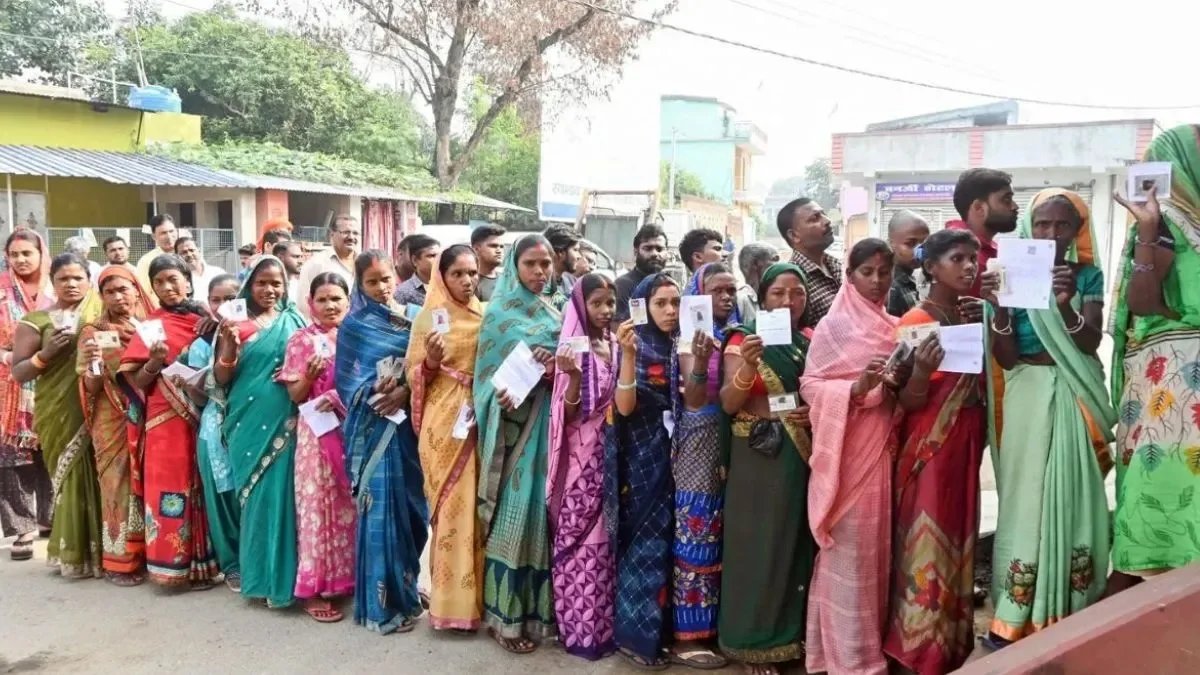
New Delhi, 7th November: Bihar’s first phase of Assembly elections on November 6, 2025, witnessed an unprecedented voter turnout of 64.66%, marking the highest participation recorded in the state’s electoral history. This surge stunned political analysts, not only because it trounced turnout figures from the 2020 Assembly and 2024 Lok Sabha elections but because it came amid a contentious electoral roll cleanup that saw over 3 million names deleted. As Bihar stands at this democratic crossroads, the implications of the voting patterns, past trends, and the Election Commission’s Special Intensive Revision (SIR) process offer a rich subject for analysis.
From Stagnation to Surge: Turnout Trends Over Two Decades

For over a decade, Bihar’s voter turnout hovered around a stagnant 57%, signaling a persistent malaise of voter disengagement despite concerted efforts to expand access and awareness. The early 2000s had seen turnout numbers in the mid-40s, inching up slowly to just over 56% in 2015. However, the recent Phase I turnout of 64.66%—the highest since the 1998 Lok Sabha polls—represents not just a statistical leap but a profound behavioral shift amongst Bihar’s electorate.

Voter enthusiasm was visible throughout the day, with turnout rates surpassing those of previous elections at every recorded checkpoint. While the number of registered voters as per the final SIR rolls was 7.42 crore, down from 7.89 crore before revisions, actual voter participation was robust, underscoring a renewed confidence in the electoral process.
The Impact of Special Intensive Revision (SIR): Cleaning the Rolls, Not Suppressing Votes

The SIR process aimed to remove duplicate, deceased, and migrant voters from Bihar’s rolls—an exercise that inevitably raised fears of disenfranchisement among marginalized groups, a concern voiced vigorously by opposition parties. However, the data from the 2025 elections challenge these claims. The deletions accounted for a 4% reduction in the total electorate, yet voter turnout sharply increased compared to past elections.
This divergence reveals that the SIR’s cleanup targeted largely non-participatory entries, resulting in a more accurate and credible voter list rather than suppression of legitimate votes. Between the constituencies polled in Phase I, actual voters numbered 24.3 million, a pronounced increase from 21.55 million in the 2024 Lok Sabha elections despite a marginal rise in registered voters.
Political Underpinnings: What Does Higher Turnout Mean?

While high voter turnouts traditionally indicate a public mood for change or anti-incumbency, Bihar’s scenario complicates this assumption. Historical precedents from other states show that surging turnout does not always translate to election outcomes unfavorable to the incumbent. Instead, the increase may reflect a more engaged electorate motivated by local issues, developmental aspirations, and the high-stakes power contest between major alliances—the Nitish Kumar-led NDA, Tejashwi Yadav’s Mahagathbandhan, and the BJP.
Moreover, the simultaneous presence of a cleaner electoral roll means the percentage turnout reflects genuine electoral engagement rather than inflated figures distorted by ghost voters. This result boosts the legitimacy of the election and quells narratives of malpractice tied to roll inaccuracies.
Navigating the Road Ahead: Political and Democratic Implications

Bihar’s experiment with the SIR drives home a lesson in electoral reform: accuracy and inclusiveness in voter registrations need not be mutually exclusive. Cleaner electoral rolls can coexist with increased voter participation, strengthening democratic governance. For Bihar’s political parties, the record turnout underscores the imperative to connect with a wider and more vigilant electorate.
As election results unfold, the sharp increase in turnout may be a harbinger of greater political contestation and transformation. Voters seem ready to weigh past achievements against promises for change with renewed vigor, making the 2025 Bihar elections a milestone in the state’s democratic evolution.
A New Dawn for Democracy in Bihar
The 2025 Bihar Assembly elections have shattered myths about voter apathy and the risks of electoral roll cleansing. Through an effective cleanup and efficient administration, the Election Commission of India has facilitated a fairer, more transparent process fortified by active voter participation.
Political stakeholders must now rise to this democratic challenge by addressing the aspirations of an empowered electorate that has demonstrated its willingness to engage. This surge in turnout is a compelling reminder that democracy in Bihar, like elsewhere, thrives when citizens believe their votes count and when electoral systems are respected.
