
Bangladeshi Birth Certificate Scam Rocks Electoral Lists
West Bengal’s Silent Crisis

Poonam Sharma
As India moves deeper into a politically charged season, a disturbing story is quietly unfolding from the southern districts of West Bengal — one which speaks to illegal migration, forged documents, and a silent demographic shift that carries potentially explosive national consequences.
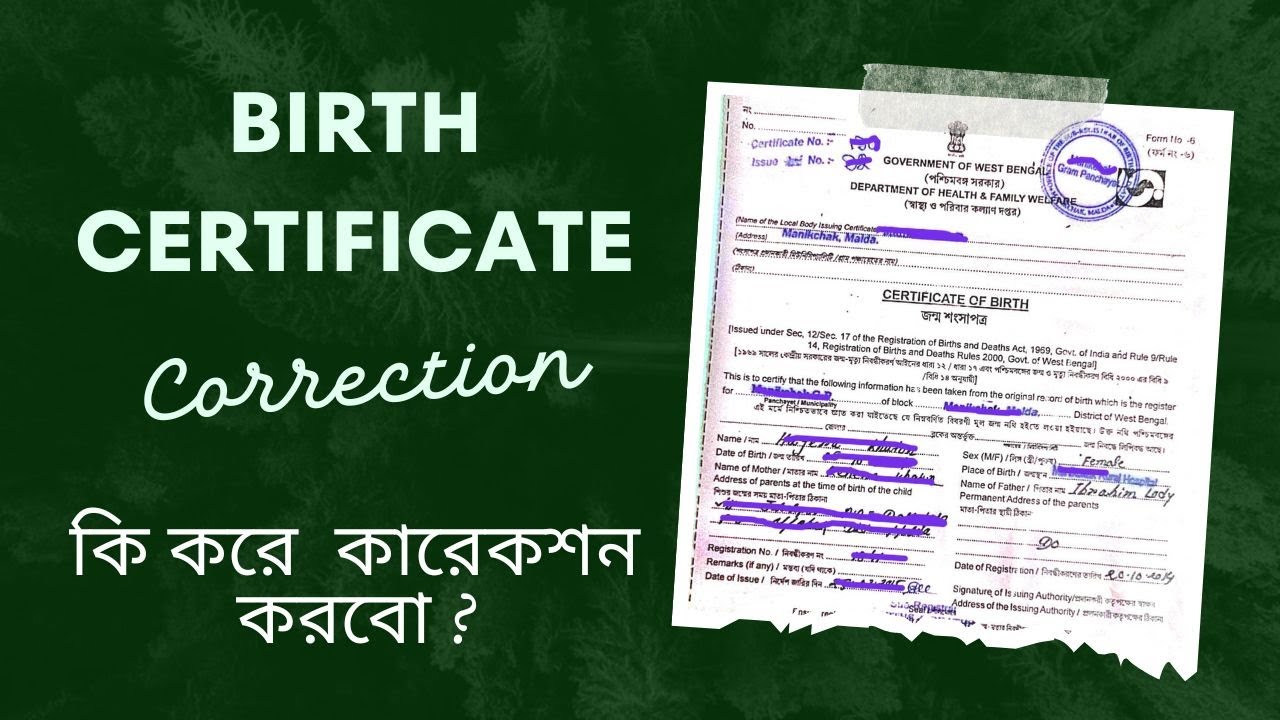
A report from Maharashtra led to the unraveling of a network that originated hundreds of kilometres away in Bengal’s South 24 Parganas district. Pathankhali village panchayat was at the heart of this controversy, issuing fake birth certificates to Bangladeshi nationals as early as 2012. These forged documents were used to obtain Indian citizenship credentials, find employment across states like Maharashtra and Karnataka, and eventually influence electoral rolls in multiple regions.
This is not a scandal of only bureaucratic corruption; this strikes at the very foundation of India’s citizenship, democracy, and national security.
The Forgery Network and Its Political Roots
The exposé revealed that 3,500 such certificates were issued in a single panchayat in a bi-monthly cycle, allegedly through political workers at the local level. The documents were sold for a few thousand rupees and later validated in other states, effectively giving Bangladeshi nationals an Indian identity.
The revelations bring up two very important questions: Who allowed this system to flourish for over a decade? And how deep does the political patronage go?
Observers explain an uncomfortable reality-in areas where vote bank politics of illegal immigrants has become deep-rooted, these forged documents are not isolated forgeries but tools of political survival.
Sources in West Bengal indicate that the ruling Trinamool Congress is facing growing pressure in the run-up to the electoral cycle. The worry is simple yet severe: if the revision of the voter list, beginning on November 4, is strictly implemented, thousands of ineligible names could get deleted. For a party deriving strength from consolidated minority votes, such a purge could be disastrous.
Mamata Banerjee’s Tightrope
Chief Minister Mamata Banerjee and her nephew Abhishek Banerjee have expressed in public their apprehension over the “special voter list revision” being put into effect by the Election Commission. On paper, this will purge duplicate and fake voter entries. But within the ranks of TMC, there is growing trepidation that this may expose a ten-year demographic manipulation.
“This isn’t any random bureaucratic exercise; this is an existential threat to TMC’s political arithmetic,” said Abhishek Tiwari, a political commentator whose viral monologues have drawn nationwide attention. “Once the fake voter base collapses, the electoral map of Bengal changes forever.”
He warns that as verification drives intensify in districts like North and South 24 Parganas, tension on the ground is bound to rise. “The moment illegal entries begin to be challenged, we will see civil unrest. And once that begins, the next step may well be President’s Rule in Bengal,” says Tiwari.
A Nationwide Chain Reaction
The forgery issue is no longer confined to Bengal. Investigations suggest that many of those possessing fake birth certificates from Bengal have migrated to Maharashtra, Karnataka, Tamil Nadu, and even Delhi, seeking work as daily wage labourers, carpenters and construction workers.
Another issue created by the economic ripple effect can be seen in the fact that locals, nearly all being Hindu, often refuse to work for the very low wage and instead demand more for their labor. This has caused contractors and small industries to hire Bangladeshi Muslim workers for only ₹300–₹500 per day; a price that Indian workers just cannot compete with.
The larger concern is not just economic displacement but security. “When a country begins depending on illegal workers, it’s not just jobs that are lost — national integrity is compromised,” Tiwari argues. “We need to decide whether to pay a bit more to keep India secure, or to save money by empowering those who don’t belong here.”
An Election Like No Other
The debate comes at a critical time. In Bihar, where elections are due soon, intelligence reports indicate a visible demographic shift in border districts like Purnia and Katihar, where new settlements of Bangladeshi-origin Muslims have appeared in recent years.
Tiwari feels that a trend is also being set. “As the Foreigners and Immigration Bill — brought in by the Modi government — becomes more stringent, illegal residents are shifting base. Some flee West Bengal into states where law enforcement is laxer or where identity checks are less rigorous.”
He says that could lead to a reduction in overall voter turnout across the country. “This time, voter participation might fall below 50%. Many fake or dual entries are being quietly deleted. This will change political equations dramatically,” he says.
Congress and the Left’s Dilemma
While the BJP is positioning itself as the defender of lawful citizenship, opposition parties face a crisis of credibility. Congress leader Adhir Ranjan Chowdhury recently admitted that “Bangladesh has long claimed parts of Murshidabad and Malda,” indirectly validating fears of growing foreign influence in eastern India.
For both the Left and the TMC, the admission is politically damaging. It substantiates the BJP’s claim that unregulated infiltration and political appeasement have given shape to a “Greater Bangladesh” design — a theory dismissed for years as paranoia but now gaining traction with every new revelation.
A Brewing Civil Conflict
What makes the situation alarming is the undercurrent of communal volatility. If the illegal migrants are identified and removed from the electoral lists, TMC is likely to take to the streets. Party sources have already hinted at mass mobilization plans starting November 4, coinciding with Ambedkar Jayanti processions in Kolkata-a timing critics call “strategic camouflage.”
The security agencies fear that if protests turn violent, the Election Commission might invoke Article 356, thus making way for President’s Rule in the state.
Tiwari sums up the crisis thus: “The day will come when parties like AIMIM will be strong enough in Bengal to form governments on their own — thanks to demographic engineering. When that happens, Hindu political leadership in Bengal will vanish forever.”
Conclusion:
A Nation at a Crossroads The West Bengal birth certificate scandal is not just a case of corruption or electoral fraud; it is a mirror to the silent erosion of national boundaries, identity, and governance. For years, India’s political class has balanced between humanitarian sympathy and political convenience. But as the magnitude of infiltration becomes impossible to ignore, the nation faces a defining question-Will democracy remain authentic if citizenship itself becomes negotiable? As West Bengal gears up for what could be one of the most volatile winters in its political history, the rest of India is watching anxiously-for the storm that started with forged certificates may soon test the very idea of India’s unity.
