
Political Bias or Secularism? Congress’s War on RSS in Karnataka
“Selective Secularism or Political Targeting? Congress’s Crackdown on RSS Reveals Deep Anti-Hindu Bias.”

Paromita Das
New Delhi, 31st October: In Bharat’s charged political landscape, few accusations have been as persistent and polarizing as the charge that the Congress party harbors an anti-Hindu ideology. Rooted in decades of political maneuvering, these claims have intensified in recent years amid controversies involving Congress governments and their handling of Hindu cultural and nationalist elements. One cannot ignore incidents like the disciplinary notices issued to Karnataka teachers for participating in RSS events, which have sparked nationwide debate over secularism, nationalism, and religious rights. To understand this complex narrative, it is essential to critically examine the nature of Congress’s ideology and its impact on Bharat’s Hindu majority.
Political Context: The Clash Over Cultural Expression

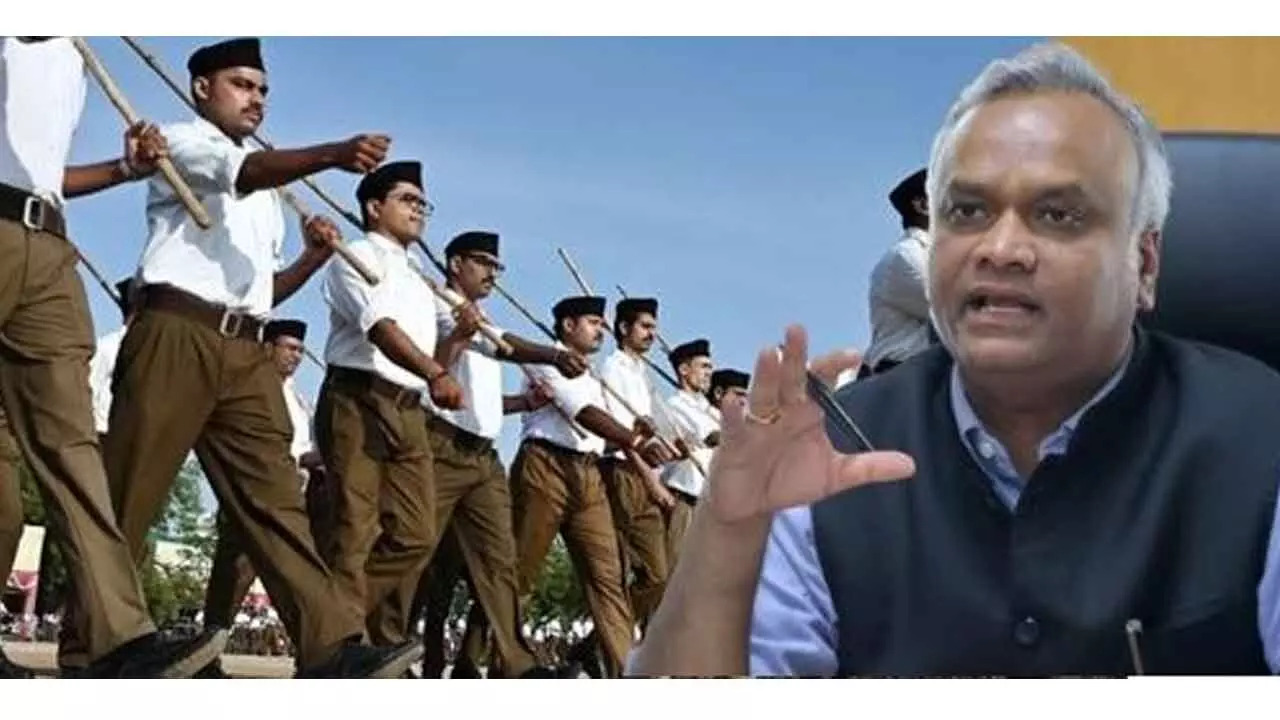
The Karnataka government’s notices to four teachers for joining RSS path sanchalans illuminate a broader conflict. The RSS, viewed by many as a cultural organisation promoting Hindu values, finds itself frequently targeted by Congress-led governments through administrative actions and legal challenges. The state’s recent move, justified by citing civil service conduct rules banning government employees from political or religious activities, was met with sharp backlash. Critics argue that such actions are selectively enforced when it comes to Hindu organizations, reflecting an intolerance and bias within Congress-controlled administrations.
These events raise fundamental questions: Is Congress’s stance one of upholding secular, neutral governance, or is it an active suppression of Hindu cultural expressions? The politically motivated restrictions, coupled with judicial pushback like the Karnataka High Court’s stay on bans against RSS, highlight the contentious nature of Congress’s approach toward Hindu-centric groups.
Minority Appeasement: Political Strategy or Ideological Bias?

A significant criticism of Congress is its perceived minority appeasement politics, often at the expense of Hindu interests. Historical patterns and recent incidents reveal a tendency within Congress leadership to court Muslim votes by disproportionately endorsing minority quotas, special privileges, and symbolic protections, igniting debates on fairness and communal balance.
Opponents argue that this “divide and rule” approach fragments Hindu society and fuels sectarian tensions, weakening social cohesion. Prime Minister Narendra Modi has repeatedly accused Congress of fostering Hindu disunity, claiming that Congress’s strategy exploits caste and religious fault lines to secure electoral gains.
While Congress defends these measures as efforts to uplift marginalized communities, the political fallout often results in Hindus perceiving Congress as hostile or indifferent to their cultural aspirations and rights.
The Secularism Paradox: Between Neutrality and Neglect

Congress claims the mantle of secularism, but critics highlight a paradox: secularism should mean equal respect for all religions, yet actions under Congress rule often seem to neglect or marginalize Hindu traditions.
For example, while Muslim festivals receive visible government support, Hindu cultural events face bureaucratic hurdles or opposition. The strict regulation of Hindu nationalist organizations contrasts sharply with the permissiveness toward minority religious bodies, deepening alienation among Hindu constituencies.
This perceived double standard fuels narratives that Congress ideologically sidelines Hindu identity, thereby alienating a crucial voter base and contributing to the party’s electoral decline.
A Hindrance to Inclusive National Unity

Congress’s stance—whether by design or consequence—risks widening communal divides rather than bridging them. Genuine secularism must embrace Bharat’s cultural diversity without undermining any faith. Congress’s policies and actions need recalibration toward inclusive nationalism, where Hindu culture is cherished alongside others as integral to Bharat’s identity.
Suppressing mainstream Hindu cultural participation or institutionalizing minority privileges without balancing Hindu aspirations fosters resentment. This imbalance hampers nation-building efforts and threatens long-term social harmony.
Furthermore, Congress’s neglect or antagonism toward Hindu sentiments inadvertently strengthens right-wing alternatives that claim to represent Hindu interests authentically.
Toward a Balanced and Respectful Political Discourse
The debate over whether Congress holds anti-Hindu ideology cannot be simplified to rhetoric alone. It requires a nuanced understanding of political strategies, historical contexts, and policy outcomes.
To regain trust and relevancy, Congress must transcend minority appeasement politics and cultivate a genuine respect for Hindu cultural identities while ensuring fairness to all communities. This balance is essential not only for electoral success but for fostering a truly united and progressive Bharat.
Failing to address these issues risks alienating a majority community while sharpening communal divides—a scenario detrimental to democratic stability and social peace.
Bharat’s political future depends on leaders who promote harmony through respect, equality, and cultural affirmation—not through divisive ideologies or selective secularism.
