
The Iron Resolve: Sardar Patel and the Unbreakable Spirit of Bharat
“How Sardar Vallabhbhai Patel’s vision and grit forged Bharat’s unity and continue to inspire the nation on his 150th birth anniversary.”

Paromita Das
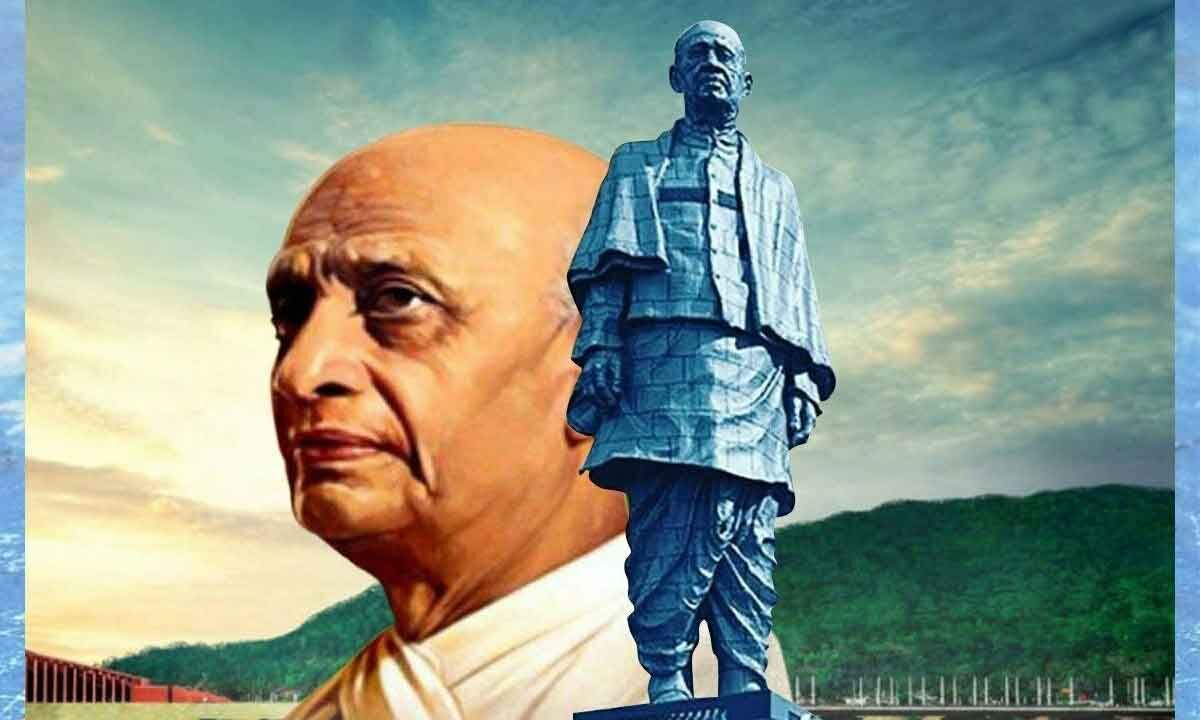
New Delhi, 31st October: On a misty October morning, Kevadia once again echoed with the spirit of unity. As Prime Minister Narendra Modi inaugurated ambitious projects worth Rs 1,219 crore and launched electric buses in the shadow of the Statue of Unity, the world could sense that this celebration was more than just an anniversary—it was a tribute to the vision that stitched a fragmented Bharat into one soul. On the 150th birth anniversary of Sardar Vallabhbhai Patel, the Iron Man of Bharat, the nation bowed not merely to a memory, but to a moral force that shaped its destiny.
From Barrister to Nation-Builder

Before Sardar Patel became the towering symbol of national integrity, he was a brilliant lawyer from Gujarat who mastered the fine threads of justice and leadership. Born in Nadiad in 1875, his journey began in ordinary soil but flourished through extraordinary resolve. After completing law studies in England, Patel returned to Bharat to practice at the Ahmedabad Bar, earning immense respect for his clarity, discipline, and fearlessness.
It was in Ahmedabad’s struggle for mill workers’ rights that Patel’s leadership found its national purpose. The quiet barrister transformed into a mass leader under Mahatma Gandhi’s guidance. When famine gripped Kheda, it was Patel who stood firm against British exploitation. Organizing farmers and workers, he refused tax payments during the devastating drought—an act of defiance that earned him the title Sardar, or leader, from the people.
The Architect of Bharat’s Political Unity

Post-independence, Bharat was a mosaic of 562 princely states—an administrative nightmare threatening the integrity of the new nation. It was here that Patel’s iron determination forged Bharat’s political geography. With diplomacy, firmness, and audacity, he persuaded and, when necessary, pressured princely rulers to accede to Bharat.
The integration of states like Hyderabad and Junagadh remains one of the most decisive chapters in history. While others hesitated, Patel acted swiftly to prevent balkanization. His pragmatic nationalism balanced power and persuasion—earning him the reputation of being Bharat’s “Iron Man.” Without his political will, Bharat might have remained a divided dream.
The Iron in His Character

Sardar Patel’s strength was not just administrative but moral. He believed that unity was not imposed by force but nurtured through trust. When Partition tore through the subcontinent, Patel worked relentlessly to rehabilitate displaced families, restore law and order, and ensure that the administrative system stood strong amid chaos.
Few know that Patel never sought personal glory or power. When asked why he did not insist on being the first Prime Minister, he replied, “I will not be party to anything that weakens our unity.” This humility and discipline set him apart as a true servant-leader—an ideal modern Bharat often yearns for.
Little-Known Facets of Sardar’s Life

Patel’s persona was layered with rare qualities that history often overlooks:
- He was deeply spiritual, reading the Bhagavad Gita daily and believing in practical karma over rhetorical idealism.
- Despite his stern visage, he shared a warm camaraderie with Gandhi and Nehru, though his differences with them were often ideological, not personal.
- Patel displayed exceptional administrative precision—his handling of the civil services led to the creation of the modern Bharatiya bureaucratic framework, often referred to as the “Steel Frame of India.”
- His correspondence with global leaders reflected an astute understanding of international diplomacy, though he rarely sought the limelight.
PM Modi’s Tribute: The Spirit of Continuity

In Kevadia’s vibrant landscape, where the 182-meter Statue of Unity rises over the Narmada, Prime Minister Narendra Modi’s initiatives embody a continuation of Patel’s vision. The inauguration of eco-friendly electric buses, the establishment of the Birsa Munda Bhavan, and the creation of a hospitality district reaffirm a balance between progress and preservation.
By releasing a commemorative coin and stamp, PM Modi symbolically revived Patel’s timeless message—that modernity and unity must walk hand in hand. His words echoed the sentiment of a living legacy: a call to make Bharat both iron-strong and environmentally resilient.
Why Patel’s Legacy Matters Today

In the polarized climate of global politics, Sardar Patel’s approach offers timeless lessons. He combined nationalism with inclusivity, authority with compassion, and decisiveness with humility—values often missing in the rhetoric of contemporary politics.
Bharat’s future hinges on the same principle Patel upheld—national unity above political rivalry. The iron he embodied was not in domination but in determination, not in coercion but in conviction. As Bharat advances toward becoming a global power, revitalizing Patel’s straightforward realism is not merely desirable; it is essential.
The Iron That Still Holds Us Together
Sardar Vallabhbhai Patel’s life is not a chapter that ended in 1950; it is an unfinished philosophy guiding Bharat’s destiny. From Nadiad’s dusty fields to Kevadia’s towering monument, his story bridges the past and future with unbreakable resolve.
On his 150th birth anniversary, Bharat salutes not only the man who unified its map but also the leader who unified its mind. The Iron Man’s message remains eternal: a nation is not built by power alone but by the courage to put unity above all.
