
Trump’s Asia visit: A mix of peace deals and economic uncertainty defines US-ASEAN Ties and how should India respond

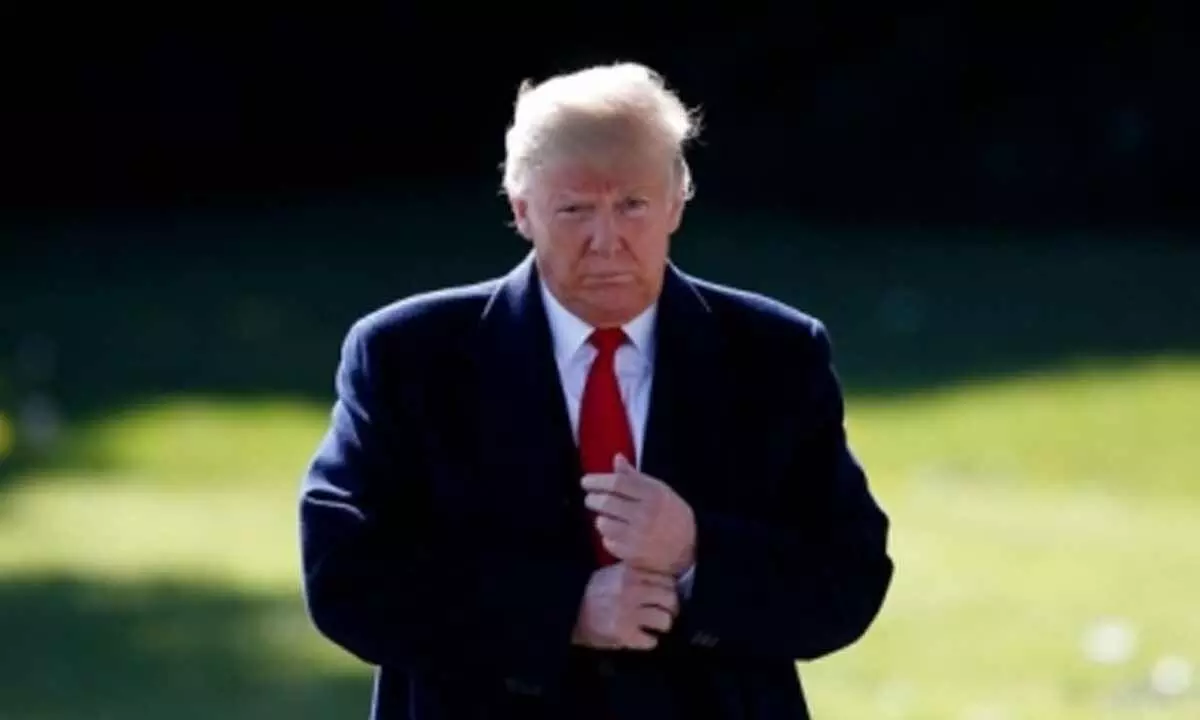

Kuala Lumpur, Malaysia – United States President Donald Trump’s appearance at the 47th ASEAN Summit concluded with a striking duality: celebrated diplomatic success alongside escalating economic uncertainty. The high point of the visit was the mediation and co-signing of a ceasefire accord between Thailand and Cambodia; an achievement President Trump hailed as a “Great Peace Deal.” This act served to underscore the enduring American role as a global power broker, actively engaged in maintaining regional stability.
However, the feel-good diplomacy was quickly complicated by the administration’s unpredictable trade strategy. While the U.S. successfully inked new reciprocal trade agreements with Malaysia and Cambodia, and established framework deals with Thailand and Vietnam, these gains were overshadowed by the potential of devastating trade measures. The threat of a massive 100% tariff on semiconductors and a 40% duty on “trans-shipments”—a policy designed to penalise goods routed through third countries to bypass existing tariffs—created deep apprehension.
For ASEAN nations, whose economies rely on complex, interconnected supply chains, these looming tariffs represent a fundamental threat to regional economic stability. This tension highlights the administration’s strategic use of trade policy as a coercive tool of Economic statecraft.
Beyond the immediate, transactional deals, the adoption of the ASEAN-U.S. Leaders’ Joint Vision Statement offers a crucial insight into the permanent direction of American policy. This document provides a long-term roadmap for cooperation across three dimensions: “Safer,” “Stronger,” and “More Prosperous.”
The “Safer” pillar, with its focus on maritime security and freedom of navigation, reinforces the U.S.’s enduring commitment to countering regional aggression and maintaining Primacy in the Indo-Pacific. The “saviour” narrative, embodied by the ceasefire and humanitarian cooperation, further legitimises U.S. intervention.
The “More Prosperous” section is the strategic linchpin, emphasizing resilience in critical minerals and supply chains. This is interpreted by analysts as a key effort to safeguard Dollar Hegemony—the system that permits the U.S. to finance its substantial national debt by guaranteeing global confidence in the U.S. financial system and its economic leadership. By deepening economic ties, the U.S. seeks to solidify its position as the indispensable economic alternative in Asia.
For India, the enhanced U.S.-ASEAN strategic partnership necessitates a decisive and adaptive strategy. The formalisation of deep US-ASEAN ties intensifies the competitive pressure on India’s own Act East Policy.
India must urgently finalise the commercially relevant review of the ASEAN-India Trade in Goods Agreement (AITIGA). This is necessary to ensure Indian exporters are not disadvantaged compared to their U.S.-allied ASEAN counterparts.
By championing the cause of the “Global South”—a concept frequently promoted by Prime Minister Modi—India offers a distinct, non-hegemonic partnership model. This approach focuses on mutual capacity-building in areas like the digital economy and sustainable development, contrasting with the transactional nature of U.S. tariff diplomacy.
India must follow up its announcement of 2026 as the ‘Year of ASEAN-India Maritime Cooperation’ with tangible, high-impact defence and maritime security initiatives. This proactive stance is vital to demonstrate India’s capability as an indispensable, reliable, and non-intrusive security partner in the region.
India must adopt a strategy of competitive cooperation by leveraging its strengths while adapting to the new U.S.-ASEAN reality.
India must fast-track the legal and commercial review of the ASEAN-India Trade in Goods Agreement (AITIGA) to make it more beneficial and competitive against the backdrop of US-ASEAN trade frameworks and RCEP. It should focus its investment and partnership in the areas where it has a comparative advantage, specifically digital economy (leveraging India’s digital public infrastructure—UPI, Aadhaar), AI, and MSME support, which are mentioned in the U.S.-ASEAN vision but where India has unique expertise.
India should also work towards fully implementing, the ASEAN-India Maritime Cooperation Year (2026) with concrete, visible joint initiatives in humanitarian assistance and disaster Relief (HADR), search and rescue, and anti-piracy to reinforce India’s role as a net security provider and a “first responder.” Deepen defence dialogue beyond the current level, potentially proposing regular, large-scale, joint multilateral exercises with willing ASEAN partners.
PM Modi’s emphasis on India and ASEAN as “fellow travellers of the Global South” is a strong counter-narrative to the U.S.’s “saviour” image. India must operationalise this by championing issues like development finance, climate justice, and equitable access to technology (e.g., through multilateral forums like the Quad and G20), thereby offering a less hegemonic, peer-to-peer partnership model that respects ASEAN Centrality.
While supporting the U.S. strategic presence, India must insulate its own trade interests. It must be prepared to negotiate a robust bilateral trade agreement with the U.S., but one that is not rushed and protects key sectors while ensuring access for its services and manufacturing exports, as articulated by its commerce minister.
About the Author:
