
Loyalty for Sale: The U.S.-Pakistan Power Pact That Changed Regional History
“The CIA, Musharraf, and America’s ‘Purchased Pact’: Inside the Era When Washington Held Pakistan’s Leash.”

Paromita Das
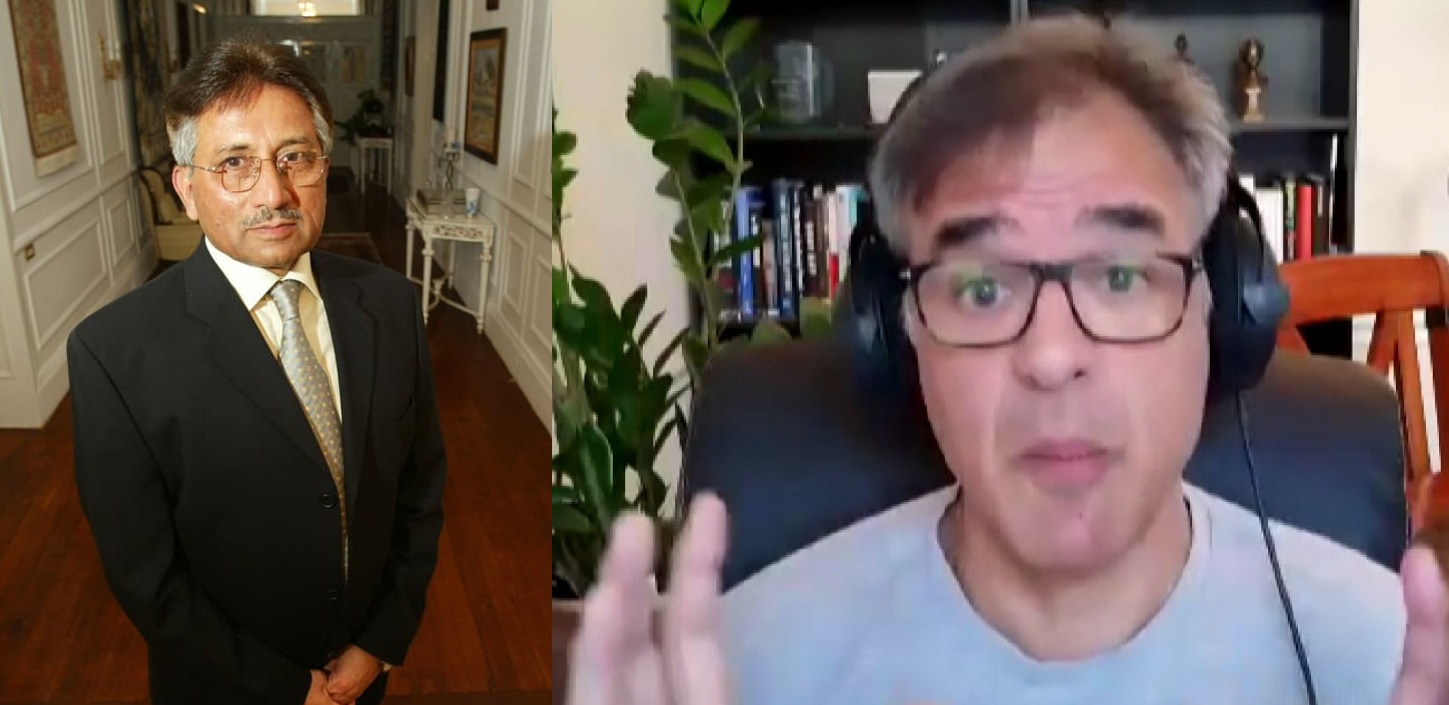
New Delhi, 28th October: In the complex web of post-9/11 geopolitics, truth often hides between diplomatic courtesies and the quiet exchange of favours. Yet, few revelations have struck as sharply as the one made recently by former CIA operative John Kiriakou — a man who headed counterterrorism operations in Pakistan and knew the inner architecture of Washington’s covert relationships. His statement that “the United States bought Musharraf” is not merely a comment on corruption but a window into how superpowers secure obedience through checkbooks, weapons, and whispered promises.
Kiriakou’s blunt admission that Washington “essentially purchased Pakistan” under General Pervez Musharraf has reignited debate on how the U.S. manipulated South Asian geopolitics in the early 2000s — and how Islamabad quietly traded autonomy for survival.
A Deal Wrapped in Dollars and Fear

According to Kiriakou, Washington’s post-9/11 desperation to control the region turned Pakistan into a bought asset. The Pentagon, he claims, wielded temporary authority over Pakistan’s nuclear arsenal — with Musharraf allowing American oversight under the pretext of preventing extremist access. Millions in U.S. military and economic aid followed, ensuring every layer of Islamabad’s establishment was oiled and compliant.
It was a masterclass in transactional diplomacy. Kiriakou explained that America prefers “dictators over democracies” because dictators don’t negotiate — they obey. “We basically bought Musharraf,” he said, describing how Pakistan became the perfect client state: dependent, cooperative, and strategically positioned between the Taliban, Bharat, and China.
Yet beneath the compliance, duplicity brewed. While Musharraf projected loyalty to Washington’s “war on terror,” Pakistan’s military-intelligence nexus allegedly continued to fund groups targeting Bharat. The façade of cooperation hid years of silent betrayal, as Kiriakou observed: “They didn’t care about Al-Qaeda. Their obsession was Bharat.”
Bharat’s Composure Amid Provocation

One of Kiriakou’s more startling confessions concerns New Delhi’s handling of provocations. In the aftermath of the 2001 Parliament attack and even the 2008 Mumbai carnage, U.S. intelligence expected swift Bharatiya retaliation — a conventional strike that might have triggered escalation. Instead, Bharat chose restraint.
“We called it strategic patience,” Kiriakou recalled. “At the White House, everyone was astonished. Bharat had every right to strike, but it didn’t.”
He admitted that Bharat’s maturity might have averted nuclear confrontation, though such patience comes at a cost. Over time, it bred misjudgments — a misreading of Bharat’s quiet resolve as weakness. That illusion shattered years later when Balakot and other assertive responses demonstrated a recalibration of Bharat’s doctrine from restraint to calculated precision.
The Shielding of A.Q. Khan: Riyadh’s Silent Hand

If Kiriakou’s Pakistani revelations rattled analysts, his comments on Saudi Arabia sent shockwaves through security circles. He alleged that the CIA once planned to “eliminate” Abdul Qadeer Khan — Pakistan’s Father of the Bomb — whose black-market proliferation network supplied nuclear technology to North Korea, Iran, and Libya. But the mission, he said, was halted after Riyadh intervened.
“The Saudis told us, ‘Please leave him alone. We’re working with him,’” Kiriakou revealed. By protecting Khan, Saudi Arabia may have shielded its own nuclear aspirations. The episode highlights the transactional nature of America’s alliances — money for silence, oil for weapons, loyalty for impunity. The CIA officer called it one of Washington’s costliest moral failures — a compromise that not only legitimised Pakistan’s nuclear opacity but also emboldened Riyadh’s covert ambitions.
America’s Double Game in South Asia

Kiriakou’s disclosure underscores how pragmatism has long overridden principle in U.S. foreign policy. America’s loudest slogans — democracy, human rights, transparency — often dissolve in smoky backrooms where strategy trumps morality. In Musharraf’s Pakistan, the U.S. found an eager client willing to exchange sovereignty for security guarantees. Yet, that same Pakistan also deceived Washington by nurturing terrorism it publicly condemned.
The relationship mirrored a toxic marriage of convenience — mutually dependent, perpetually distrustful. Washington gained logistical access for its Afghan war; Pakistan gained unchecked aid and diplomatic leniency. Bharat, meanwhile, emerged as the silent observer, bearing the cost of this hypocrisy through cross-border terrorism and geopolitical manipulation.
Bharat’s Rise Amid Global Realignment

What makes Kiriakou’s account especially relevant today is his recognition of a shifting order — one in which power is no longer monopolised by the West. He admitted that strategic dependence on authoritarian allies like Pakistan and Saudi Arabia has eroded America’s credibility, particularly as nations like Bharat, China, and Saudi Arabia assert new autonomy.
“The U.S. doesn’t stand for democracy,” Kiriakou said. “It stands for whatever benefits it at the moment.” He reflected on a telling anecdote from his tenure in Saudi Arabia, where a guard once told him, “You’re the hired help. We paid for you to defend us.” That brutally honest statement captures the essence of America’s transactional diplomacy — respect bought, not earned.
Bharat, however, stands apart in his narrative — as a nation that combined moral restraint with economic power. No longer merely a regional counterweight, it has become a balancing force in a multipolar system. In contrast, America’s dependence on ephemeral partnerships exposes its inability to adjust to a more diversified world order.
The Lessons of a Compromised Alliance

Kiriakou’s words peel back the veneer of global idealism, exposing how great powers often mistake control for influence. The U.S. “purchased” Musharraf’s Pakistan, but what it really bought was fragility. Aid bought temporary compliance; it didn’t build trust. Control over nuclear codes did not translate into security; it fostered resentment. And by ignoring Islamabad’s duplicity for convenience, Washington empowered the very instability it sought to contain.
Meanwhile, Bharat’s cautious diplomacy — often derided as indecisive — proved to be strategic endurance. It avoided the traps of emotional response and leveraged time as a weapon of credibility. As the world’s power centres shift, that discipline may become Bharat’s greatest strategic export.
Truth Beyond Transactions
John Kiriakou’s revelations serve as a mirror to the contradictions of global politics — where democracies engineer dictatorships, alliances rest on deceit, and moral superiority is traded for influence. His testimony reminds the world that foreign policy shaped by fear and finance ultimately undermines the very freedom it claims to protect.
For the United States, his words are a cautionary echo. For Pakistan, they expose the fragility of a sovereignty too often sold.
And for Bharat — the silent constant in a region of volatility — they reaffirm a hard-earned truth: credibility, not cash, defines real power.
