
The Shadow Plot: How Modi’s Life Became the Center of Global Spy Warfare
“Shadow Over Tianjin: The Modi Assassination Plot That Shook Global Intelligence Circles.”

Paromita Das
New Delhi, 27th October: The Shanghai Cooperation Organisation (SCO) Summit in Tianjin earlier this year was meant to be a symbol of new geopolitical balance, but if recent revelations are true, it almost became the stage for one of the most audacious assassination plots in modern diplomacy. A startling investigative report by a leading Bharatiya weekly known for its nationalist affiliations has alleged that Bharatiya and Russian intelligence agencies, acting on an urgent alert, foiled a CIA-linked conspiracy to eliminate Prime Minister Narendra Modi during his visit to China.
Though the claims remain unverified, the story has unleashed ripples far beyond New Delhi and Washington, drawing in Moscow, Beijing, and Dhaka into a web of suspicion, intrigue, and strategic recalibration. Beneath its sensational surface lies a troubling reflection of how twenty-first-century espionage is merging with information warfare — where perception can be just as lethal as reality.
The Summit That Never Went As Planned

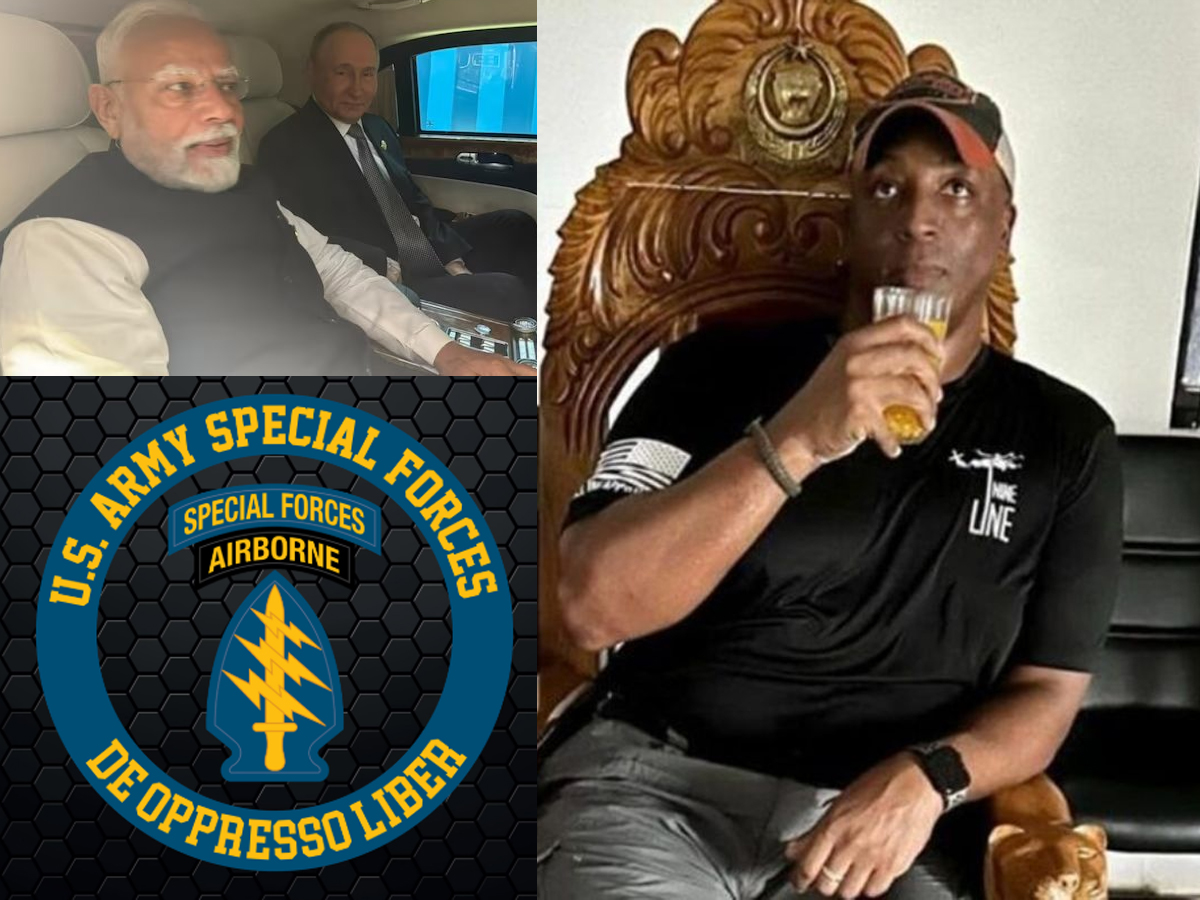
According to the explosive account, it all began on the morning of the SCO Summit in Tianjin. Just hours before Prime Minister Modi’s scheduled arrival at the venue, a “credible intelligence alert” reportedly reached both Bharatiya and Russian agencies. The tipoff, said to have originated from China’s Ministry of State Security, warned of an assassination attempt targeting Modi. What followed, as per the narrative, was an extraordinary breach of diplomatic protocol — Russian President Vladimir Putin personally requested Modi to ride to the venue with him in his armoured car, an act described as a “strategic security measure” after fresh intelligence inputs.
This manoeuvre, while symbolic on the surface, reflected a deeper convergence of interests among Bharat, Russia, and China — three powers often divided by ideology but united by necessity when threatened by Western intelligence dominance.
Dhaka’s Dark Link: The Death That Raised Questions

Central to this alleged conspiracy is the mysterious death of a U.S. Army Special Forces officer, Terrence Arvelle Jackson, discovered lifeless in a Dhaka hotel on August 31. Initially dismissed as an isolated incident, the death soon acquired international dimensions. Reports claimed traces of radioactive material were detected in Jackson’s system, invoking comparisons to past covert assassinations that used deadly isotopes as invisible weapons.
Jackson, working under diplomatic cover, was reportedly involved in “security coordination” in Bangladesh. But beneath that façade, he was said to be cultivating local operatives through NGO networks and ex-military contacts to destabilize South Asia — with Prime Minister Modi’s life as the ultimate target. The coincidence of Jackson’s death just weeks before the Tianjin summit lends the story an eerie precision — the kind that conspiracy historians may ponder for years to come.
The Trilateral Intelligence Web

What makes the account more remarkable is its suggestion of joint coordination between three unlikely players — Bharat’s Research and Analysis Wing (RAW), Russia’s FSB, and China’s Ministry of State Security. The publication describes this as a “rare moment of triangular cooperation” in modern intelligence history. The agencies allegedly monitored Jackson’s movements in Dhaka and intercepted communications linking Western intelligence assets to suspected contractors in Chittagong and Bangkok.
As the summit neared, the network was reportedly “neutralized” through secretive countermeasures. Three other operatives associated with Jackson’s circle were said to have died under ambiguous circumstances in Bangladesh, further deepening global intrigue.
Diplomatic Denials and Digital Frenzy

Washington, for its part, has maintained conspicuous silence. A brief military statement addressed only the “safety and accountability of all serving personnel” without referencing Jackson or any covert operations. Yet, social media platforms across South Asia erupted in speculation, turning the alleged plot into a trending storm.
Hashtags such as #ModiAssassinationPlot, #CIAinDhaka, and #TerrenceJackson flooded feeds in Bharat and Bangladesh. While nationalist circles hailed the report as proof of Bharat’s security resilience and global standing, sceptics dismissed it as a calculated piece of geopolitical misinformation aimed at discrediting U.S. influence in the region.
In Dhaka, the story triggered unease within the transitional government still consolidating power after regime changes earlier in the year. Bangladesh, newly aligned with Western interests, now finds itself at the center of a spy-versus-spy narrative reminiscent of Cold War thrillers.
A Larger Game: The Silent Fracture in Global Power

Whether true or exaggerated, the alleged episode underscores a deeper trend — the erosion of trust between old allies and the rebirth of a multipolar intelligence order. A collaboration between Bharat, Russia, and China — even temporarily — signals an earthquake in traditional alignments. New Delhi’s willingness to share sensitive intelligence beyond the Western sphere reflects its determination to assert autonomy amid growing U.S. pressure on its Russia ties.
If indeed a covert American operation was planned on Bharatiya soil or against an Bharatiya leader, the diplomatic fallout could be catastrophic. It would represent not just a breach of sovereignty but a betrayal of the fragile Indo-U.S. strategic trust that Washington has painstakingly built through the QUAD and Indo-Pacific initiatives.
At the same time, the narrative allows Moscow and Beijing to project themselves as protectors of regional stability, using alleged “Western aggression” to build moral legitimacy in their competition with NATO powers.
Truth or Tactical Illusion?

In today’s world of strategic deception, the line between fact and fabrication is deliberately blurred. Whether the alleged assassination plot was real, exaggerated, or fabricated, the story demonstrates how information itself has become a weapon of statecraft. It serves both as deterrence and as narrative warfare — a means of reshaping global perceptions before any investigative truth can emerge.
For Bharat, the mere suggestion of surviving such a plot reinforces an image of strength, vigilance, and global centrality. For Washington, it’s a reminder of how quickly geopolitical partnerships can unravel in an age of real-time propaganda. And for global observers, it underscores that twenty-first-century power isn’t just military or economic — it’s informational.
In the Age of Shadows
As the dust of speculation thickens, the death of Terrence Arvelle Jackson in Dhaka remains a haunting enigma. Was it a rogue mission gone wrong or a convenient coincidence? No official answers exist — and perhaps none ever will.
But beyond the rumors, one lesson stands clear: global power today flows as much through secret briefings and coded signals as through public summits and policy speeches. The alleged plot, whether fiction or buried fact, exposes the invisible games that shape modern diplomacy — where allegiance is fluid, narratives are weaponized, and truth itself is just another battleground.
If the story is even partially true, it marks not just an attempt on one leader’s life — but a strike at the fragile trust defining twenty-first-century geopolitics.
