
JMM’s Bihar Exit: Cracks Widen in the Opposition’s Grand Alliance
“JMM’s shock pullout from Bihar’s Mahagathbandhan lays bare deep fractures within the opposition bloc and questions Congress–RJD’s political sincerity.”

Paromita Das
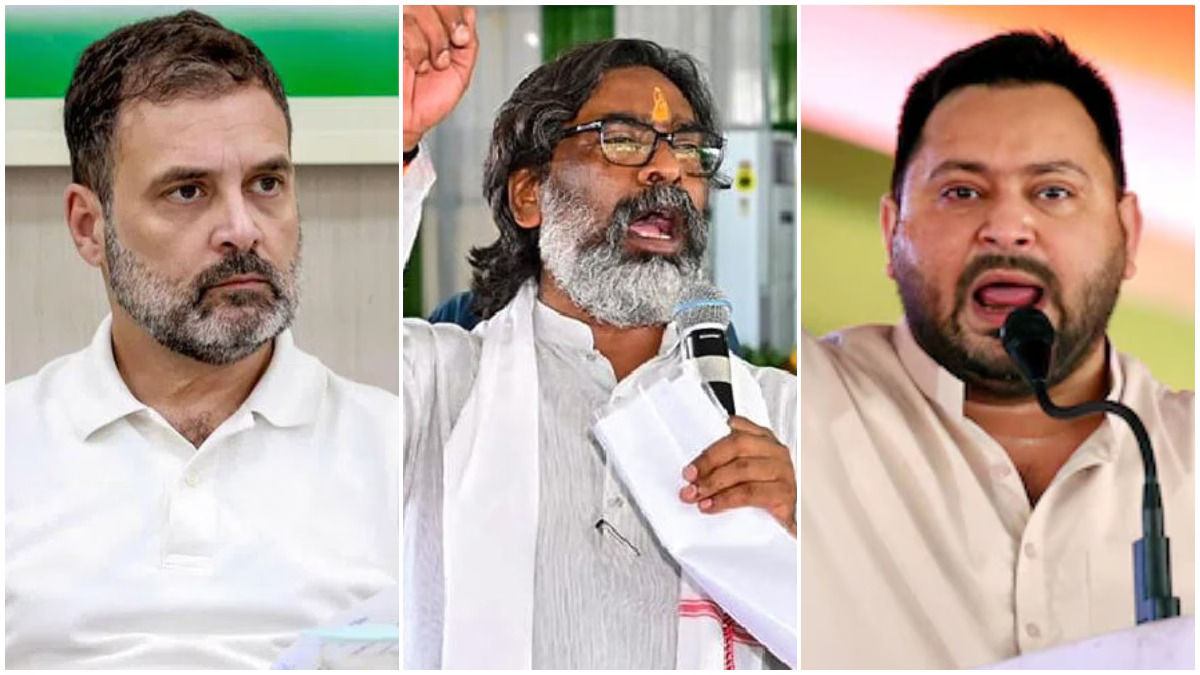
New Delhi, 22nd October: Jharkhand Mukti Morcha’s sudden withdrawal from the Mahagathbandhan in Bihar is more than a political episode; it’s a mirror reflecting the internal contradictions haunting the opposition’s unity narrative. What began as a promise of regional cooperation now lies fractured, exposing the limits of INDIA bloc’s coalition arithmetic and the simmering distrust between partners.
A Quiet Exit with Thunderous Implications

Just days after declaring it would contest six seats in Bihar independently, the Jharkhand Mukti Morcha (JMM) abruptly announced that it would not participate in the state’s upcoming elections at all. The party’s decision, though cloaked in restraint, carries the weight of accumulated resentment. JMM leader Manoj Pandey accused both the Rashtriya Janata Dal (RJD) and the Congress of sidelining their ally through “confusion and political cunningness.” According to JMM insiders, the party waited for clarity on seat-sharing until patience ran out. The message is clear: political courtesy has limits when self-respect is bruised.
The Anatomy of a Breakdown

The chain of events leading to this rupture underscores the deeper malfunction within the Mahagathbandhan. After seat-sharing talks in Patna on October 7 failed to deliver any concrete result, JMM leaders returned disillusioned. On October 18, they announced plans to go solo in six constituencies — Chakai, Dhamdaha, Katoria, Manihari, Jamui, and Pirpainti — all with a notable tribal voter base. But within days, those ambitions were crushed as JMM opted for a complete withdrawal.
Minister Sudivya Kumar minced no words when he accused the RJD, backed by Congress, of betraying a trusted partner through political manipulation. “Our aspiration to contest in Bihar has been shattered,” he declared — a statement that not only signals JMM’s disappointment but also questions the ethical foundation of opposition coordination itself.
A Blow to Opposition Cohesion

This sudden fallout couldn’t have come at a worse moment for the INDIA bloc. The alliance, already grappling with seat-sharing disputes across states, now faces the challenge of defending its very credibility. The RJD’s perceived domination and Congress’s reluctance to mediate fairly have further fueled the perception that smaller allies are dispensable.
The episode also exposes how precarious the Mahagathbandhan’s unity truly is. Allies that were expected to complement each other’s strengths are instead engaged in silent rivalries and mistrust. JDU leader Rajeev Ranjan Prasad aptly summed it up when he said, “Mahagathbandhan is going through an existential crisis in Bihar.” His remark, though politically charged, resonates with the reality of a crumbling coalition held together more by expedience than ideals.
Tribal Politics and the Regional Fallout

The JMM’s frustration isn’t merely about six seats — it’s about representation. The constituencies identified by the party lie in the tribal belt stretching across the Bihar-Jharkhand border, where identity-based politics play a decisive role. By sidelining JMM, the alliance risks alienating a segment of tribal voters who have traditionally viewed the party as their political voice.
Political observers argue that this could have long-term repercussions in Jharkhand as well. JMM leader Sudeep Kumar Sonu warned that the humiliation felt in Bihar will not be forgotten back home. The party is now reviewing its alliance with both RJD and Congress in Jharkhand — a development that could weaken their power equation in the state and potentially give the BJP-led NDA an edge.
Congress and RJD: The Price of Political Arrogance

By failing to accommodate JMM, both the RJD and Congress come across as larger parties unwilling to respect regional partners. This behavior echoes a familiar pattern — larger political actors consuming the space of smaller allies while paying lip service to unity. Congress’s inaction and RJD’s assertiveness have together alienated a partner whose presence could have strengthened their collective performance in border constituencies.
Instead of strategic coordination, what emerges is a picture of internal arrogance and communication breakdown. This perception does more damage than seat numbers ever could — it portrays the opposition bloc as disorganized at a time when it must appear most cohesive.
The Fragility of Bharat’s United Opposition

The JMM’s withdrawal speaks volumes about the INDIA bloc’s fundamental weakness — a coalition united by necessity but fractured by ego and distrust. The episode reveals how lofty slogans of “unity for democracy” can collapse under the weight of old political habits. For the RJD and Congress, it is a cautionary tale: neglecting regional allies may bring momentary dominance but creates enduring fault lines.
In a broader sense, JMM’s exit also mirrors the growing realization that alliances built on arithmetic alone cannot survive without moral trust and equity. In the volatile world of Bharatiya coalition politics, respect is as valuable as votes.
Beyond Bihar, A Warning for 2025
As Bihar readies for its two-phase election on November 6 and 11, the JMM’s departure leaves the Mahagathbandhan visibly weaker and symbolically exposed. The NDA, meanwhile, stands to benefit from the opposition’s disunity, particularly in areas where tribal votes once leaned Left.
For the Congress and RJD, this should mark a turning point — either they reform their alliance structures with genuine inclusivity or risk watching their broader national ambition unravel one state at a time. JMM’s exit, though seen as a regional protest, is truly a national message: alliances survive not by numbers but by trust.
