
Akhilesh’s Diwali Doubts Outshone by Modi and Yogi’s Deepotsav Brilliance
"Akhilesh Yadav’s dismissal of diyas contrasts sharply with Modi and Yogi’s embrace of tradition, sustainability, and rural empowerment through ayurvedic craftsmanship."

Paromita Das
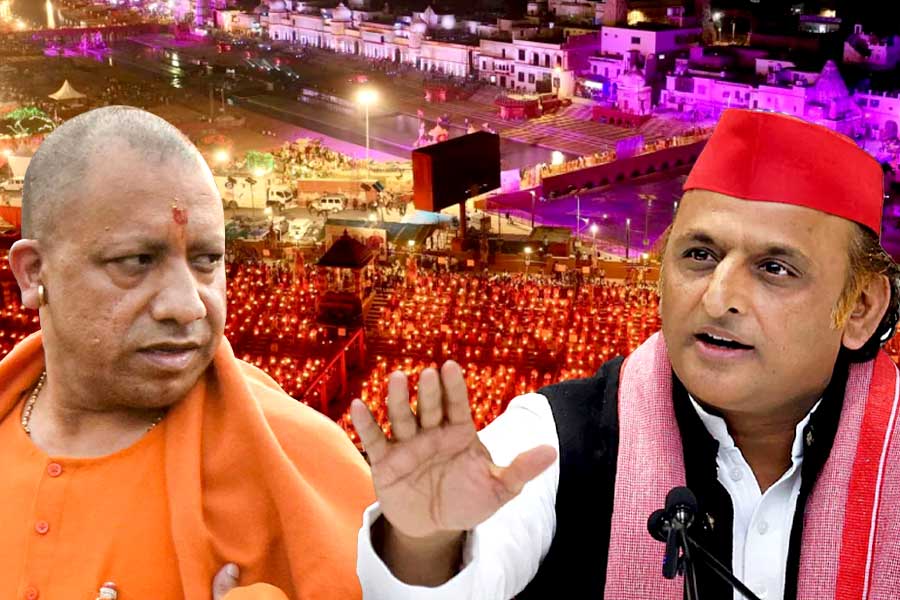
New Delhi, 20th October: Every Diwali, crores of tiny diyas illuminate Bharat’s cities and villages, linking homes, hearts, and heritage in a golden aura of unity. But this year, controversy flickered amid the glow. As Hindus prepared to celebrate their most sacred festival, Samajwadi Party chief Akhilesh Yadav dismissed the lighting of diyas as a “waste of money,” suggesting that people should instead follow Christian Christmas-style decorations with electric lights. His remark, seemingly trivial, unleashed a wave of anger—because it struck at the heart of Hindu tradition, faith, and dignity.
It echoed a familiar strain of anti-Hindu rhetoric often voiced by opposition figures who mistake devotion for excess and identity for politics. But as criticism grew, Prime Minister Narendra Modi and Uttar Pradesh Chief Minister Yogi Adityanath didn’t respond with outrage—they responded with symbolism. They reaffirmed the value of diyas not only as spiritual beacons but as instruments of social uplift, environmental responsibility, and economic empowerment.
Faith Beyond Politics: The Soul of the Diya

For Hindus, the diya is not merely a lamp; it is a living metaphor—the victory of light over darkness, knowledge over ignorance, and divinity over despair. Its flame represents Atma Jyoti, the light of the soul and of consciousness itself. The lighting of diyas at temples, homes, and especially in Ayodhya, where Lord Ram is believed to have returned after 14 years of exile, stands as both spiritual renewal and civilizational pride.
When Akhilesh Yadav compared the ritual of diya lighting to “electric lights of Christmas,” he missed the point that Diwali lights are not about spectacle but sanctity. Each diya, hand-moulded in earth, connects worshippers to the soil of Bharat and to those who shape it—the potter families whose craftsmanship sustains one of the oldest eco-friendly industries in the world.
#WATCH | Lucknow | SP Chief Akhilesh Yadav says, "… I dont want to give a suggestion. But I will give one suggestion on the name of Lord Ram. In the entire world, all the cities get illuminated during Christmas. And that goes on for months. We should learn from them. Why do we… pic.twitter.com/HAL47migCC
— ANI (@ANI) October 18, 2025
Yogi’s Deepotsav: Where Faith Fuels Livelihoods
In Ayodhya, what began as a festival now embodies Bharat’s cultural resurgence. The Deepotsav, launched in 2017 by CM Yogi Adityanath, has become an emblem of faith and inclusion. This year, with nearly 2.9 million diyas set to illuminate the ghats of the Sarayu River, the event is more than a record—it is a renaissance. Each diya is crafted by skilled hands from local potters, mainly from the Kumhar community, who once struggled to survive on declining demand.
As media reports reveal, these artisans’ incomes have soared from merely ₹20,000 before 2017 to several lakhs during Diwali months. Families in rural Uttar Pradesh, Madhya Pradesh, and Bihar testify how Diwali orders have revived a dying craft. Far from being “wasteful,” diyas have become symbols of sustainable enterprise, where tradition fuels economic growth and rural dignity.
एक से बढ़कर एक नेता देखे पर इन के जैसा कोई नहीं जो खुद ही अपना स्टैंड क्लियर नहीं कर पाए.
आखिर PDA के नाम पर लोगों को गुमराह कर झूठी तसल्ली दे अपना राजनीतिक कैरियर बनाने में माहिर नेता जी ब्राह्मणों,क्षत्रियों और सर्वणों का विरोध करते करते हिन्दुओं का अभी अपमान करने लगे।
एक तरफ… pic.twitter.com/tARAoamzWs— Himanshu Dwivedi(Legal Journalist)🇮🇳 (@Dwivedihd92) October 19, 2025
PM Modi’s appeal to “embrace Vocal for Local” ahead of Diwali reinforced this transformation. It encouraged an economic model rooted in self-reliance, revitalizing small-scale industries and cottage markets. In every glowing earthen lamp lies not extravagance—but employment.
A Green Glow: The Eco-Friendly Spirit of Diwali

Ironically, those who deride Diwali as environmentally damaging ignore that diyas are among the most sustainable lighting options ever conceived. Made from terracotta clay, they are biodegradable, consume minimal oil, and leave zero plastic waste. Unlike electric lights that raise carbon footprints, emit heat, and require industrial energy, a diya symbolically and literally embodies renewable illumination.
In contrast, Christmas—Akhilesh’s preferred model—often involves felling of trees or the use of polyvinyl plastic trees coated with metal compounds. Artificial lighting and decorations demand high electricity consumption, while deforestation during the holiday season harms ecosystems. The humble mitti ka diya thus stands tall as an emblem of ecological balance and spiritual restraint—a perfect alignment of dharma and sustainability.
Modi’s Message: Local Pride, Global Light

Prime Minister Modi’s emphasis on celebrating festivals through indigenous products is not a nationalist slogan but a developmental vision. By urging citizens to buy local clay lamps and handicrafts, he channels consumer power into the grassroots sector. For potters and small sellers, Diwali is the financial peak that sustains them year-round. In Ayodhya, Varanasi, and Prayagraj, large-scale diya purchases by local administrations have breathed life into traditional craftsmanship that once faced extinction under imported competition.
When CM Yogi lights the first lamp at Ram Ki Paidi during Deepotsav, it is not a political gesture—it is a reaffirmation of Sanatan pride harnessed for modern prosperity. The radiance of millions of diyas sends a quiet yet powerful message that faith, when fused with economic empowerment, can become the foundation of inclusive growth.
When Rhetoric Dims and Light Shines

Akhilesh Yadav’s comments reflect a deeper ideological malaise—a discomfort with expressions of Hindu identity in public life. To call a diya wasteful is to misunderstand Bharat itself, a land where spirituality has always intertwined with sustainability. It reveals a political blindness that cannot see how religion, livelihood, and ecology coexist in harmony within the Hindu way of life.
Yogi Adityanath and PM Modi have, in contrast, turned faith into function—transforming a festival into a development engine, linking ancient traditions to modern economics. Diwali’s radiance is no longer confined to prayer runs; it illuminates artisan workshops, women’s cooperatives, and terracotta kilns across Bharat.
The Light That Rewrites the Narrative
As the diyas of Ayodhya shimmer across the Sarayu, they tell a story far more profound than politics: a story of resilience, renewal, and reverence. Despite cynicism and mockery, these earthen flames have outshone the rhetoric of those who dismiss Bharat’s roots.
While opposition leaders deride the glow of tradition, Modi and Yogi have ensured its brilliance lights up not just temples but the rural economy, not just hearts but homes. The diya, after all, is more than clay and cotton—it is the conscience of a civilization. And in this Deepotsav of Bharat’s soul, no rhetoric, however dark, can extinguish its flame.
