

Paromita Das
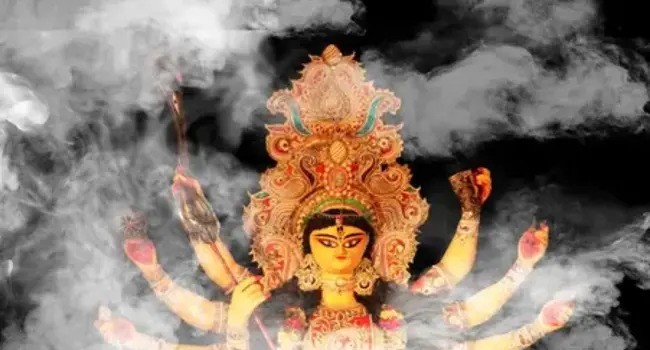
New Delhi, 16th October: In West Bengal, where the air once echoed with chants of “Jai Maa Durga” and the goddess’s image towers over every street during the grand Durga Puja, a disturbing contradiction keeps surfacing. The state that venerates the goddess of power, courage, and victory — Maa Durga — has become synonymous with stories of women’s suffering, silence, and shame. The recent Durgapur gang rape of an MBBS student from Odisha has once again torn open this moral wound, revealing how far Bengal has drifted from the ideals its own culture celebrates.
What makes this tragedy more piercing is not only the brutality of the act but the response of those in power. Chief Minister Mamata Banerjee’s comment that “girls should not go out at night” was more than an insensitive remark; it was an indictment of the very system she governs. Instead of demanding accountability from law enforcement or promising justice to the survivor, her words shifted the burden of safety onto women themselves — an echo of patriarchal conditioning wrapped in political carelessness.
The Sacred Feminine and the Real Woman
It’s hard to ignore the irony. In Bengal, women are deified as goddesses during Durga Puja, their power glorified in myth and music. Yet, when a real woman becomes a victim of violence, she’s met not with reverence but with scrutiny. This cultural duality — worshipping feminine power while suppressing female autonomy — has created a dangerous gap between symbolism and reality.
Every year, lakhs of devotees gather to celebrate the triumph of good over evil. But what of the evils that roam the streets after the festivals end? The monsters that Maa Durga slayed have been replaced by men emboldened by impunity, and the silence of those in authority only strengthens them.
From Devotion to Denial: A Culture of Victim-Blaming
The Chief Minister’s remarks reflect a deep-rooted mindset that plagues not just Bengal, but much of Bharat — the belief that women are responsible for avoiding violence, not men for committing it. This kind of victim-blaming is both insidious and regressive. It’s a narrative that tells women to modify their behavior, restrict their freedom, and carry the burden of their own safety, even in public spaces that should be protected by the state.
When a female leader — in a land that reveres the goddess as the ultimate protector — suggests that women should stay indoors at night, the hypocrisy is jarring. It reduces centuries of feminist spiritual tradition to mere performance.
Zero Tolerance or Zero Accountability?
Banerjee has repeatedly claimed that West Bengal follows a “zero-tolerance policy” toward crimes against women. Yet, the record says otherwise. From the horrific 2023 R.G. Kar Medical College rape and murder in Kolkata to the Durgapur case, the pattern remains unchanged: outrage, denial, and misplaced priorities. The government’s earlier suggestion that women should avoid night shifts — later withdrawn under public pressure — further exposed how quick authorities are to regulate women rather than rein in men.
The arrests of three accused in the Durgapur case offer some progress, but justice cannot thrive on reactionary arrests alone. Without systemic reform, Bengal’s claim to being a “safe state for women” is merely political theater.
The Political Fallout and Public Outcry
The backlash against Banerjee’s comments has been swift. Opposition leaders, particularly from the BJP, accused her of moral failure and administrative negligence. “Instead of ensuring justice, she blames the victim,” said Samik Bhattacharya, reflecting the public anger that erupted on the streets. Hashtags like #BlameTheRapist and #JusticeForDurgapurVictim trended across social media, encapsulating the sentiment of a generation tired of hearing the same excuses.
Even Odisha’s Chief Minister, Mohan Charan Majhi, stepped in, urging prompt justice for the young survivor. The political pressure, both internal and interstate, has placed the Bengal government under an unwelcome spotlight — one that reveals cracks in its moral and administrative foundation.
Distortion, Deflection, and Damage Control
By Sunday evening, Banerjee accused the media of twisting her words. She claimed her statements were “taken out of context.” Yet, as any leader should know, words carry power, especially in moments of public grief. When spoken without empathy, they wound deeper than silence.
In a state already grappling with rising crime against women, such statements do not merely “spark debate” — they reinforce dangerous attitudes. The moment leaders begin to question why a woman was out instead of why men attacked her, society moves backward.
Why Bengal Needs a “Yogi Model”
The question that now haunts Bengal’s citizens is simple: Why can’t West Bengal adopt a law-and-order model like Uttar Pradesh under Yogi Adityanath?
While the two states differ politically and culturally, the comparison stems from one visible truth — deterrence works. Under the “Yogi model,” strict law enforcement, fast-track courts, and public accountability mechanisms have significantly reduced crimes against women in several regions.
In Bengal, by contrast, policing is often politicized, investigations are slow, and justice is diluted by rhetoric. What Bengal lacks is not divine protection, but decisive governance — one that instills fear in offenders, not in women.
The True Test of Leadership
Real leadership lies not in defending a statement but in defending the vulnerable. Banerjee’s political stature as Bharat’s only female Chief Minister carries enormous symbolic weight — yet symbolism means little when it fails to translate into protection.
The Chief Minister could have turned this tragedy into a moment of introspection and reform — an opportunity to strengthen policing, invest in surveillance, and enforce stricter punishments for sexual crimes. Instead, the narrative was lost in justification.
In the Land of Durga, Women Deserve More Than Worship
West Bengal’s streets, lit every year by the glow of Durga Puja, tell stories of faith and femininity. But when those same streets become scenes of fear, that faith begins to feel hollow. The true measure of a society is not how it worships its goddesses but how it protects its women.
If Bengal truly wishes to honor Maa Durga, it must channel her strength — not just in rituals but in governance. It’s time to move beyond symbolic devotion and embrace real justice. Because in the land of the goddess, no woman should ever have to pray for safety before stepping out at night.
