

Paromita Das
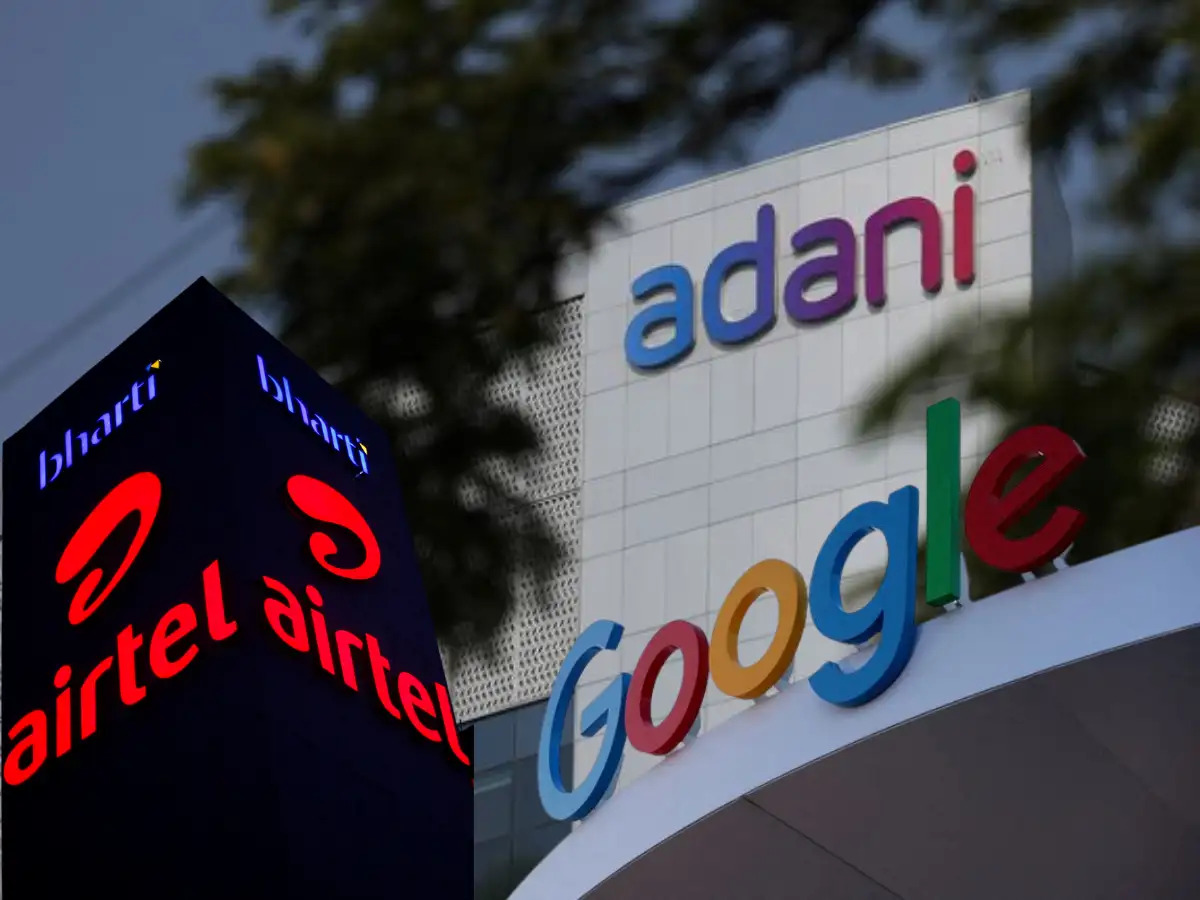
New Delhi, 16th October: In a world obsessed with summit selfies and headline theatrics, one quiet transformation is unfolding on the ground in Bharat — a shift so structural that glossy optics seldom capture it. While the world watched President Trump bask on the Sharm el-Sheikh stage with Pakistan’s prime minister, Bharat was making news of a different order: Google’s landmark $15 billion pledge for an AI data centre in Visakhapatnam, a collaboration with the Adani Group and Airtel. That single announcement — the biggest bet by Google outside the United States — underlines a blunt truth: global pageantry may momentarily shape narratives, but long-term geoeconomic traction is built through capital, capacity and policy. And in that contest, Bharat is not merely participating — it is reinventing the playing field.
The optics-versus-substance divide

Summits are theatre; investments are strategy. The Sharm el-Sheikh gathering offered dramatic visuals: leaders clustered behind an American president who framed the event as his personal triumph. For Bharat, however, that spectacle was not a necessary stage. Prime Minister Narendra Modi’s decision to send a minister rather than attend personally signalled a refusal to trade national agency for a cameo in another leader’s show. Diplomacy is as much about what you decline as what you embrace. The distinction matters because real influence flows from durable economic ties, not applause lines.
Google’s Visakhapatnam deal is emblematic. It’s not a press photo; it is infrastructure that anchors cloud, AI and semiconductor activity on Bharatiya soil. Microsoft’s $3.7 billion commitment to Telangana and Amazon’s plans to invest $12.7 billion in cloud infrastructure by 2030 form a pattern: global tech giants see Bharat as a market worth betting real resources on — talent, users, regulatory clarity and scale.
Great to speak with India PM @narendramodi @OfficialINDIAai to share our plans for the first-ever Google AI hub in Visakhapatnam, a landmark development.
This hub combines gigawatt-scale compute capacity, a new international subsea gateway, and large-scale energy infrastructure.…
— Sundar Pichai (@sundarpichai) October 14, 2025
These investments create jobs, deepen supply chains and, crucially, make Bharat a node in the global digital economy rather than a passive consumer.
A monumental day for India!
Adani is proud to partner with @Google to build India’s largest AI data centre campus – in Visakhapatnam – engineered specifically for the demands of artificial intelligence.This facility will house the TPU and GPU-based compute power required for… pic.twitter.com/leypKgPTAb
— Gautam Adani (@gautam_adani) October 14, 2025
Pakistan’s fleeting applause and fragile promises

Contrast that with Pakistan’s spectacle at Sharm. Public displays of gratitude and announcements about oil or rare-earth promises may make headlines, but they mask deep structural problems. Economically, Pakistan remains a marginal recipient of US private capital; its historical relationship with Washington has been transactional — security-focused, conditional and episodic. The kind of long-term commercial anchors Bharat is attracting simply do not exist in Pakistan’s portfolio. Multinationals are leaving or scaling back operations there amid political instability and business risk. Paper agreements or ceremonial endorsements do not translate easily into factories, data centres or enduring supply chains — especially when the resource claims in question are contested within Pakistan itself.
Strategic de-hyphenation: Bharat’s quiet confidence
Bharatiya diplomacy under Modi — and the professional diplomatic voice of officials like S. Jaishankar — has embraced “de-hyphenation”: refusing to let Bharat’s policy be defined by its neighbour. This is not detachment for its own sake; it is strategic focus. Bharat’s growth story and its deepening economic ties with the United States and other partners make it less and less sensible to equate New Delhi’s global role with Islamabad’s. The numbers speak plainly: bilateral trade between the US and Bharat was around $212.3 billion in 2024, while US–Pakistan trade hovered near $7.2 billion. These are not marginal differentials — they are foundational.
EAM Dr S Jaishankar in India Pakistan hyphenation: "We have multiple neighbours, some are clearly better than others. Hyphenation normally happens with a neighbour who is not so nice" pic.twitter.com/O5Yuf7TcrF
— Sidhant Sibal (@sidhant) October 6, 2025
The consequence is practical: Bharat sets its agenda by maximizing its comparative advantages — a vast market, a tech-savvy workforce, improving ease-of-doing-business metrics and a stable policy environment that welcomes investment. That approach yields compounding rewards. Where Pakistan seeks validation through optics, Bharat secures leverage through economics and capability.
Why Bharat remains resilient to global theatrics

There are three operational reasons Bharat’s global image-building exercises do not fundamentally destabilize its trajectory. First, investments like Google’s are long-horizon commitments that involve sunk costs, local partnerships and regulatory depth — they cannot be undone by a day’s summit. Second, Bharat’s strategic partnerships are multi-threaded: trade, defence, education and technology interweave to create resilience. Third, domestic reforms and targeted state-level incentives have steadily improved Bharat’s attractiveness for capital. The result is a momentum that is empirically harder to reverse than any diplomatic posture broadcast from abroad.
Substance will always outlast soundbites

Spectacles satisfy short memories; strategy secures long-term gains. Bharat’s refusal to be drawn into a photo-op was not aloofness but calculation. The world will always produce leaders who chase headlines; Bharat’s bet has been on institutions, incentives and industrial heft. Those are the levers that translate international goodwill into domestic prosperity. If Trump’s stage can hand out praise, Bharat’s policy framework can secure factories — and factories employ people, not optics.
Building permanence in an age of performance
Global summits will continue to dazzle and distract. But Bharat’s resilience rests on the hard infrastructure of investment, regulatory clarity and talent development. When Google digs into Andhra Pradesh, or Microsoft and Amazon double down in Bharatiya states, they are etching a new economic geography — one that is resilient to passing narratives. Bharat’s global picture is changing, yes — but the change that matters is not the one that fits on a podium. It is the quiet accumulation of capacity that ensures the country’s future will be shaped more by code, capital and commerce than by camera angles. In that sense, Bharat’s trajectory is impervious to the spectacle; it is being rewritten on the ground.
