
UNICEF says children facing heightened risk from disease after earthquake in Afghanistan

By Anjali Sharma
UNITED NATIONS- UNICEF on Wednesday reported that over 212,000 Afghan children are at risk of acute watery diarrhoea and other deadly waterborne diseases,
UN agency said that the severe risk of disease outbreak comes after a 6.3-magnitude earthquake hit a remote eastern area of Afghanistan on 31 August near the Pakistan border, destroyed water, sanitation and hygiene infrastructure.
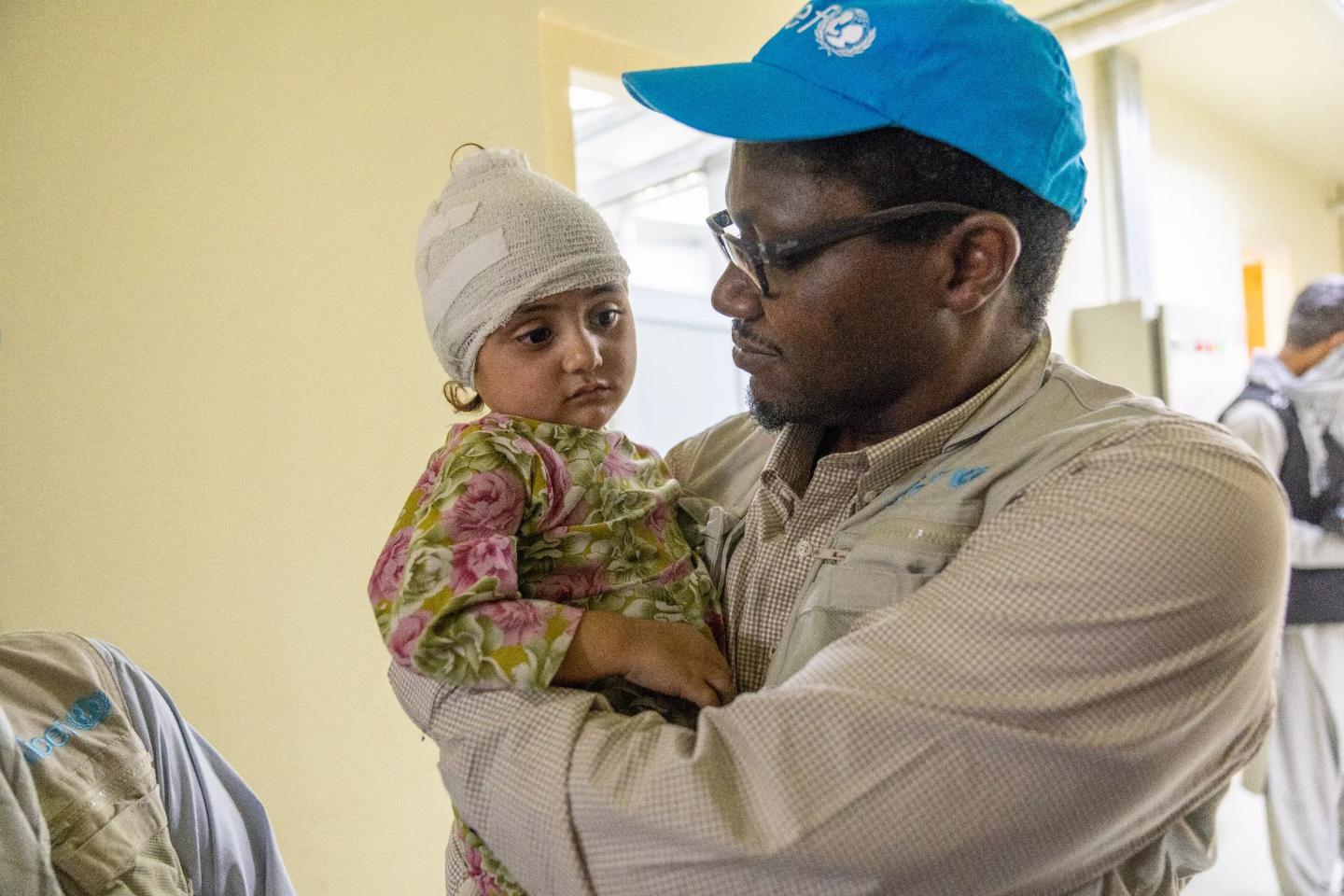
UNICEF’s representative in Afghanistan Dr. Tajudeen Oyewale warned that “The earthquake has flattened homes and taken too many lives, and now threatens to take even more through disease”.
He said that child survivors of the earthquake are living in crowded displacement camps or makeshift shelters with no access to toilets or safe water.
“This is a perfect storm for a health catastrophe,” he added.
WHO said that acute watery diarrhoea is one of the three types of the debilitating disease. It can last several hours or days.
The disease is the third leading cause of death in children 1 to 59 months, and kills over 400,000 children under five every year.
WHO said that to a significant extent, clinical diarrhoea can be prevented through safe drinking water and adequate sanitation and hygiene basic necessities that children in Afghanistan currently lack.
UNICEF reported that in Afghanistan, 132 water sources have been destroyed because of the earthquake, leaving families without access to safe water or hand washing facilities.
It noted that 4 out of 5 communities are now practicing open defecation, since most latrines were shattered during the earthquake.
Many survivors also lack access to essential hygiene items like soap, making conditions ripe for disease outbreak.
UNICEF said that acute watery diarrhoea is prevalent in the region and communities are at risk of other waterborne diseases as well. Health centres are also reporting an alarming increase in various kinds of skin rashes, dehydration.
UNICEF provides WASH (water, sanitation and hygiene) services to over 60 countries, helping prevent infections and disease in homes, schools, healthcare facilities and public spaces.
The agency has installed temporary sanitation facilities in the quake affected areas, distributed hygiene kits and deployed temporary emergency water trucking while simultaneously repairing water supply systems.
UNICEF said only half of $21.6 million appeal for its emergency response is secured. The agency is calling for donors to urgently step up funding.
WFP is also facing a funding shortfall of $622 million over the next six months.
The agency’s operation in Afghanistan is one of the six at risk, alongside those in Democratic Republic of the Congo, Haiti, Somalia, South Sudan, and Sudan.
WFP assistance in the country now reaches less than 10% of the millions of food insecure Afghans in need.
