
Know Your MP : Rajiv Ranjan Singh
Bihar’s Strategist Turned Union Minister

Paromita Das
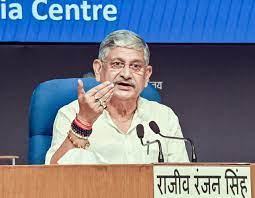
Rajiv Ranjan Singh, better known as Lalan Singh, commands considerable respect in Bihar’s political circles as a strategist turned representative. Serving as MP for the Munger constituency, his role includes facilitating Central funding for local development via schemes like MPLADS (Member of Parliament Local Area Development Scheme). MPLADS is meant to allow MPs to recommend work in their areas: of infrastructure, social welfare, potable water, sanitation, etc. But how has Singh fared in using these funds, and what has actually taken shape in his area?
On the Ground: Where Development Really Happened
According to a report covering the 15th Lok Sabha term (2009-2013), Lalan Singh had been allocated roughly ₹12.06 crore under MPLADS. In that period, he unambiguously spent about ₹4.57 crore, which converts into ~38.16% utilization of the total funds available. This placed him among the MPs with second lowest utilisation rates in Bharat during that period.
More recent, detailed figures for his latest terms are not clearly documented in openly accessible government reports (at least none that surfaced during this search). Therefore, comparisons of his current performance are not reliably quantifiable by public sources yet.
Grassroots Development: Key Areas & Implementation
Though the past MPLADS utilization by Lalan Singh was comparatively low, there is historical evidence that he has focused on development consistent with Munger’s needs, particularly in the following areas:
- Flood management and riverside embankments: Munger is prone to flooding (being near rivers), so embankment work and drainage schemes have been among the development priorities to protect agriculture and homes during monsoon.
- Irrigation and agriculture: Given the rural character of much of his constituency, efforts to improve irrigation – including canal repairs or improved water bodies – have been requested and occasionally funded.
- Infrastructure & basic amenities: Some works under MPLADS and other central/local schemes have included construction of roads, especially in smaller villages, public buildings (such as community halls or health sub-centres), sanitation projects, and water supply lines.
However, based on the available data from 2009-13, many of these works were under-funded or delayed, suggesting issues in implementation rather than lack of need. Also, low fund utilisation implies that many approved works did not reach migration from plan to execution in sufficient measure.
Bridging the Gap: Challenges in Execution and Transparency
- Utilisation gap: Spending less than 40% of allocated MPLADS funds in that 2009-2013 window points to under-utilisation. It suggests delays in identifying projects, perhaps bureaucratic inertia, or challenges in overseeing execution.
- Lack of recent transparency: More recent data on how much allocated vs how much spent is either not published in easy-to-access form, or fragmented. Constituents and observers would benefit from timely reporting and updated dashboards on MPLADS usage for 2014-19, 2019-24, and current period.
- Completion & accountability: Even when works are sanctioned, delays or partial completion are not uncommon in many constituencies. Monitoring the actual end-to-end lifecycle of projects (recommendation → sanction → execution → post-completion maintenance) is crucial.
Room for Improvement: Beyond the Numbers
Lalan Singh’s low percentage utilisation in one term is concerning, especially given Munger’s vulnerability to natural disasters and its basic infrastructure deficits. But it’s important to recognize that MPLADS alone is only one piece of the development puzzle. Poor utilisation doesn’t always reflect lack of will—it may also indicate systemic constraints: administrative delays, difficulties in contractor performance, geography and logistic hurdles, or even deficiencies in local authority execution.
What stands out, though, is that representatives like Singh who wish to build lasting trust must address these gaps proactively: by better project planning, ensuring community participation in selecting needs, and by maintaining transparency so voters see what funds are achieving. If Singh improves utilisation and delivery, especially in flood-proofing, water supply, roads and health infrastructure, his reputation as a service-oriented leader will be strengthened.
Promises vs. Performance: Translating Funds into Results
Rajiv Ranjan “Lalan” Singh’s profile in terms of MPLADS usage paints a mixed picture. On one hand, his strategic political ascent shows effectiveness in negotiation and governance; on the other, his track record under MPLADS reveals room for improvement, particularly in translating allocations into completed grassroots work.
To truly serve his constituency, Munger needs more than promises—it needs higher utilization of MPLADS funds, improved implementation, and prioritization of works that address recurring district problems like floods, lack of sanitation, water supply and rural connectivity. As Singh takes on roles with broader responsibilities, the real test will be whether he marshals central resources with efficiency, transparency, and justice for his grassroots.
