
Hariom Valmiki Lynching: Rumors, Mob Justice, and Political Spin
“A tragic case of mistaken identity in Raebareli lays bare how rumours, mob hysteria, and political narratives collide — and how victims become symbols long before justice is served.”

Paromita Das
New Delhi, 9th October: In a small village in Rae Bareli district, Uttar Pradesh, a simple act—losing one’s way—turned into a fatal tragedy for Hariom Valmiki, a mentally unstable man. On October 1st, caught amid swirling rumors about “drone thief gangs,” Hariom became a victim not only of violent mob hysteria but of political opportunism. While the facts tell a story of mistaken suspicion and collective panic, major political forces quickly framed the incident as a caste-based murder, forcing a divisive narrative onto a complex reality. This article peels back the layers of fear, misinformation, and political rhetoric to reveal the truth behind Hariom’s death and the broader lessons it holds for Bharatiya society.
The Deadly Power of Rumors
The night that Hariom Valmiki lost his life was marked by a terrifying social panic in Ishwardadpur village. Rumors had spread that gangs were using drones to rob homes—a chilling prospect that sowed deep mistrust and fear among villagers. When Hariom, disoriented and mentally vulnerable, was spotted by locals, suspicion quickly escalated. Despite an initial police check that found no wrongdoing, rumors took on a life of their own. Villagers, convinced they were confronting a “drone thief,” unleashed hours of brutal violence against him, leading to his death in a horrific display of mob justice.
This tragedy underscores how misinformation, especially when amplified in tight-knit rural settings, can override reason and law. It reflects a growing crisis where a lack of awareness and social media hysteria create fertile ground for violence, undermining law enforcement and community cohesion.
The Anatomy of a Lynching: Rumour, Mob, and Privilege
Across Bharatiya heartlands, rumours of “drone thieves” have become a trope — stories circulate that criminals use drones to scope out houses before night raids. These rumours, unsubstantiated and sensational, prey on insecurity and gullibility. Hariom’s story reflects that poisoning: a man becomes suspect not because of evidence, but because the narrative already exists.
In Raebareli, when he failed to respond coherently (him being mentally unstable), the mob treated his silence as guilt. The violence lasted for hours — not minutes — indicating a collective decision to punish rather than inquire. And because the mob outran inquiry, facts and motive became secondary.
Politics Enters the Scene: Caste Angle and Counterclaims
The political reaction was swift. From Congress leaders to social media handles, the narrative shifted immediately to caste violence.
A young Dalit man, Hari Om, was lynched in Rae Bareli; beaten, tied, and tortured to death.
His last words were “Rahul Gandhi ji, help me!”
His killers mocked him saying, “We are Baba’s men.”That one line says it all.
Under Adityanath, Uttar Pradesh isn’t a state, it’s a… pic.twitter.com/FkaGp5zbb1— Karnataka Congress (@INCKarnataka) October 5, 2025
I strongly condemn the brutal assault and murder of Dalit youth Hariom in Rae Bareli citing that they are supporters of the UP CM and, the government’s inaction in this matter as well as all similar matters.
The number of such cases is rising steeply. Backwards classes,… pic.twitter.com/QLBT7bFqcU
— Dr Syed Naseer Hussain, M P (@NasirHussainINC) October 6, 2025
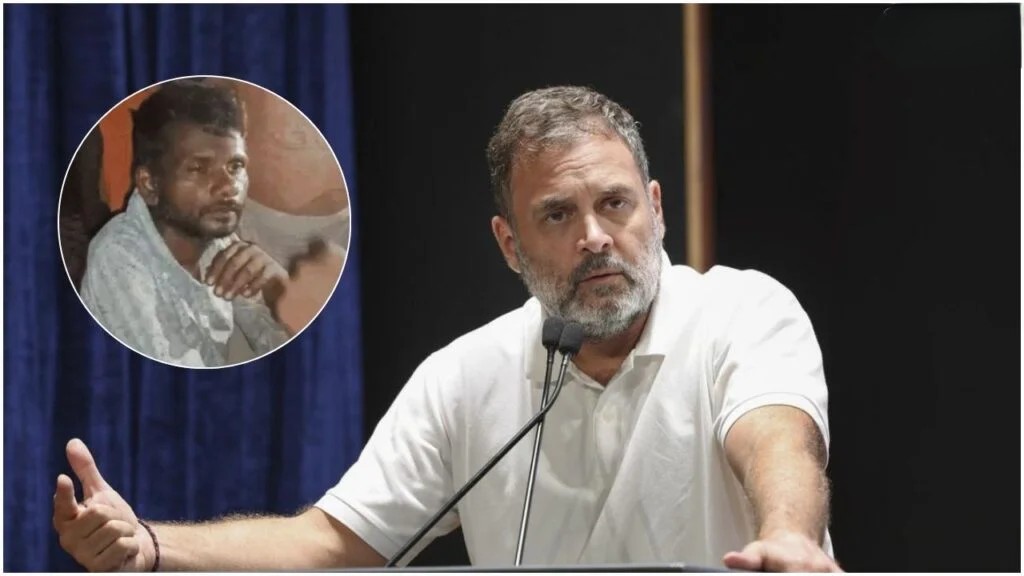
Hariom, belonging to the Dalit community, became a symbol of systemic oppression. Congress accused the BJP and UP’s state machinery of turning “Dalit lives cheap.” Rahul Gandhi declared his murder as not just a crime, but an affront to the Constitution, equality, and humanity itself.
रायबरेली में दलित युवक हरिओम वाल्मीकि की निर्मम हत्या सिर्फ़ एक इंसान की नहीं – इंसानियत, संविधान और न्याय की हत्या है।
आज भारत में दलित, आदिवासी, मुसलमान, पिछड़े और ग़रीब – हर उस व्यक्ति को निशाना बनाया जा रहा है, जिसकी आवाज़ कमजोर है, जिसकी हिस्सेदारी छीनी जा रही है, और जिसकी… pic.twitter.com/V0KtN4CHAQ
— Rahul Gandhi (@RahulGandhi) October 7, 2025
The counterpoint was equally strong. Raebareli police dismissed any caste motive, claiming the mob was unaware of his caste and that people from multiple communities were involved. The inquiry registered a case under culpable homicide, arrested five individuals, and suspended several local police personnel pending further investigation.
थाना ऊंचाहार पुलिस टीम द्वारा युवक को चोर सझकर तथा पीटकर उसकी हत्या करने वाले 05 अभियुक्तों को गिरफ्तार कर न्यायिक अभिरक्षा में भेजा गया। जिसके संबंध में क्षेत्राधिकारी डलमऊ श्री गिरिजा शंकर त्रिपाठी का वक्तव्य-#UPPolice #RaebareliPolice@Igrangelucknow@Uppolice pic.twitter.com/ws9PLuoorl
— Raebareli Police (@raebarelipolice) October 4, 2025
Whether political grandstanding or genuine outrage, the swift politicization of the incident deepened public fissures. Some see the Congress response as opportunism; others see silence from many quarters as complicity.
#Update थाना ऊंचाहार क्षेत्र अतंर्गत कुछ लोगों द्वारा एक युवक को चोर समझ कर पीटकर उसकी हत्या किए जाने के संबंध में अपर पुलिस अधीक्षक रायबरेली श्री संजीव कुमार सिन्हा का वक्तव्य- #UPPolice #Raebarelipolice@Igrangelucknow @Uppolice pic.twitter.com/i4tWDc2YU4
— Raebareli Police (@raebarelipolice) October 6, 2025
When Narratives Collide: Victim, Symbol, and Inquiry
Hariom’s murder reveals a tragic intersection: he was victim first, then symbol. For political actors, symbols matter. But the danger is that symbol-making can overshadow the victim’s dignity and the pursuit of truth.
Did caste animus play any part? Perhaps. But what is clear is that mob logic precedes inquiry, and political logic often supersedes justice. The fact that the police assert no caste motive doesn’t discount perceptions rooted in historical trauma. Narratives matter as much as facts when public trust is low.
The Danger of Political Rush and Mob Validation
In tragedies like this, there is a temptation — from every side — to outrun the facts. Politics often rewards the quickest statement rather than the most cautious inquiry. But when a party claims ownership over a case before investigations conclude, it distorts justice into narrative warfare. Victims become avatars in ideological battles, and accountability becomes secondary to image.
Meanwhile, a state’s failure to prevent rumours from spiralling into violence is a failure of governance. When mobs fear and hire themselves out to myth, social contracts erode. The first duty of the state is to restrain collective violence — not to amplify its consequences.
Beyond Blame — Toward Truth and Reform
The lynching of Hariom Valmiki is not just another case of “mob justice.” It is a mirror held up to society — of how fear, rumours, and political opportunism converge against the vulnerable.
Rahul Gandhi’s condemnation or Congress’s caste framing, the police’s counterclaims — all are part of the struggle for public meaning. But meaning without justice is hollow, and politics without humility is dangerous.
Let us demand more than statements. Let us demand impartial investigation, accountability, and institutional reform to prevent myth-fuelled violence. Only then can the memory of Hariom Valmiki serve not as a political wedge, but as a catalyst for a safer, more just society.
