
Pakistan’s Hidden Truth: The Army’s Open Role in Governance
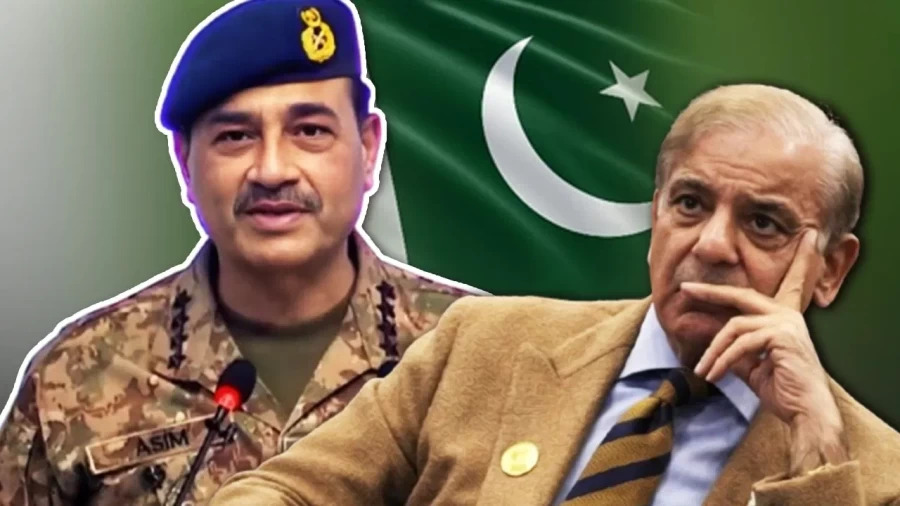
“Prime Minister Shehbaz Sharif’s Washington visit alongside Army Chief Asim Munir signals a new era of shared authority, challenging Pakistan’s democratic norms and governance structures.”

Paromita Das
New Delhi, 8th October: Pakistan’s political landscape has long been shaped by the persistent interplay between civilian administrations and an influential military. The recent visit of Prime Minister Shehbaz Sharif to Washington, accompanied openly by Army Chief Field Marshal Asim Munir, marks a pivotal moment in this dynamic. This joint presence on the global stage signals an important evolution: the military is no longer simply influencing civilian governance from the shadows but sharing the spotlight openly, reshaping Pakistan’s power balance. This overt power-sharing challenges conventional democratic norms and reflects a deeper transformation in how authority is exercised within the country.
A Diplomatic Gesture Signaling Dual Authority

Diplomatic engagements are carefully crafted for symbolic significance, and the Washington visit was no exception. The co-presence of Munir and Sharif, both acknowledged by U.S. President Donald Trump, projected a partnered leadership model rather than a single civilian authority. While Sharif used the occasion to promote strategic sectors like agriculture and energy to potential American investors, Munir emerged as a visible actor in diplomacy—a role traditionally reserved for civilian officials. This shift appears less like a new cooperative chapter and more like the military reasserting its control, making clear to foreign governments and audiences that real authority in Pakistan is shared, if not dominated, by the military.
This evolution is rooted in Pakistan’s political history, where military influence over civilian governments has been consistent, though varying in visibility. Past military rulers such as General Musharraf operated with overt control but maintained some separation in public appearances. Munir’s visible diplomatic role alongside the prime minister signals a newer approach: legitimizing the military’s equal claim to leadership and signaling to both domestic and international audiences that the military remains a co-equal power center.
Impact on Governance and Civilian Autonomy

The implications for governance are significant. Prime Minister Sharif’s freedom to craft policies independently is constrained as military considerations gain precedence before diplomatic or domestic decisions. Foreign policymakers engaging with Pakistan must navigate an additional layer of military oversight, complicating diplomacy and blurring lines of accountability. This dual command structure reduces civilian authority and challenges the democratic principle of civilian control over the military.
For Pakistan’s citizens, the overt partnership undermines confidence in electoral politics. It fosters skepticism about the effectiveness and legitimacy of civilian governments, as the military’s entrenched role suggests real power extends beyond the ballot box. Political parties understand that electoral victories alone may not translate into governing authority, discouraging robust political competition and weakening democratic processes over time.
The Delicate Balance of Joint Power

This power-sharing arrangement contains inherent tensions. For Sharif, there is a risk of becoming symbolic rather than substantive in his role, his decisions guided or limited by military approval. For Munir and the military, greater public and international visibility bring increased scrutiny and accountability. Any missteps or crises could expose vulnerabilities in this delicate setup, threatening both civilian and military legitimacy.
However, for the military, this arrangement offers advantages: it legitimizes their role in governance, deflects criticism of interference, and secures their position in Pakistan’s political architecture. By showcasing itself as a stabilizing force and a partner in diplomacy, the military strengthens its grip while presenting an image of cooperative governance, complicating external calls for democratic reform.
A Challenge to Democratic Norms

This visible duality of power poses a serious challenge to Pakistan’s democracy. Democratic governance rests on civilian supremacy and clear separation from military control, both lacking in the current scenario. The normalization of military presence in civilian affairs—including diplomacy and economic policymaking—risks institutionalizing authoritarian oversight under the guise of partnership.
For Pakistan to thrive democratically, the military’s dominance must be reevaluated and balanced with strengthened civilian institutions. Without such recalibration, democratic governance risks becoming a facade, with elections offering the illusion rather than the reality of civilian control. This undermines public trust and weakens mechanisms for accountability and transparency essential to stable democracy.
Reimagining Civil-Military Relations
The Washington visit of Prime Minister Shehbaz Sharif with Army Chief Asim Munir symbolizes a new phase in Pakistan’s civil-military relations—one of shared, overt authority rather than concealed dominance. While this duality may provide short-term political stability, it fundamentally alters democratic governance, subordinating civilian autonomy to military oversight.
To build a more resilient democratic framework, Pakistan must redefine the boundaries between civilian and military power. Restoring civilian control, ensuring institutional accountability, and clarifying diplomatic representation are essential to overcoming entrenched military influence. Until then, Pakistan will continue to face the challenge of balancing military strength with democratic ideals, a balancing act critical to its future stability and international standing.
