
From MoUs to Meaningful Investments: Needonomics Lessons for Haryana CM’s Japan Outreach


Prof. Madan Mohan Goel, Proponent Needonomics & Former Vice-Chancellor (Thrice)
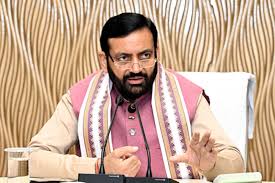
The ongoing visit of the Chief Minister of Haryana, Shri Nayab Singh Saini, to Japan marks an ambitious chapter in the state’s economic diplomacy. The mission, aimed at attracting foreign investment and strengthening bilateral ties, has generated optimism across policy and business circles. With six Memoranda of Understanding (MoUs) reportedly signed with leading Japanese corporations, Haryana anticipates investments worth ₹1,185 crore and the creation of over 13,000 employment opportunities for its youth.
While these numbers inspire confidence, the Needonomics School of Thought (NST) calls for cautious optimism rooted in realism. If history is a guide, there remains a considerable gap between the signing of MoUs and the actual inflow of Foreign Direct Investment (FDI). This gap reflects what can be termed the “coefficient of distrust”—a critical obstacle that undermines the translation of intent into tangible outcomes. To bridge this trust deficit, Haryana requires not just good governance, but needo-governance—a form of administration that is Street SMART (Simple, Moral, Action-oriented, Responsive, and Transparent).
From MoUs to Meaningful Partnerships
The signing of MoUs is only the first step in a long process of partnership-building. Many states in India, including Haryana, have witnessed high-profile investment summits and global roadshows that generate impressive figures on paper but yield limited results in practice. The reasons often lie in bureaucratic delays, policy inconsistencies, and a lack of handholding support for investors once commitments are made.
NST teaches us to move from wantonomics—a system driven by greed and unrealistic expectations—to Needonomics, which is anchored in realism, ethics, and prioritization of genuine needs. Applying this lens, Haryana’s investment diplomacy must emphasize not just the quantum of investment but the quality and sustainability of partnerships.
Japanese investors, known for their precision, patience, and perfectionism, value long-term relationships built on credibility and trust. Haryana must therefore focus on strengthening its reputation as a reliable, policy-stable, and culturally receptive destination. This requires more than attractive incentives—it demands consistent governance rooted in honesty of purpose and operational integrity.
Promise of Needo-Governance
Needo-governance, a concept derived from the moral core of Needonomics, is an antidote to bureaucratic inertia and corruption. It advocates decision-making that is guided by ethical principles and oriented toward the needs of the people rather than the wants of politicians or interest groups. For Haryana, this means ensuring that every policy—whether related to land acquisition, industrial licensing, or infrastructure facilitation—serves the collective welfare rather than vested interests.
To actualize the vision of Street SMART governance, Haryana must simplify procedures, moralize actions through integrity, act decisively without bureaucratic hurdles, remain responsive to investors’ needs, and maintain transparency in all interactions. Only then can the state move from the rhetoric of “ease of doing business” to the reality of trust in doing business.
Harnessing Haryana’s Strategic Advantage
Haryana’s geographical proximity to the national capital, robust infrastructure, and strong industrial base make it an attractive investment destination. The state is home to automobile giants, electronics manufacturers, and a growing startup ecosystem. Yet, beyond the industrial narrative lies a deeper cultural and spiritual dimension that can redefine Haryana’s economic future.
As the land where Hari manifested as Krishan—the divine guide of the Bhagavad Gita—Haryana, particularly Kurukshetra, holds unparalleled potential for spiritual tourism. Kurukshetra is not merely a geographical location but a Karambhumi—a land of duty, righteousness, and enlightenment. By integrating spiritual tourism with modern infrastructure and cultural diplomacy, Haryana can position itself as a global destination for peace, learning, and reflection.
Japan, a nation deeply rooted in discipline, harmony, and respect for tradition, can find resonance with Haryana’s spiritual ethos. Joint ventures in wellness tourism, traditional arts, cultural exchanges, and meditation centers could strengthen the emotional and cultural fabric of Indo-Japanese relations while diversifying Haryana’s economy beyond manufacturing.
Disneyland and the Need for Realism
The Chief Minister’s vision of establishing a Disneyland-like project in Haryana reflects a desire to boost tourism and attract large-scale private investment. While the ambition is laudable, Needonomics reminds policymakers to assess such projects through the lens of need-based realism.
A Disneyland project calls for massive investment, complex partnerships, and sustainable demand. Before venturing into such an undertaking, the state must carefully evaluate its long-term feasibility, socio-cultural impact, and ecological footprint. The goal should not merely be to replicate a Western entertainment model but to create an indigenous theme park that celebrates India’s cultural narratives and ethical wisdom. A “Kurukshetra Spiritual Park” or “Gita Theme Park,” for instance, could blend entertainment with enlightenment—making Haryana not just a tourist destination, but a global center of cultural learning.
Technology, Innovation, and Shared Values
The Haryana delegation’s focus on exploring opportunities in technology exchange, innovation, and joint ventures is aligned with the principles of Needonomics. Collaboration with Japanese firms can enhance Haryana’s capabilities in robotics, renewable energy, precision manufacturing, and smart agriculture. These areas resonate with the idea of balanced progress—growth that meets human needs without compromising sustainability.
However, to ensure meaningful collaboration, both sides must nurture shared values—mutual respect, transparency, and commitment to ethical business conduct. Haryana’s investment promotion agencies should adopt a proactive approach to post-MoU engagement, facilitating project clearances, ensuring land and utility availability, and maintaining open communication channels with investors.
Employment and Human Resource Development
The anticipated creation of 13,000 jobs through Japanese investments is encouraging, but the focus should extend beyond quantity to quality. Haryana’s educational institutions and skill development centers must be aligned with the requirements of modern industries. The state’s youth need training not only in technical skills but also in Japanese work culture, discipline, and teamwork.
Needonomics underscores that employment generation is not just an economic goal but a moral responsibility. Work, when performed ethically and purposefully, becomes an instrument of human dignity. Thus, Haryana’s development agenda must combine economic efficiency with human enrichment.
Bridging the Trust Gap for a Better Tomorrow
The success of the Chief Minister’s Japan visit will ultimately depend on how effectively the state translates promises into performance. To achieve this, Haryana must cultivate an ecosystem of trust-based governance. The coefficient of distrust can only be reduced through consistent action, ethical leadership, and transparent communication.
As Prof. M.M. Goel emphasizes, “Good governance is no longer good enough—it must be needo-governance, where decisions are driven by moral economics and guided by the real needs of people.” Haryana’s future lies in harmonizing material prosperity with ethical integrity, industrial advancement with environmental sustainability, and foreign partnerships with local empowerment.
In essence, the Haryana–Japan collaboration offers more than an economic opportunity—it presents a moral test of governance. By walking the path of Needonomics and embracing Street SMART governance, Haryana can not only attract investment but also build a model of trust-based development for Viksit Bharat 2047.
Needonomics thus envisions a Haryana where investments are not just counted in crores but measured in credibility; where employment is not just about numbers but about nurturing purpose; and where governance is not merely efficient but ethically enlightened.
