
Savarkar, RSS, and Democracy: Rahul Gandhi’s Controversial Colombia Call
"Rahul Gandhi’s remarks in Colombia on democracy, BJP-RSS ideology, and Savarkar have reignited the debate on patriotism, political strategy, and Bharat’s global image."

Paromita Das
New Delhi, 4th October: Politics often spills beyond borders, but seldom has a leader of a major political party repeatedly chosen foreign soil to criticize his own country. Congress leader Rahul Gandhi, on his visit to Colombia on October 2nd, did just that—once again courting controversy by portraying Bharat’s democratic framework as fragile and under siege. In doing so, he not only reignited domestic debates but also raised eyebrows internationally.
Instead of celebrating Bharat’s resilience as the world’s largest democracy, Gandhi painted a picture of systemic flaws and alleged threats from the ruling dispensation. His rhetoric might appeal to a niche intellectual audience abroad, but at home, it has sparked strong reactions from both supporters and critics.
The Democracy Debate

During his speech at a Colombian university, Rahul Gandhi claimed that Bharat is facing a “wholesale attack on democracy,” describing it as the biggest risk to the nation today. While political criticism of government policies is part and parcel of democracy, his phrasing went a step further—it questioned the very credibility of Bharatiya democratic institutions.
By calling the challenges “structural flaws,” Gandhi implied that the issue transcends temporary political cycles and lies deep within Bharat’s governance framework. Critics argue that such statements undermine the country’s global image at a time when Bharat is increasingly being recognized as a major voice on the world stage.
Taking the Fight Global

This isn’t the first time Gandhi has taken domestic politics international. From Cambridge to Washington, he has often criticized the ruling Bharatiya Janata Party (BJP) and its ideological parent, the Rashtriya Swayamsevak Sangh (RSS). In Colombia, he continued this trend by describing the BJP-RSS worldview as one rooted in “cowardice.”
Citing a statement by Bharat’s External Affairs Minister on China, he suggested that BJP leaders shy away from confrontation and that their political philosophy thrives on suppressing the weak. His remarks quickly echoed back home, sparking furious rebuttals from BJP spokespersons who accused him of demoralizing Bharat on foreign platforms.
Targeting VD Savarkar

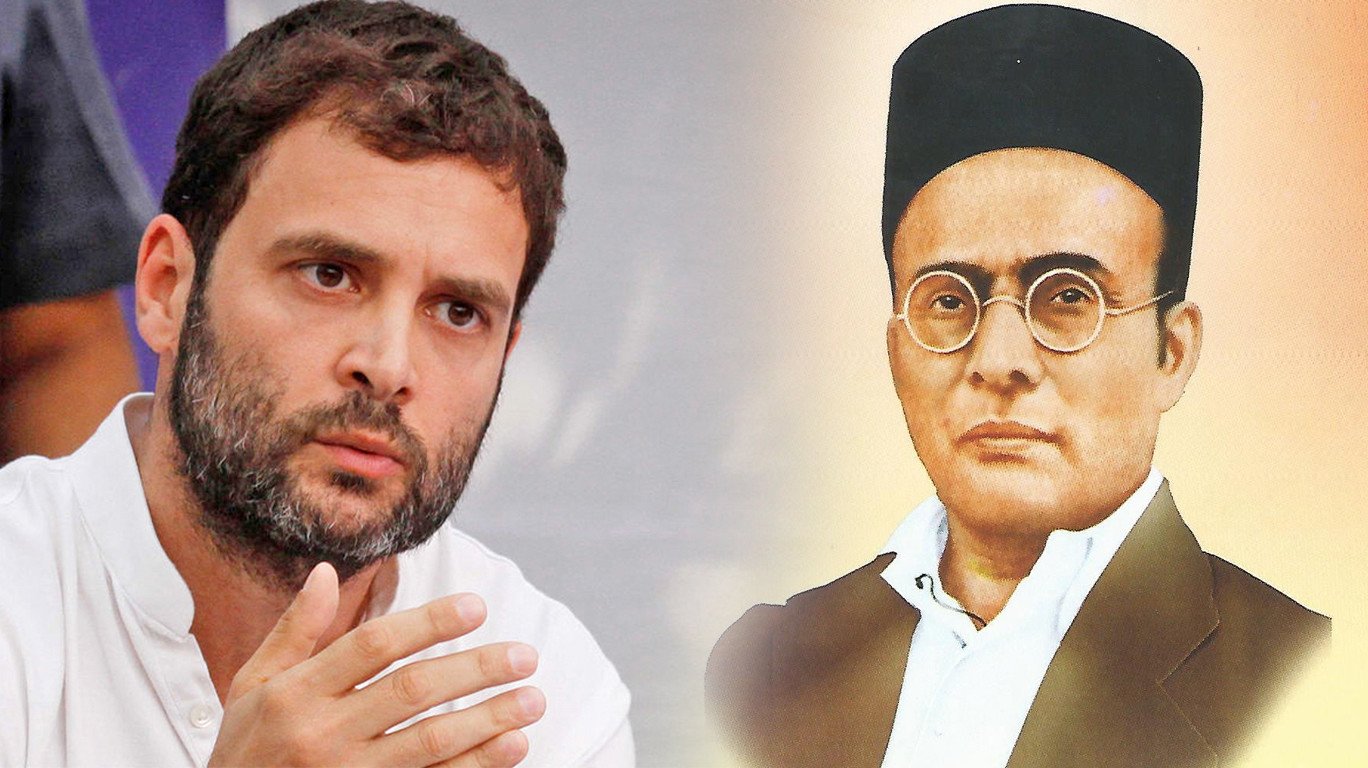
Perhaps the most incendiary part of Gandhi’s Colombian address was his attack on freedom fighter Vinayak Damodar Savarkar. He accused Savarkar of promoting violence against minorities, quoting a passage from his writings. Gandhi argued that such an ideology—ganging up on the weak—became the foundation of the RSS.
Savarkar, a revered figure for the BJP and its allies, has long been a polarizing personality in Bharatiya politics. By invoking him negatively on international soil, Rahul Gandhi reignited an ideological fault line that goes back decades. For the Congress leader, this was not just a criticism of history but a broader swipe at the present ruling party’s legacy.
Political Strategy or Misstep?

From a strategic perspective, Rahul Gandhi’s approach is both daring and divisive. By internationalizing Bharat’s political debates, he positions himself as a global statesman speaking uncomfortable truths. This may resonate with certain international audiences who view Bharatiya politics through the lens of human rights and liberal democracy.
However, domestically, the optics are far less favorable. Many Bharatiya, even those critical of the government, are wary of leaders airing internal disputes on foreign stages. It risks appearing unpatriotic, and in electoral politics, such optics can be costly. The BJP has consistently capitalized on this, painting Gandhi as “anti-Bharat” and out of touch with the national mood.
A Double-Edged Sword
Rahul Gandhi’s speech in Colombia once again highlights his peculiar political positioning. On one hand, he is trying to craft an image of a fearless truth-teller who won’t shy away from criticizing power. On the other, he risks alienating voters who perceive his remarks as undermining national pride.
In my view, a stronger strategy for any opposition leader would be to critique policies robustly within Bharat while presenting a united, confident face internationally. A healthy democracy thrives on debate, but it also requires responsible framing when projected on global platforms. Gandhi’s approach, while bold, often ends up reinforcing the BJP’s narrative that he is disconnected from grassroots sentiment.
Rahul Gandhi’s Colombia remarks add yet another chapter to his long record of controversial statements abroad. By questioning Bharat’s democracy, criticizing the government, and attacking VD Savarkar, he has once again ignited debates about patriotism, political strategy, and leadership.
Whether his words resonate with voters at home remains uncertain. What is clear, however, is that such speeches keep him in the headlines—sometimes for his courage, often for his missteps. In the end, the impact of his rhetoric will not be decided in Colombia or Cambridge, but in Bharat’s towns and villages when voters cast their ballots.
