

Poonam Sharma
Not Religion vs. Religion, But Extremism vs. Civil Society
The crisis unfolding on the continent is usually misconstrued as a conflict of religions—Muslim against Christian, Hindu against Muslim. Truth be told, the conflict is deeper than that: it is one of fundamentalism against democracy, extremism against civil society. Events in various parts of Germany, Britain, and France indicate that the continent is facing a cultural challenge that goes beyond religion and geography.
The London Protests: Anger on the Streets
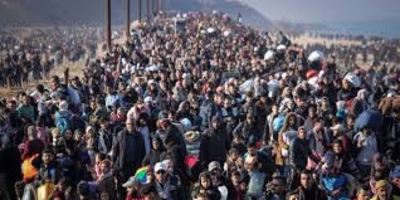
On September 13, over 125,000 protesters took to the streets in a gigantic “Unite the Kingdom” rally organized by right-wing activist Tommy Robinson. Despite having been labeled xenophobic by critics, the massive turnout was a testament to public disillusionment with illegal immigration, Islamic extremism, and increased crime. The fury is not merely about numbers of immigrants—it is about a perceived loss of identity and security in one of the world’s most liberal democracies.
Crime and Fear in Once-Safe Cities
London, previously touted as a world city of openness, is now facing a disturbing crime surge. Metropolitan Police statistics indicate snatches, for example, of watches have accounted for over 43,000 cases from 2018 through 2024. Even tycoon Jim Ratcliffe conceded he no longer goes out in public wearing costly watches. What was previously unimaginable in Europe’s capital of finance is now standard fare.
France is also an even darker shade. According to an investigation by Le Monde, numerous women in Paris are transforming their looks—dyeing their hair black or dressing conservatively—to prevent harassment. In a city long regarded as the height of freedom, women are being pushed to hide their femininity to avoid danger.
Demographics Fuel Political Anxiety
Beyond crime, Europe faces a demographic transformation. Pew Research forecasts suggest that the Muslim population in Europe could nearly double by mid-century. In Germany, an ARD survey in 2025 found 68 percent of citizens favor halting refugee inflows altogether. Such numbers explain the political rise of far-right movements across the continent.
In France, Marine Le Pen’s National Rally has also seen a surge in polls, capturing almost 37 percent of the vote. Citizens will not necessarily publicly acknowledge supporting hardline parties, but political currents reveal a longing for tougher borders and tightened integration policies.
The Weight of History: From Al-Andalus to Today
This unease is nothing new. Europe’s recollection of the Islamic conquest of Spain in 711 CE and the Reconquista that spanned centuries continues to haunt it as a shadow of civilization. The past cautions Europeans that cultural identity, once lost, cannot be regained. The “war” today might not be waged with swords but with policies, ideology, and demographics.
As political scientist Samuel Huntington once wrote, the most perilous wars of the future are not economic or territorial—they are civilizational. Europe in our times appears to be living out that prophecy.
The Human Cost: Cologne and Rotherham
Numbers only cannot account for the trauma experienced on the ground. In Cologne, Germany, more than 600 women alleged sexual assault on New Year’s Eve in 2015—an event that shook the country. In Rotherham, England, close to 1,400 girls were systematically exploited from 1997 to 2013 in a grooming scandal that was slow to be addressed by authorities.
These instances strengthened the impression that the governments, under the guise of multiculturalism, tended to look the other way. The crisis feels personal to average citizens—about safety, dignity, and justice.
Poland’s “Zero Tolerance” Response
Not all countries are responding in the same manner. Poland and Hungary have been tougher in their response, with Warsaw embracing a “zero tolerance” attitude towards immigration. Although condemned by the EU, they assert that anything less would see Europe repeat the same errors. To many Europeans, Poland is now a symbol of a different vision—where cultural identity is saved and not traded away.
Lessons for India
For India, the European experience has significant lessons. India has always welcomed minorities—Parsis, Jews, and others. However, contemporary challenges are new. The Rohingya influx, open Bangladesh borders, and ideological penetration into schools and cultural institutions require caution.
If Europe erred in mixing up tolerance with appeasement, India cannot follow suit. Dignity for diversity must not be secured at the expense of sovereignty and civic order.
Beyond Europe: A Global Question
This is not anymore Europe’s only crisis. Fundamentalism v. democracy is a global challenge. The same arguments are heard in India, America, and elsewhere: Must cultural identity continue to bend to fit radical demands? Or must democracies set some lines in the sand to defend civil society?
The response will determine the destiny of countries. As Cologne’s women, Rotherham’s children, and Paris’s tired citizens remind us—the actual conflict in the present is not between religions. It is between a liberal society that believes in freedom and an ideology that aspires to tear it apart.
