
From Myth to Modernity: The Timeless Significance of Durga Puja
“Celebrated as both a sacred ritual and a cultural carnival, Durga Puja and Vijayadashami embody Bengal’s devotion, artistry, and timeless spirit of resilience.”

Paromita Das
New Delhi, 2nd October: Every autumn, as the air turns crisp and the skies of Bengal glow with the golden hues of Kash flowers, a transformation takes place. Streets light up, artistry blooms, and communities come alive. It is Durga Puja, the heartbeat of Bengal, a festival that is at once religious, cultural, artistic, and political. Beyond the boundaries of devotion, it has become a living theatre of society, shaping identities and reflecting history.
This year, as the sounds of dhaak drums mingle with the chants of “Jai Maa Durga,” the significance of Durga Puja and its culmination in Vijayadashami feels especially poignant. For this is not just the story of a goddess slaying a demon—it is the story of a people, their resilience, their creativity, and their eternal quest to merge the sacred with the social.
Durga Puja: Bengal’s Carnival of Faith and Art

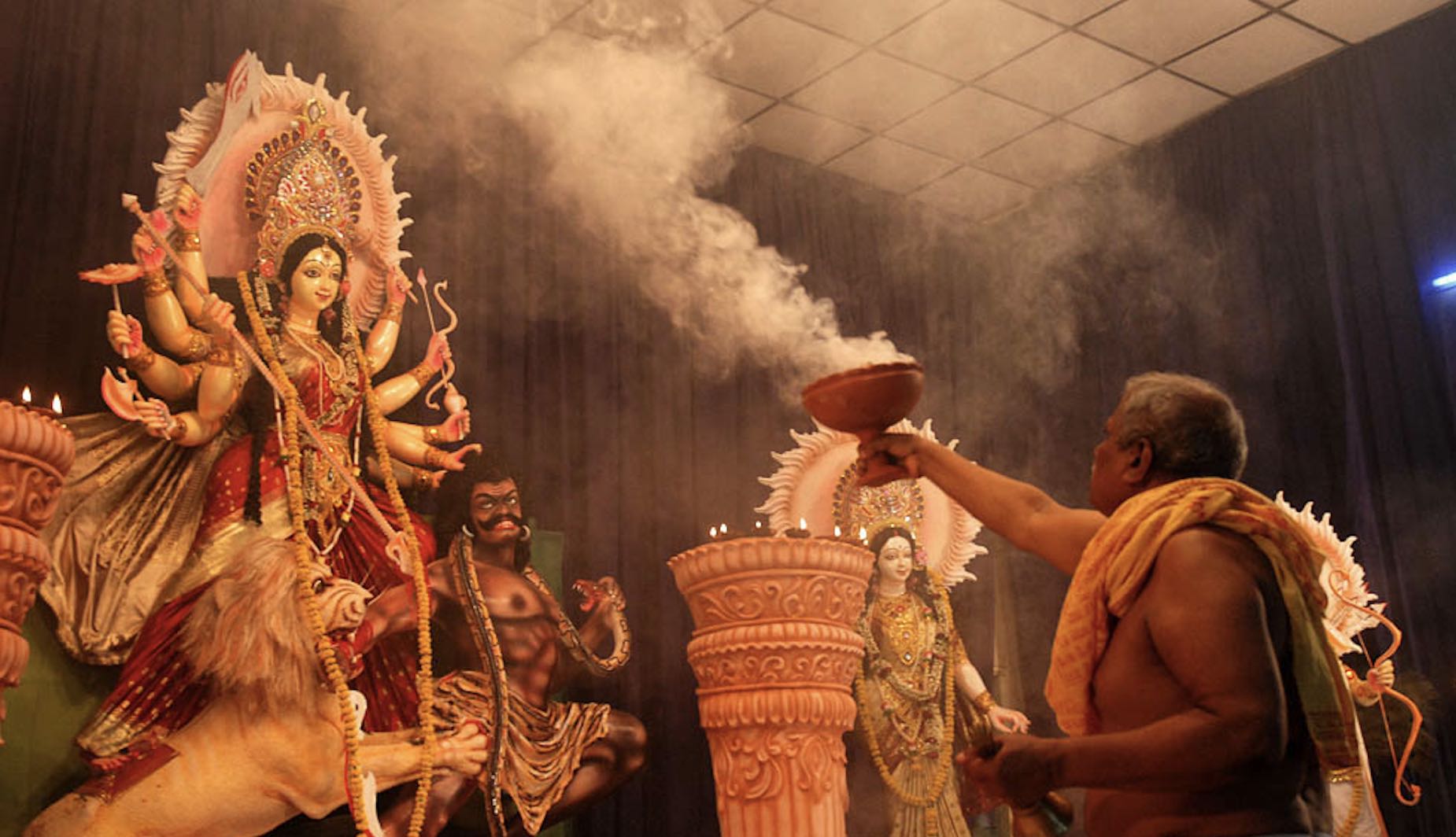
In Bengal, Durga Puja is not performed behind closed temple doors but out in the open, as a community carnival. Its soul is devotional, but its form is celebratory—filled with music, food, dance, theatre, and, above all, breathtaking artistry. The pandal is the centrepiece of this carnival, a temporary yet majestic space where artisans pour months of creativity into constructing themes that range from mythological to modern, from ornate tradition to bold social commentary.
This public art tradition has deep roots. In the 18th and 19th centuries, zamindars competed to host the grandest Pujas, showcasing wealth and influence. Today, the legacy lives on as neighbourhood clubs outdo each other in imaginative themes—be it on climate change, women’s empowerment, or migrant struggles. Thus, the festival becomes both aesthetic spectacle and social mirror, reaffirming its relevance across centuries.
From Tribal Shrines to the Mainstream Goddess

Durga’s journey in Bengal reflects the layered evolution of spirituality. Long before Durga became the central deity, Bengal’s religious life revolved around local goddesses like Sheetala and Manasa. With the gradual integration of tribal traditions into the Brahmanical fold, Durga emerged as a fierce protector figure in Bengal’s spiritual imagination.
By the Vaishnavite period of the 15th and 16th centuries, her image softened—she was no longer only a warrior but also a mother, a beloved daughter returning to her father’s home every autumn. This explains the unique emotional depth of Durga Puja in Bengal: she is revered as the destroyer of evil but also mourned as the daughter leaving after a short stay. This dual identity—warrior and nurturer, goddess and daughter—makes the festival profoundly intimate.
Vijayadashami: Triumph of Good Over Evil

The final day of Durga Puja, Vijayadashami (Dussehra), carries universal significance. It commemorates the slaying of Mahishasura, symbolizing the eternal triumph of good over evil, light over darkness, and dharma over adharma.
But in Bengal, Vijayadashami carries an added layer of poignancy. After days of joy, feasting, and worship, it becomes a farewell. Idols of Durga are immersed in rivers, accompanied by processions where devotees bid her goodbye with tears, much like a daughter returning to her marital home. This ritual encapsulates the cyclical nature of life—joy, separation, and renewal, embodying both cultural philosophy and emotional resonance.
Politics and Power in Puja

Durga Puja has never been insulated from politics. In the 18th century, zamindars used extravagant celebrations to assert dominance under shifting regimes. In the nationalist era, Durga became an icon of resistance, with writers like Bankim Chandra portraying her as Bharat Mata, a motherland in need of liberation.
The Sharbojonin (community) Puja movement of the 20th century democratized worship, cutting across caste and class divisions. This collective spirit not only united society but also doubled as a quiet act of defiance against colonial power. Even today, Durga Puja remains a platform where politics, social assertion, and cultural pride intersect.
A Living Tradition: UNESCO Recognition

Durga Puja’s survival and relevance lie in its ability to reinvent itself across eras. From tribal shrines to zamindari extravagance, from nationalist symbolism to modern-day global recognition, the festival has constantly adapted. Its inclusion in UNESCO’s list of Intangible Cultural Heritage of Humanity underscores its stature as not just a regional celebration but a global cultural phenomenon.
It is simultaneously sacred and secular, intimate and collective, artistic and devotional. Above all, it is a living tradition that continues to evolve while staying rooted in its essence.
Why Durga Puja Matters Now More Than Ever

Durga Puja is not just a festival—it is a cultural compass. In an age of fragmentation, it stands for unity; in an age of consumerism, it celebrates creativity; in an age of social conflict, it projects harmony. Its layers of meaning—from goddess worship to community expression, from political assertion to global cultural showcase—make it indispensable to Bengal’s identity.
What strikes me most is its adaptability. Few festivals can integrate tribal roots, Vaishnavite philosophy, nationalist fervour, and contemporary social commentary into a single spectacle while retaining their spiritual sanctity. Durga Puja manages this balance effortlessly, proving why it remains both Bengal’s pride and Bharat’s cultural gift to the world.
The Eternal Spirit of Vijayadashami
As Durga departs every year, leaving behind streets lined with empty pandals and hearts heavy with farewell, she also leaves behind a timeless message: evil never prevails, resilience always returns, and community bonds outlast crises.
Durga Puja, culminating in Vijayadashami, embodies this eternal rhythm of hope. It is at once an act of worship, a carnival of art, a stage for social voices, and a symbol of unity. Ultimately, it is not just about celebrating a goddess; it is about celebrating the indomitable spirit of a people.
In its chants, artistry, and farewells, Durga Puja tells the world: faith can be festive, devotion can be creative, and culture can be eternal.
