

GG News Bureau
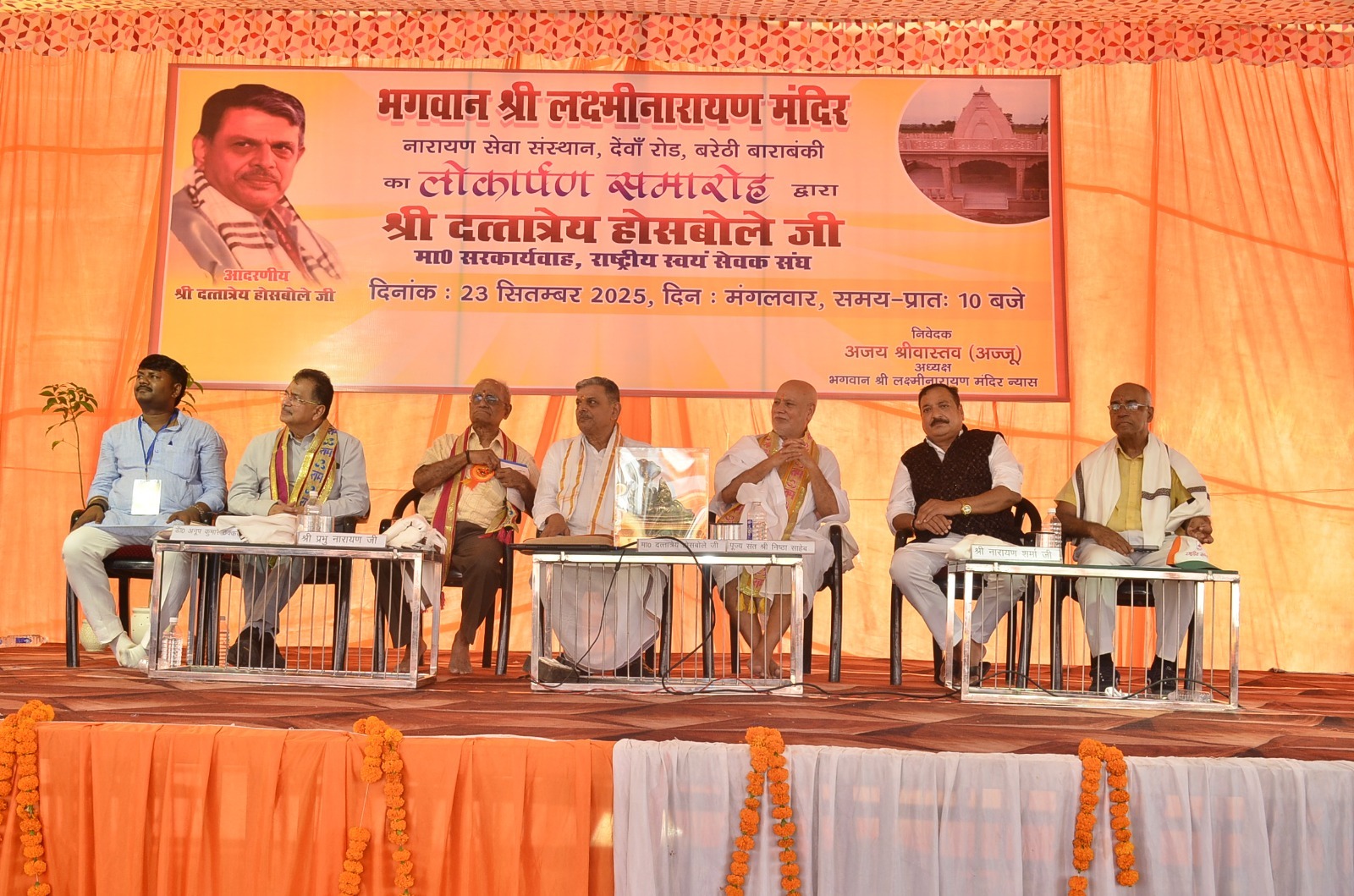
Barabanki, 27th Sept: Rashtriya Swayamsevak Sangh (RSS) General Secretary (Sarkaryavah) Dattatreya Hosabale, during the inauguration of the Lakshmi Narayan Temple built by the Narayan Seva Sansthan in Barethi village, described temples as “centres of inner awakening and social unity,” urging communities to view them as spaces of service and spiritual growth rather than merely places for seeking blessings.
“Temples are not just sites for earning merit; they keep human consciousness alert and inspire service to others,” Hosabale said. Drawing parallels to the COVID-19 pandemic, he noted how crises often generate positive action. “During the pandemic, many organisations stepped forward to provide employment and assistance. Inspired by that spirit, the Narayan Seva Sansthan emerged, and today we gather in its premises.”

Hosabale emphasised that a social organisation’s strength lies not in its bank balance but in the dedication of its members. He recounted how the temple project began during the pandemic and evolved into a vibrant centre for community service.
Addressing the purpose of temple construction, he explained, “God exists everywhere, just as air exists everywhere. Yet when a bicycle tire deflates, we still need a pump to fill it. Similarly, temples are essential for awakening the inner self and bringing people together through art, culture, and devotion.” Temples, he added, follow the guidelines of the Agama Shastras and connect individuals to the Supreme.
Citing examples of temple-centric rural development, Hosabale mentioned Anna Hazare’s work in Ralegan Siddhi and a Karnataka volunteer who revitalised a 900-year-old Sitaram temple, transforming it into a centre of village life. He called for village development focused on health, education, and employment, echoing the Prime Minister’s efforts to boost rural industries. “India’s reconstruction will come from its villages, not just Delhi,” he said, urging social organisations to ensure education, healthcare, and livelihood within villages.
Quoting Kautilya, Hosabale observed, “The root of Dharma is Artha (wealth), and the root of happiness is Dharma. Life and wealth are like a boat and water—necessary for movement, but if water fills the boat, it sinks. Wealth is needed to sustain life, but if it dominates life, destruction follows.” He underlined that truth, purity, compassion, and austerity form the four pillars of Dharma.
Hosabale concluded by encouraging the establishment of worship spaces in every village and neighbourhood, where people can shed pride and draw inspiration for service. “Lakshmi and Narayan symbolise the harmony of nature and spirit. Serving humanity is serving Narayan. Let our vision reflect this truth,” he said.
