
WTO’s World Trade Report 2025: A Needonomics Perspective
-Transforming AI’s Monkey Mind into a Monk Mind for Sustainable Trade and Growth


Prof Madan Mohan Goel, Proponent Needonomics & Former Vice-Chancellor (Thrice)
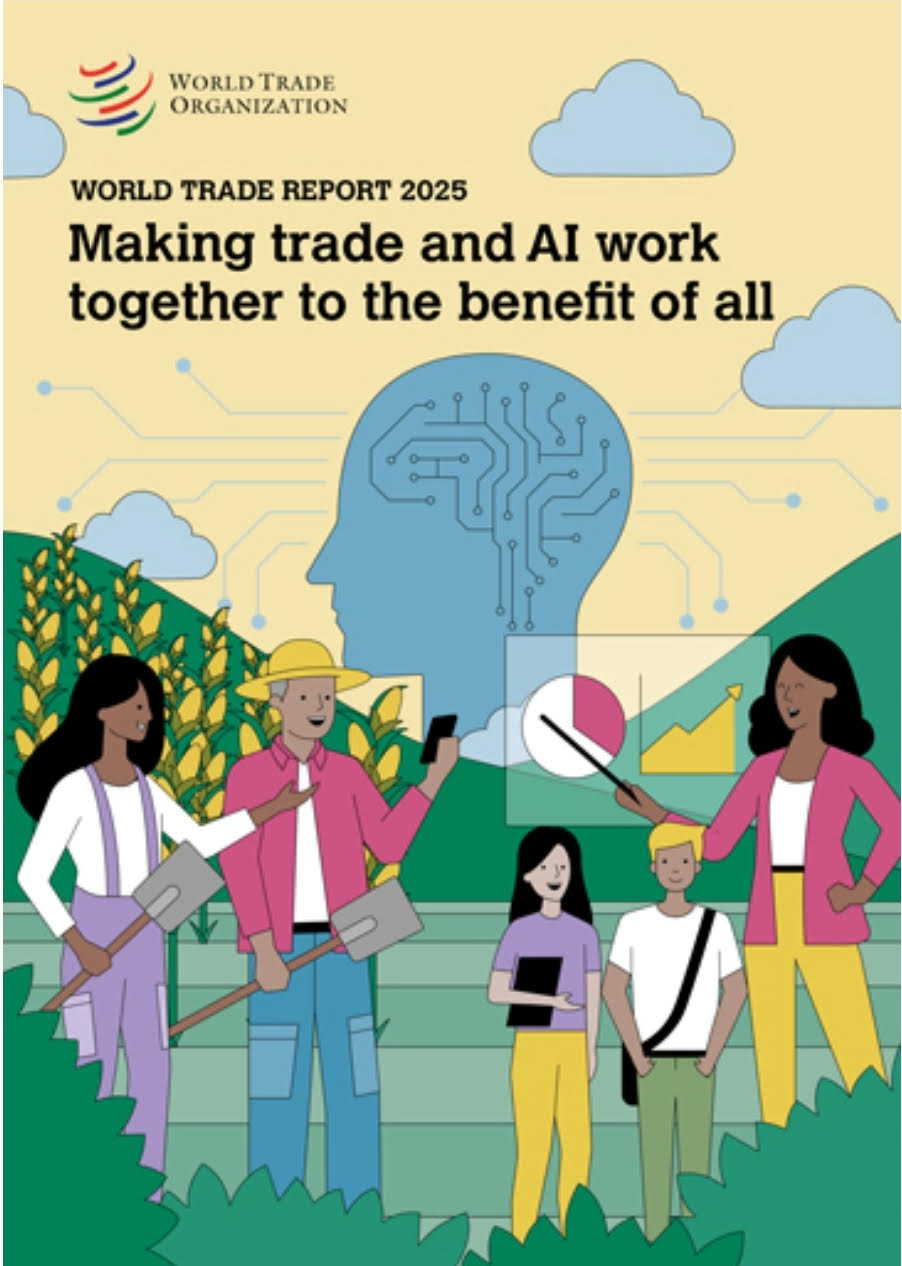
The World Trade Organization’s World Trade Report 2025 titled “Making Trade and AI Work Together to the Benefit of All” (114 pages excluding annexures and bibliography) marks an important milestone in the global dialogue on the intersection of artificial intelligence (AI) and international trade. The report not only examines the fast-evolving relationship between AI and trade but also emphasizes how these forces could be harnessed for inclusive growth—provided the right policies and global cooperation are in place.
Needonomics School of Thought (NST), with its core philosophy of balancing needs with resources while infusing ethics into economics, has reviewed this report with a critical yet constructive lens. The challenge, as highlighted, is not merely technological or economic—it is deeply human and ethical. AI can either remain a “monkey mind,” prone to misuse and inequality, or be transformed into a “monk mind,” guided by spiritual intelligence (SI) for sustainable and inclusive development.
AI and Trade: Opportunities and Challenges
AI is reshaping the global economy by reducing trade costs, boosting productivity, and enabling even small firms to participate in global markets. WTO simulations suggest significant potential for AI to increase global trade and raise real incomes across economies. AI-enabled services—by virtue of being digital and scalable—can open new avenues for trade, innovation, and entrepreneurship.
However, the transformative potential of AI is far from guaranteed. The digital divide persists across nations, rooted in disparities in infrastructure, hardware, and human capabilities. Without corrective measures, AI risks reinforcing inequality, shifting comparative advantages in ways that marginalize weaker economies. Labour market disruptions, if unaddressed, may further widen divides between high-skilled and low-skilled workers.
NST highlights that inclusive growth is not an automatic outcome of AI-driven trade. It must be consciously designed through trade and trade-related policies that ensure access, fairness, and sustainability.
Policy Insights from WTO’s Report
The WTO’s new AI Trade Policy Openness Index (AI-TPOI) reveals stark variations in AI-related policies across countries and income groups. This signals that openness alone is insufficient—complementary policies such as competition law, intellectual property rights, education, and digital infrastructure are equally vital.
Key findings include:
- Education and Skill Development: Global imbalances persist between high- and low-income economies in preparing their workforce for AI adoption.
- Infrastructure Investment: Massive capital flows are required for energy and digital systems powering AI. Without equitable access, inequality will be entrenched.
- International Cooperation: Current efforts remain aspirational, with regional trade agreements (RTAs) leading the way, while WTO itself has yet to fully establish a comprehensive framework for AI governance.
- Transparency and Dialogue: Trade can serve as a vehicle for AI diffusion if supported by open dialogue, capacity-building, and trust-building mechanisms.
The report stresses that the future impact of AI will depend on choices made today.
Needonomics Perspective: Converting Monkey Mind into Monk Mind
NST offers a philosophical and ethical lens to interpret these findings. The “monkey mind” symbolizes misuse of AI—reckless exploitation, profit-driven monopolies, and unequal access. To “fetch fortunes” from AI, humanity must evolve toward the “monk mind”—a state guided by self-discipline, fairness, and spiritual intelligence (SI).
In practical terms, this transformation requires:
- Street SMART WTO Members – Simple, Moral, Action-oriented, Responsive, and Transparent in policymaking.
- Ethical Trade Policies – Infusing morality into economic choices to ensure AI empowers rather than excludes.
- Global AI Governance – Developing collaborative frameworks that emphasize transparency, sustainability, and inclusiveness.
- Bridging Digital Divides – Prioritizing capacity-building and equitable access to infrastructure for all economies.
- Education for SI – Nurturing values alongside skills, ensuring future generations use AI responsibly.
NST cautions against the rise of “Tariff Terrorism,” particularly in the context of unilateral policies under leaders such as former U.S. President Donald Trump, which can disrupt global cooperation. Instead, WTO must serve as the anchor for trust, fairness, and collaboration.
Road Ahead
AI, much like trade, is a double-edged sword. Its benefits are vast—ranging from reducing costs to spurring innovation—but its risks are equally daunting, including inequality, labour disruptions, and geopolitical tensions. The World Trade Report 2025 rightly signals that this is a moment of strategic choice.
For NST, the path forward lies in aligning AI-driven trade with the principles of Needonomics: balancing needs with resources, privileging ethics over greed, and ensuring fairness in global economic governance. AI should not be allowed to widen divides but should serve as a bridge to inclusive and sustainable development.
Conclusion
The WTO’s World Trade Report 2025 is not merely an academic exercise-it is a call for action. As trade and AI increasingly intertwine, the question is not whether they will reshape global markets, but how. Will AI remain a monkey mind, deepening inequalities and divisions, or will humanity transform it into a monk mind, guided by spiritual intelligence and global solidarity?
The answer depends on the collective choices of policymakers, businesses, and individuals today. By applying Needonomics, we can ensure that AI-driven trade becomes a force for inclusive growth, sustainable development, and shared prosperity.
