
Youthquake in Nepal: The Rise of Balen Shah and Sudan Gurung
“Disillusioned youth turn frustration into a political earthquake, leaving Nepal without its top leaders.”

Paromita Das
New Delhi, 11th September: Nepal has been thrust into a historic turning point. The largest citizens’ movement in the country’s modern history has toppled both Prime Minister KP Oli and President Ramchandra Paudel, leaving the nation without its top leadership and in search of stability. At the heart of this upheaval stands a restless GenZ generation, mobilized by frustration with censorship, corruption, and disillusionment with politics as usual.
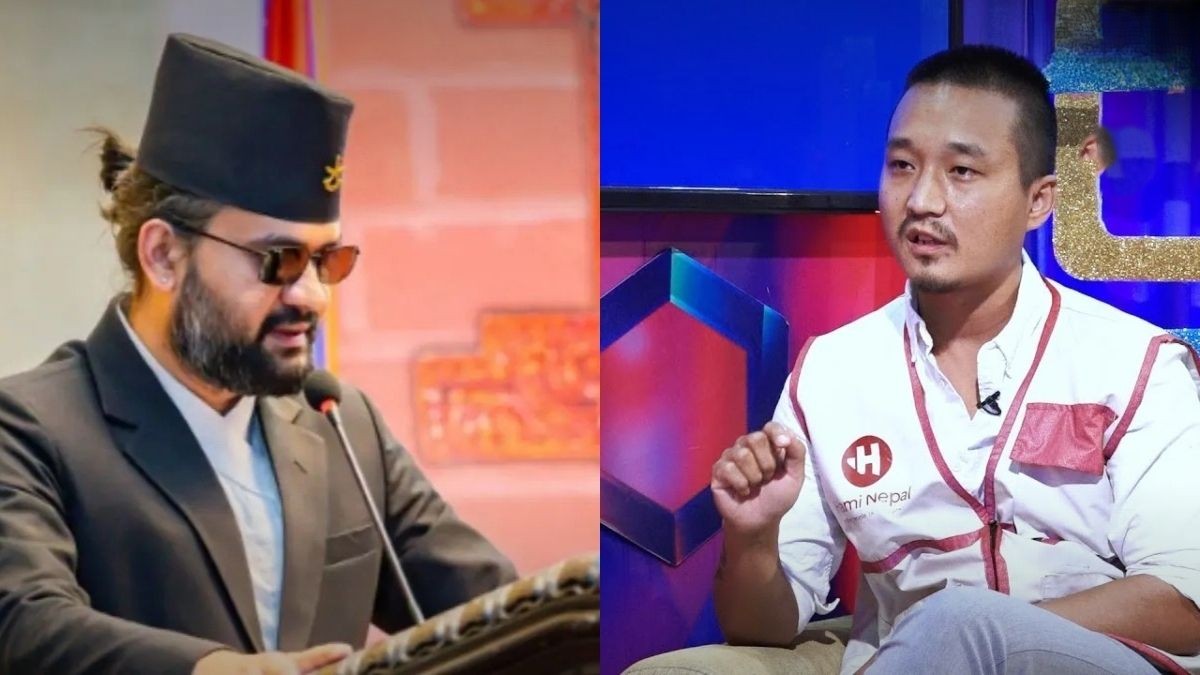
Two men have emerged as the faces of this youth-led storm. Kathmandu’s mayor, Balen Shah, and social activist Sudan Gurung, founder of the NGO Hami Nepal, are now synonymous with the protests that have redrawn Nepal’s political map. But who are these men—and what does their rise mean for Nepal’s fragile democracy?
The Meteoric Rise of Balen Shah

Balen Shah’s journey from rapper to mayor to would-be Prime Minister is as improbable as it is impactful. Known for his biting anti-establishment rap lyrics, Shah transformed his cultural influence into political capital when he won the mayoral race in Kathmandu in 2022. Since then, his outspoken criticism of Nepal’s leadership has resonated deeply with disillusioned youth.
On September 7, 2025, Shah publicly threw his weight behind the GenZ protests through a Facebook post that read less like a politician’s statement and more like a rallying cry. His words legitimized the movement and electrified thousands of young Nepalis. The next day, students as young as 13 flooded the streets of Kathmandu and seven other cities, initially protesting against a social media ban. By evening, the protests had spiraled into a direct demand for the Prime Minister’s resignation.
As violence escalated—leaving 19 dead and more than 300 injured—Shah became both a hero and a lightning rod. His social media feeds were flooded with pleas to assume national leadership. Yet Shah struck a careful balance, encouraging protestors while later urging restraint: “Please GenZ, the country is in your hands… Now go home.”
Shah’s Global Profile and Controversies
Unlike many Nepali politicians, Shah is not confined within Nepal’s borders. His inclusion in Time Magazine’s Top 100 (2023) and coverage in The New York Times elevated him onto the global stage. He has met with U.S. diplomats multiple times, fueling perceptions that he enjoys Western backing.
Great introductory meeting with Mayor of Kathmandu @ShahBalen yesterday. I particularly enjoyed discussing
the ways we can work together on cultural
preservation! pic.twitter.com/brEDyR7kq4— U.S. Ambassador Dean R. Thompson (@USAmbNepal) December 2, 2022
Before politics, Shah’s music positioned him as a cultural dissident. Songs like Balidan accused Nepal’s leaders of looting the nation and betraying its people. During the protests, he reposted the song with the caption: “Let the government allow me to speak.”
But Shah’s appeal is not without controversy. His decision to ban Bharatiya films in Kathmandu cinemas in 2023, later overturned by Nepal’s Supreme Court, revealed his willingness to take hardline, populist stances that could strain Nepal’s delicate foreign relations.
Sudan Gurung: The Strategist Behind Hami Nepal

If Shah is the agitator, Sudan Gurung is the strategist. At 36, Gurung has leveraged his NGO Hami Nepal into a powerful organizing force. Originally founded in 2020 for flood relief, the NGO has since expanded into activism. For the GenZ protests, Hami Nepal orchestrated coordination through Instagram and Discord—posting protest guides, rallying students to wear uniforms, and even circulating instructions for makeshift weapons.
Leaked chats suggest that Gurung’s team actively encouraged international media coverage and drew comparisons with regime-change movements in Bangladesh. Placards at rallies carried Hami Nepal branding, underlining the NGO’s central role in the uprising.
Yet Gurung’s methods and funding sources have raised red flags. Hami Nepal has admitted to receiving over 200 million Nepali rupees from foreign companies like Coca-Cola, Viber, Goldstar, and Mulberry Hotels. Critics argue this foreign funding risks turning a domestic struggle into a proxy battle for international interests.
The Dangerous Alliance

Together, Shah and Gurung embody two halves of a volatile movement: one symbolic, one organizational. Shah provides the charisma and national recognition, while Gurung delivers the grassroots machinery and resources.
This partnership mirrors patterns seen elsewhere in South Asia. In Bangladesh, Sheikh Hasina’s ouster in 2024 paved the way for Muhammad Yunus to take over as caretaker Prime Minister, amid reports of Western encouragement and youth-led unrest. Nepal’s upheaval, with its anti-Bharatundertones and reliance on foreign-funded NGOs, suggests a similar script may be unfolding.
Between Hope and Manipulation

The GenZ uprising is undoubtedly a watershed for Nepal. It demonstrates the power of a digitally connected generation unwilling to accept censorship or corruption. For many Nepalis, Shah and Gurung represent a refreshing break from an older political elite entrenched in power struggles.
But there is also a darker side. The speed and violence of the protests, the presence of foreign money, and the echoes of regional regime-change playbooks raise uncomfortable questions. Is Nepal witnessing genuine grassroots reform, or is it sliding into manipulation by global powers seeking influence in a country strategically sandwiched between Bharatand China?
Nepal at a Crossroads
As Nepal stands leaderless after the resignation of both its Prime Minister and President, the world is watching intently. Whether Balen Shah becomes interim Prime Minister or Sudan Gurung consolidates his activist clout, the stakes could not be higher.
If managed responsibly, the GenZ uprising could energize Nepal’s democracy, inject accountability, and redefine governance. If exploited, it risks dragging Nepal into instability and foreign dependency.
What is certain is that September 2025 will be remembered as the moment when Nepal’s youth—powered by social media and symbolized by Shah and Gurung—rewrote the rules of political engagement. Where this path leads remains uncertain, but it will shape Nepal’s destiny for years to come.
