
From Italy to Bharat: The Unfinished Story of Sonia Gandhi’s Vote
“From Italian Origins to Bharatiya Ballots: The Unfolding Saga of Sonia Gandhi’s Nationality”

Paromita Das
New Delhi, 5th September: In a democracy where every vote is sacred, questions about who has the right to vote strike at the very core of electoral integrity. The recent demand for an FIR against Sonia Gandhi for allegedly being listed on Bharat’s voter rolls before she became a citizen has reignited debates about legality, accountability, and the credibility of leaders who once held the highest offices of Bharat.
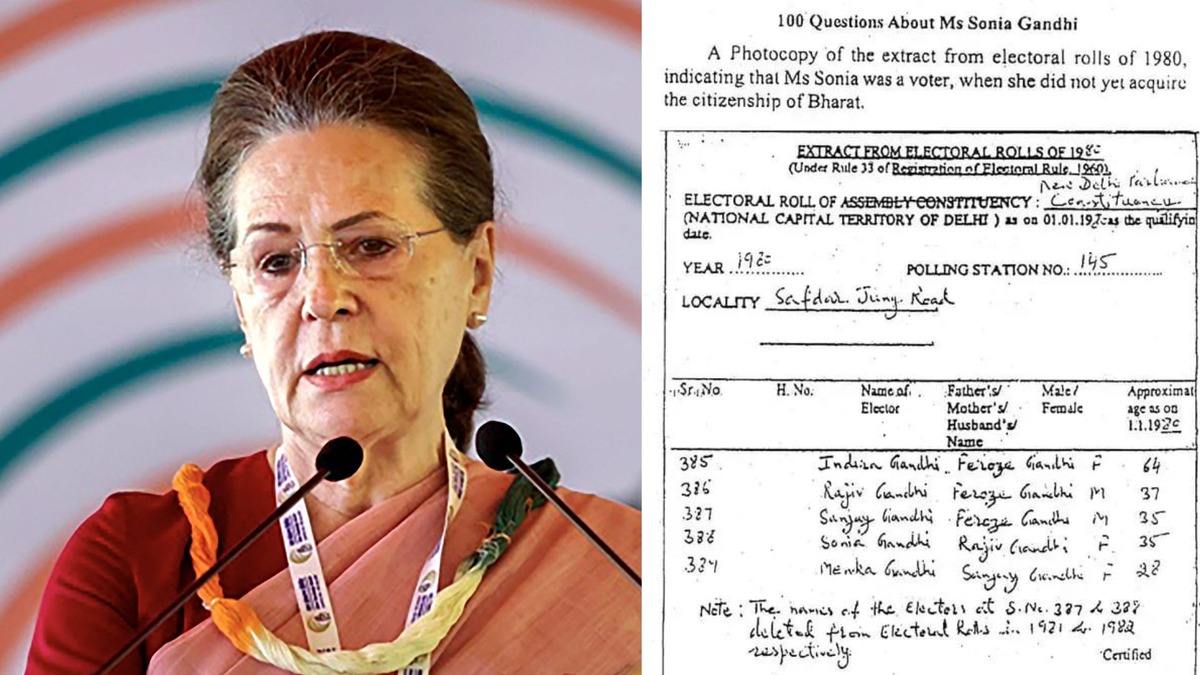
On September 4, 2025, Delhi’s Rouse Avenue Court heard a petition that accused Congress leader Sonia Gandhi of being on Bharat’s electoral rolls in 1980—three years before she legally became a citizen in 1983. The petitioner, Advocate Vikas Tripathi, argued that Sonia Gandhi’s name was added to the voter list of the New Delhi constituency despite her Italian citizenship at the time.
Senior advocates presenting the case emphasized that Sonia Gandhi’s name appeared alongside Indira Gandhi, Rajiv Gandhi, Sanjay Gandhi, and Maneka Gandhi on the 1980 Safdarjung Road polling station’s list. Her name was later removed in 1982, just before she applied for Bharatiya citizenship.
The core argument? If she was not a citizen until April 30, 1983, her presence on voter lists prior to that date could only have been facilitated through forged documents or misrepresentation. This, the petitioner claims, is not merely a political question but a legal and constitutional violation that must be investigated.
Why Citizenship Matters in a Democracy

At its heart, the debate is not about Sonia Gandhi’s Italian origins but about the sanctity of Bharatiya citizenship. Bharat’s Constitution and electoral laws are clear: only Bharatiya citizens can register as voters and cast their ballot. The allegations, if proven true, strike at the foundation of electoral credibility.
For a leader who later rose to become the president of the Congress Party and the de facto power center of the UPA government, these questions are not trivial. They demand answers—not just from Sonia Gandhi, but also from institutions responsible for safeguarding electoral rolls.
Rahul Gandhi and the Shadow of Dual Nationality

The controversy does not stop at Sonia Gandhi. Her son, Rahul Gandhi, has faced recurring allegations of holding dual nationality—something Bharat’s Constitution strictly prohibits.
Documents linked to companies abroad, including records from the UK, have repeatedly surfaced showing Rahul Gandhi listed as a British national. While Rahul has denied these allegations, the inconsistencies in filings continue to raise eyebrows.
The irony is glaring. Rahul Gandhi, who frequently accuses the government of “vote chori” (electoral theft), himself faces questions about the very eligibility of his family’s electoral participation. When the moral authority to question democratic integrity comes from a family shadowed by nationality controversies, the credibility of those accusations becomes questionable.
A Pattern of Silence and Deflection

The Congress Party has historically responded to such allegations with silence, deflection, or dismissing them as political vendettas. Yet, evidence presented in public—like 1980 voter rolls and UK corporate filings—cannot be brushed aside so easily.
Instead of directly addressing the accusations, leaders often pivot to attacking institutions or questioning the motives of petitioners. But in a democracy, leaders are not above scrutiny. The people deserve transparency, especially from those who claim to defend democratic values.
The Legal and Political Implications

If Sonia Gandhi’s voter enrollment before 1983 is proven, the case could trigger serious consequences. It would highlight:
- Electoral Misconduct: Undermining the integrity of voter rolls.
- Forgery or Misrepresentation: If documents were falsified, it constitutes a criminal offense.
- Precedent for Accountability: It could open doors for deeper scrutiny of past leaders and their adherence to constitutional norms.
Politically, this controversy cuts to the heart of Congress’s narrative. While the party positions itself as the defender of democratic institutions, such revelations erode its moral authority.
Integrity Cannot Be Selective

This controversy underscores a deeper truth—integrity in democracy cannot be selective. One cannot demand transparency from others while ignoring questions about their own conduct.
The Congress Party has long accused opponents of undermining institutions, but cases like these show that the rot of political privilege may lie closer to home. For Sonia Gandhi, a leader who wielded immense power for decades, the least the public deserves is clarity and accountability. For Rahul Gandhi, who often speaks of defending Bharat’s democracy, silence on his family’s controversies speaks louder than words.
A Call for Transparency in the National Interest
The Sonia Gandhi nationality case is not merely about an individual—it is about the credibility of Bharat’s democracy. Every Bharatiya has the right to expect that their leaders follow the same laws that bind ordinary citizens.
As the court prepares to examine the evidence, the outcome will carry implications far beyond one family. It will either reaffirm public faith in electoral integrity or deepen cynicism about double standards in Bharatiya politics.
In the end, the message is clear: In a democracy, there can be no shortcuts to legitimacy. Sonia Gandhi and Rahul Gandhi must face these questions with transparency, not silence. Anything less is not just a political failure but a betrayal of the people’s trust.
