
Bharat China relations enter a new phase of dialogue as Congress keeps playing politics
“At a time when Prime Minister Narendra Modi’s talks with Chinese President Xi Jinping have opened doors for renewed dialogue, stability, and cooperation between the two Asian giants, the Congress continues to raise doubts and allegations instead of supporting constructive diplomacy.”

Paromita Das
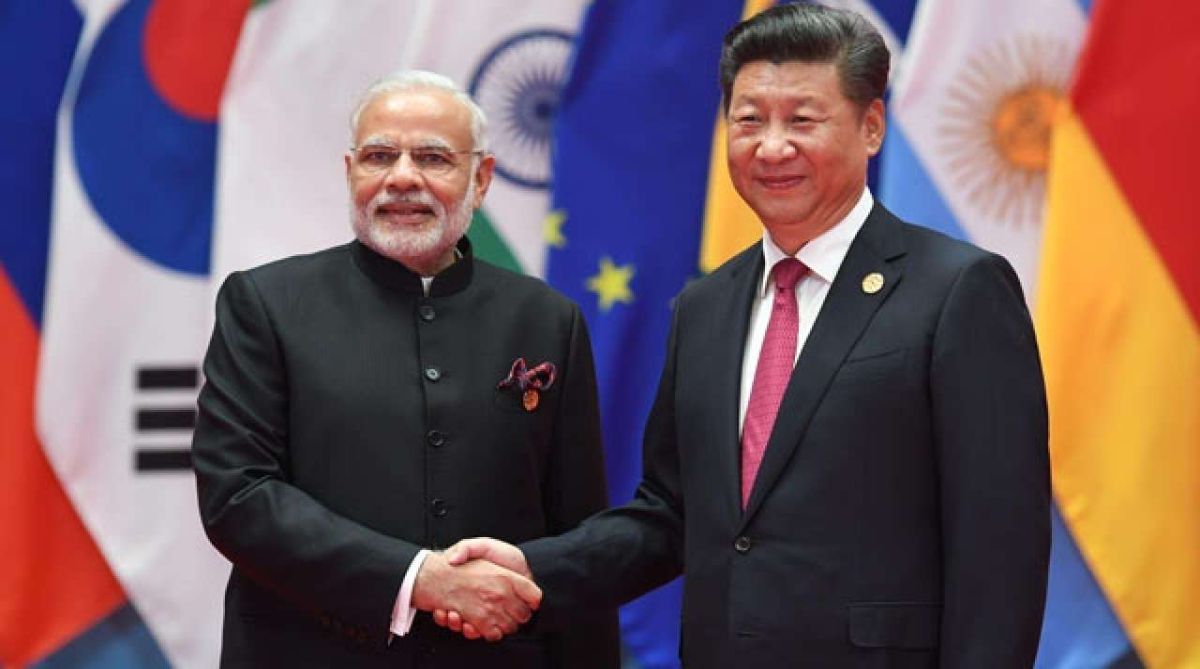
New Delhi, 1st September: Diplomacy often works in subtle shades, not dramatic headlines. Prime Minister Narendra Modi’s recent visit to Tianjin for bilateral talks with Chinese President Xi Jinping reflected exactly that spirit. After years of tension along the Line of Actual Control, Modi highlighted progress: disengagement between Bharatiya and Chinese troops, an agreement on border management, and the resumption of the Kailash Mansarovar Yatra. He also announced the return of direct flight connectivity—an important move for trade, travel, and cultural ties. “The interests of 2.8 billion people are linked to our cooperation,” he said, underscoring that stability between the two Asian giants was not merely bilateral, but global.
Congress Sees Only Betrayal

Instead of welcoming these developments, the Congress Party turned to its familiar playbook—accusing the Modi government of “spinelessness” in the face of Chinese aggression. Spokesperson Jairam Ramesh reminded the nation of the tragic loss of 20 Bharatiya soldiers in Galwan in June 2020 and argued that Modi’s outreach amounted to legitimizing China’s actions. He further accused the government of ignoring China’s massive hydropower project on the Yarlung Tsangpo, unchecked dumping of Chinese goods into Bharatiya markets, and Beijing’s growing military partnership with Pakistan. To Congress, every handshake with Beijing looks like surrender, every dialogue a compromise. But this one-dimensional framing begs the question: does the opposition want lasting peace, or perpetual confrontation?
• चीन ने गलवान घाटी में हमारे 20 जांबाज सैनिकों की जान ले ली
• ऑपरेशन सिंदूर के वक्त चीन खुलकर पाकिस्तान का साथ दे रहा था
• चीन ने पाकिस्तान को लाइव अपडेट दिएचीन की इन नापाक हरकतों पर नरेंद्र मोदी ने सख्त कदम उठाया. मुस्कराते हुए चीन के राष्ट्रपति से हाथ मिलाया. pic.twitter.com/fDquMqXwTi
— Congress (@INCIndia) August 31, 2025
The Complexity of Realpolitik

The Congress critique ignores a fundamental truth of statecraft—Bharat cannot afford to disengage from China entirely. Despite border tensions, China remains one of Bharat’s largest trading partners, and outright hostility would only hurt Bharatiya businesses and global standing. Modi’s diplomacy does not erase Galwan or whitewash Beijing’s transgressions, but it recognizes the geopolitical reality that dialogue is essential. When the Prime Minister stresses mutual trust and sensitivity, he is not conceding territory but safeguarding Bharat’s long-term interests by preventing escalation while quietly building military strength at home. The Congress’s absolutist position, by contrast, risks reducing foreign policy to little more than angry sloganeering.
Peace as a Strategic Weapon

Critics within Congress argue that reconciliation rewards Chinese aggression, but they overlook a key strategic dimension: peace itself is leverage. By resuming cultural exchanges like the Kailash Mansarovar Yatra and restarting flights, Bharat is not bowing down but showing confidence. It signals to the world that Bharat prefers dialogue but is not afraid to confront when necessary. This is consistent with Modi’s larger diplomatic doctrine—firm at the borders, open at the negotiating table. By portraying every interaction with Beijing as betrayal, Congress denies Bharat the room to maneuver on the global stage.
The Politics of Negativity

The opposition’s stance reveals less about China and more about its own crisis of identity. By rejecting every initiative outright, Congress positions itself as a perpetual critic rather than a credible alternative. In the process, it risks alienating voters who understand the need for pragmatic engagement with China. The obsession with painting Modi’s diplomacy as weakness ignores the bigger picture: Bharat is navigating one of the most dangerous border disputes in the world while simultaneously growing as a global economic and strategic power. To dismiss this balancing act as “spinelessness” is not just politically shortsighted, it is intellectually dishonest.
Constructive Criticism or Blind Opposition?
Foreign policy cannot be conducted through hashtags and outrage posts. It requires nuance, patience, and above all, a vision beyond party lines. Modi’s visit to Tianjin may not resolve decades of mistrust overnight, but it represents a cautious step toward stability—something any responsible opposition should at least acknowledge. Congress, however, seems trapped in a cycle of reflexive negativity, unable to articulate what its approach to China would look like. Until it moves beyond this posture, its rhetoric will ring hollow.
In the end, diplomacy is judged not by the noise it generates, but by the peace it sustains. And if Congress cannot appreciate even the possibility of peace, it risks being seen not as a defender of national interest, but as a party too blinded by politics to recognize progress when it unfolds before its eyes.
