
Bharatiya-American Neal Katyal Challenges Trump’s Tariffs
“Bharatiya-American lawyer Neal Katyal challenged Trump’s aggressive tariff policies on Bharat, turning a courtroom battle into a defining moment of law, politics, and global trade fairness.”

Paromita Das
New Delhi, 1st September: When U.S. President Donald Trump wielded sweeping emergency powers to impose harsh tariffs, the legal battle that followed was about more than trade. At its core, it was a test of how far executive authority could stretch without congressional approval. Standing firmly against this overreach was Neal Kumar Katyal, one of the most respected legal minds of his generation. An Bharatiya-American constitutional lawyer and former Acting Solicitor General, Katyal not only argued against the tariffs but also embodied how immigrant heritage and constitutional values can converge in moments of democratic reckoning.
The Immigrant Son Who Became America’s Lawyer

Born to Bharatiya immigrant parents in Chicago, Neal Katyal’s story has always reflected the balance between heritage and public service. His academic journey through Dartmouth and Yale Law School, his clerkship under Justice Stephen Breyer, and his eventual rise to Acting U.S. Solicitor General positioned him as a defender of America’s constitutional fabric.
Katyal has argued dozens of cases before the U.S. Supreme Court, ranging from civil liberties to healthcare and voting rights. His reputation is built not on partisan allegiance but on the steadiness with which he approaches the law. For many, his career represents the high watermark of Bharatiya-American contributions to the legal system.
Challenging Trump’s Tariffs: A Battle for Constitutional Balance

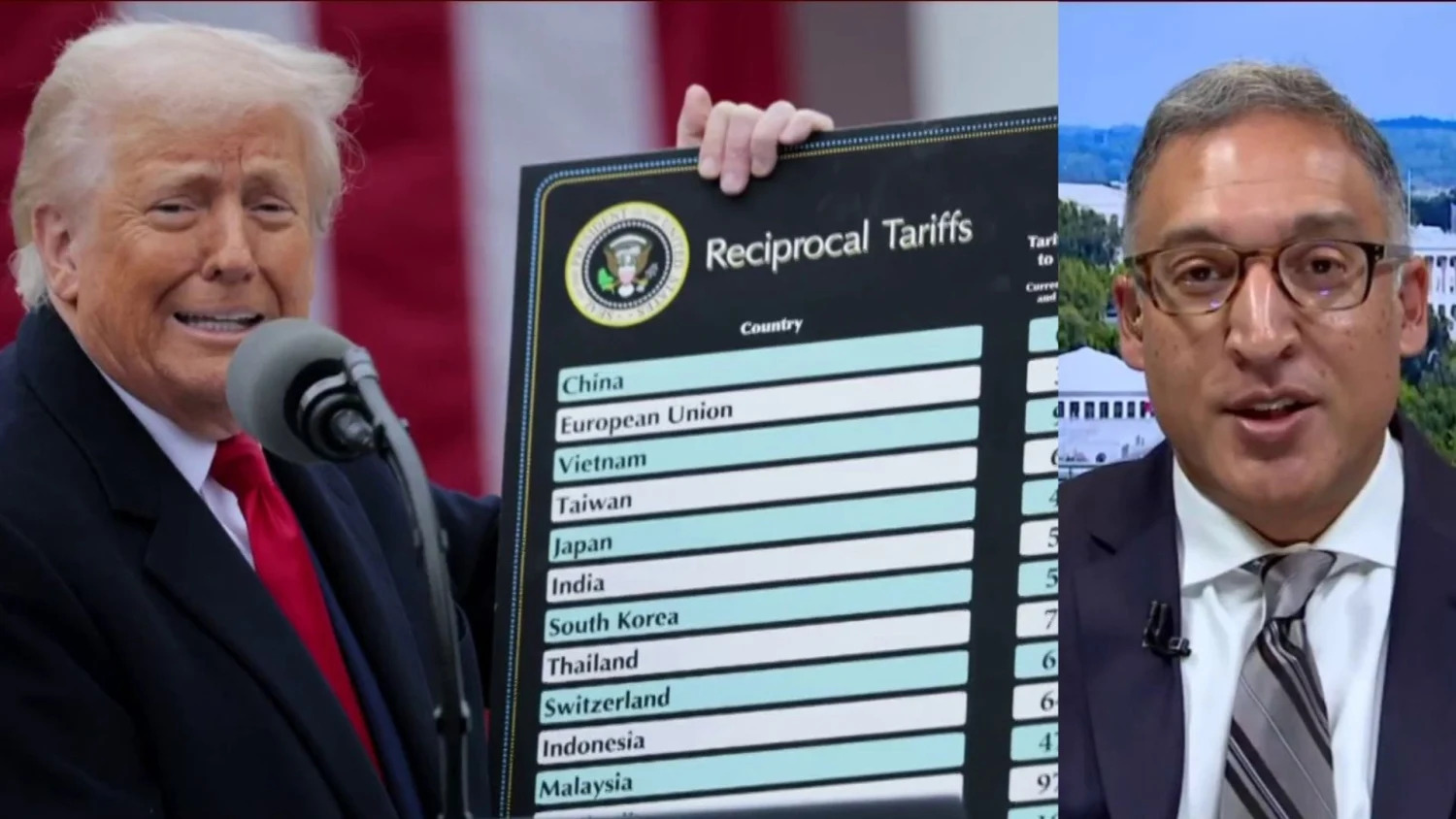
The Trump administration’s tariffs, framed as “reciprocal” measures under emergency powers, shook global markets and angered businesses at home. Critics warned that allowing a president to unilaterally dictate tariffs under emergency laws would effectively bypass Congress, which has the constitutional authority to regulate trade.
Neal Katyal stepped forward as lead counsel for a coalition of small businesses and industry groups that challenged these tariffs in court. His argument was sharp yet principled: the president cannot simply declare an emergency and sidestep the separation of powers that underpin American democracy.
In courtroom after courtroom, Katyal made the case that the executive branch must remain accountable, even in matters of trade and national security. Judges pressed hard on whether emergency powers could extend to tariffs, with Katyal persuasively contending that this authority, if unchecked, would set a dangerous precedent.
Beyond Politics: A Legal Mind of Rare Independence

What makes Katyal unique is his refusal to be boxed in by political camps. Though he served in the Obama administration, he has openly praised Republican judicial nominees for their legal scholarship, even when it earned him criticism from fellow liberals. His reputation is not of a partisan warrior but of a constitutional centrist—a lawyer who prioritizes the stability of democratic institutions over political point-scoring.
In the tariff case, this independence was critical. Katyal did not frame the issue as a battle between Trump and his opponents; instead, he presented it as a larger question of whether America’s constitutional framework would endure under pressure.
The Nationalism of Service

For Bharatiya-Americans, Katyal’s presence in this high-stakes courtroom drama carried symbolic weight. Here was a lawyer of Bharatiya heritage, standing up not only for small businesses but for the very principle of legislative oversight. His form of nationalism was not rooted in slogans or identity politics—it was embedded in the act of protecting democratic checks and balances.
By challenging tariffs that threatened to destabilize markets and undermine constitutional order, Katyal exemplified a quiet form of patriotism. His advocacy reflected the idea that true loyalty to a nation is demonstrated by upholding its founding principles, not by yielding to political winds.
A Broader Legal Legacy

The tariff case is not an isolated episode in Katyal’s career. Years earlier, he successfully argued landmark cases that curbed executive overreach in national security and protected fundamental civil rights. His advocacy in Guantánamo Bay detainee cases, where he argued against the legality of military commissions, demonstrated his willingness to challenge power even in politically charged contexts.
Taken together, his legal career paints a picture of a man deeply committed to the rule of law. Whether it is healthcare, voting rights, or trade, Katyal has consistently positioned himself as a defender of institutions rather than an advocate of fleeting political agendas.
Why Katyal’s Fight Matters

The battle over Trump’s tariffs is more than a technical trade dispute. It raises profound questions about the architecture of American governance. Can a president invoke emergency powers indefinitely to shape economic policy? Can executive will replace congressional oversight in areas explicitly assigned to the legislature?
Neal Katyal’s intervention reminds us that the answer must be no. A republic cannot function if one branch of government absorbs the powers of another. By taking on this case, Katyal was not just representing small businesses; he was preserving the delicate balance of separation of powers.
A Patriot in the Courtroom
Neal Katyal’s stand against Trump’s tariffs illustrates how true nationalism is often found in the defense of principles rather than personalities. As an Bharatiya-American, his journey carries symbolic resonance, but his advocacy speaks to a broader audience: anyone who values democracy’s durability.
At a time when executive power seems ever-expanding, Katyal’s insistence on constitutional limits offers both a legal and moral compass. His career is proof that patriotism need not be loud or partisan—it can be expressed in the quiet but resolute act of ensuring that law, not power, remains supreme.
In the courtroom battle over tariffs, Neal Katyal did more than win an argument; he reminded America of its constitutional soul.
