
States Cannot Challenge President or Governor on Bills: Centre
Solicitor General clarifies Article 32 and 361 protections before Constitution Bench

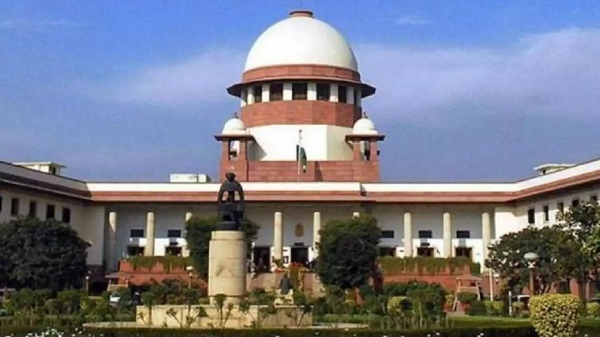
New Delhi, 28th Aug: The Central Government on Thursday told the Supreme Court that state governments cannot file petitions challenging decisions taken by the President or Governor on bills passed by state legislatures, even if states claim it violates citizens’ fundamental rights.
The submission was made by Solicitor General Tushar Mehta before a five-judge Constitution Bench led by Chief Justice B.R. Gavai, with Justices Surya Kant, Vikram Nath, P.S. Narasimha, and A.S. Chandurkar also present.
Mehta explained that the President seeks the Court’s opinion on whether states can approach the Supreme Court under Article 32 to challenge such decisions and clarified the scope of Article 361, which provides that the President or Governor is not answerable to any court in the exercise of their powers.
Key points made by Mehta:
- Petitions under Article 32 by state governments against President/Governor decisions are not maintainable.
- Courts cannot issue directions or entertain challenges against such decisions.
- Article 32 protects fundamental rights, which are held by citizens, not states; states are custodians of citizens’ rights.
- Cited the April 8 ruling, where the Court allowed states to approach the SC if a Governor fails to act on a bill within a timeline, but clarified it does not authorize challenges to presidential/ gubernatorial decisions.
- Emphasized that non-compliance by a constitutional authority does not permit courts to direct another constitutional authority.
The discussion arises amid questions on Governor delays in passing bills, including crucial legislation like budgets. On Aug 26, the Supreme Court raised concerns over whether a Governor’s indefinite delay could stall essential legislation, asking if the judiciary has any remedy in such cases.
The hearing continues on the constitutional reference sent by President Droupadi Murmu under Article 143(1), seeking guidance on whether courts can direct her to act on state bills within a specified timeline.
