

By Anjali Sharma
UNITED NATIONS – UNICEF on Thursday reported that Russia’s latest deadly attacks on Kyiv overnight killed 4 children, including a toddler and dozens injured, in a press release issued in New York.
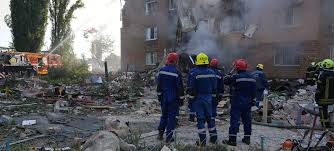
According to the UNICEF, the youngest victim of the bombing raid was two-and-a-half years old, the released video footage showed smoke billowing from a Kyiv apartment block with a massive hole where its roof had been.
UN chief Antonio Guterres condemned the attacks said that targeting civilians and civilian infrastructure violated international humanitarian law. They are “unacceptable and must end immediately”, followed by a ceasefire resulted in a “just, comprehensive, and sustainable peace in Ukraine”, he insisted, in a statement issued by UN Spokesperson Stephane Dujarric in New York.
UNICEF Representative, Munir Mammadzade, said that nowhere in Ukraine is safe today. The air-raid alert in Kyiv lasted almost 12 hours, he noted.
He also condemned the “continuous attacks” reportedly involved ballistic missiles and drones by Russia, which launched a full-scale invasion of Ukraine in February 2022.
“I’m just back from one of the sites that were impacted, severely and still, the search and rescue operation is continuing,” he said.
He added that clothes, toys and shoes lay strewn across the pavement of the impacted residential area in the Darnytskyi suburb.
“Across the city, there were four kids confirmed killed and more than 10 injured; most likely these numbers will go up,” he added.
Media reports indicated damage to civilian infrastructure including Ukraine’s railways.
Mr. Mammadzade warned that Russian attacks have continued closer to the front line, targeting key energy infrastructure ahead of winter.
He stressed that in Kyiv and in frontline areas, plummeted temperatures are “the biggest challenge”, he appealed donors and partners to support the UN agency’s winterization plan by contributing more to its Ukraine humanitarian fund, which faces a 40 per cent funding shortfall.
Mr. Mammadzade said people within 10KMS of the front line “require immediate support”, so that “families and children can survive and most importantly, have their livelihoods protected”.
The development came as the Ukraine children prepare to return to school against a backdrop of ever-present air-raid sirens that are “becoming kind of a norm”, even if the impact of the war on many youngsters’ mental health is as serious as it is common.
“We know that even if war ends today, [it] will be for generations to come,” Mr. Mammadzade explained.
He pointed out to sudden mood swings linked to post-traumatic stress and feelings of hopelessness among children he has met in frontline areas including Donetsk, Sumy and Kharkiv.
According to UNICEF a kindergarten was also damaged in the latest attacks.
“What they basically fear the most is about their lives and unfortunately, quite often, they mention to us that they don’t have dreams or any hopes,” he said.
“What they only need is peace – and this peace to happen as soon as possible – so that they can go back to normalcy.”
Mr. Guterres renewed his call for a ceasefire, insisted that it should fully uphold Ukraine’s “sovereignty, independence and territorial integrity, within its internationally recognized borders, in line with the UN Charter, international law and relevant UN resolutions”.
