
A Bureaucrat Recalls: Insights of Capt. Narinder Singh IAS (Retd.) Through the Needonomics Lens


Prof. M. M. Goel, Proponent Needonomics Former Vice-Chancellor
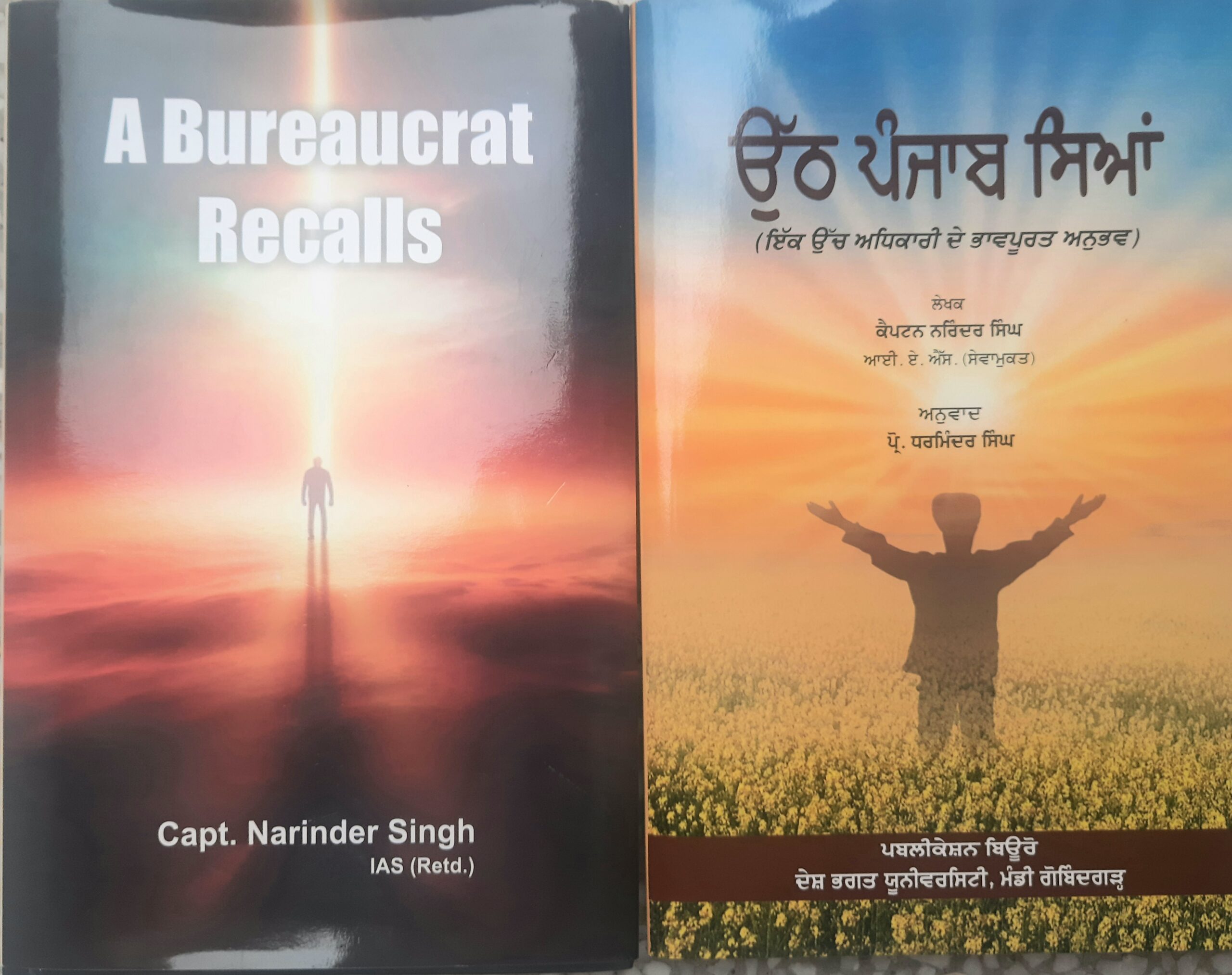
Book Review – A Bureaucrat Recalls by Capt. Narinder Singh IAS (Retd.) ISBN: 9789358162462, ₹595, 128 pages Unistar Books Mohali (2024) translated in Punjabi Edition “ Uth Punjab Sian” by Prof Dharminder Singh Desh Bhagat University Mandi Gobindgarh ( 2025) ISBN: 9789349761650, ₹350,135 pages Saptrishi Publications
On August 8, 2025 —my auspicious birthday—I was privileged to attend the release ceremony of A Bureaucrat Recalls at Desh Bhagat University, Mandi Gobindgarh. The occasion was more than symbolic. It was a convergence of lived experience and reflective thought, embodied in the memoir of Capt. Narinder Singh, IAS (Retd.), whose professional journey spans the military, bureaucracy, and judiciary. From the perspective of Needonomics School of Thought (NST), I advocate that focuses on fulfilling needs rather than chasing endless wants—this memoir is not just a recollection of a life in public service. It is a rich source of insights for present-day Needo-governance— as a street SMART(simple, moral, action-oriented, responsive and transparent) governance model that balances efficiency, ethics, and empathy.
A Bird’s-Eye View of the Book
The memoir is structured into 14 substantive chapters, each spotlighting a specific theme from Capt. Singh’s career and observations:
- Gazing Bureaucracy with Magnifying Glass – A candid look at the machinery of governance.
- Valuable Mantras for Professionals – Principles distilled from decades of service.
- Partition and Its Imprint on High Court – Historical context shaping institutional character.
- Justice Delivery System vis-à-vis Civil Services – The interplay between two pillars of democracy.
- High Court Bar Association – Its Activities – A microcosm of legal and professional culture.
- Medical Canopy in High Court – Welfare and support systems often overlooked.
- Drugs Destroying Humanity – A Cause of Worry – A social and economic crisis in Punjab.
- Spiritualism and Humane Instinct of Punjabis – Cultural resilience and empathy.
- Sikh Regiment – Nischay Kar Apni Jeet Karoon – Military discipline as a guiding ethic.
- Olympics, Asiad, and India – The role of sports in shaping national pride.
- Punjabis Who Brought Laurels in Olympics and Asiad Games – Celebrating sporting heroes.
- Prelude to Sports Articles – Contextualizing sports reflections.
- Punjab’s Sportsmen with Padma Shri and Arjuna Awards – Honoring excellence.
- Punjab’s Sportsmen/Women Glorified with Arjuna Awards – Recognizing sustained achievement.
The thematic diversity reflects a lifetime of observation, from administrative intricacies to cultural strengths and social challenges.
Man behind the Memoir
Capt. Narinder Singh emerges as a man of many seasons—a soldier, a bureaucrat, a legal observer, and above all, a conscientious citizen. His military background adds discipline and precision; his bureaucratic career provides insider knowledge of governance; his interaction with the judiciary enriches his understanding of justice and institutional behavior.
What sets him apart is his honesty of purpose—the courage to name weaknesses, highlight systemic flaws, and speak with blunt clarity. In an era where official narratives are often sanitized, such candor is refreshing and necessary.
Needonomics in Action: Key Themes
1. Bureaucracy and Governance – Serving Needs, Not Wants
In “Gazing Bureaucracy with Magnifying Glass,” Capt. Singh reflects on the inertia, red tape, and overemphasis on procedures that often hinder effective governance. Needonomics demands that governance prioritize needs—public welfare, timely service delivery, and transparency—over bureaucratic self-interest or politically driven vanity projects. His call for more responsive, leaner institutions aligns perfectly with this vision.
2. Professional Ethics – Moral Toolkit
“Valuable Mantras for Professionals” reads like a handbook for ethical public service. The lessons—integrity, diligence, impartiality—mirror the Gita’s counsel to perform one’s duty (karma) without attachment to results. Needonomics insists on such moral restraint, ensuring that governance is not swayed by greed or short-term political gains.
3. Drugs in Punjab – A Crisis Beyond Law Enforcement
“Drugs Destroying Humanity – A Cause of Worry” is one of the book’s most urgent chapters. Capt. Singh treats the drug menace not just as a criminal issue but as a social, economic, and moral emergency draining human capital. From a Needonomics standpoint, solutions must be holistic—combining prevention, rehabilitation, and job creation with strict enforcement.
4. Spiritualism and Cultural Values
The chapter “Spiritualism and Humane Instinct of Punjabis” is a tribute to the community’s innate generosity and resilience. Needonomics recognizes that economic progress without spiritual grounding risks becoming hollow. Capt. Singh’s emphasis on compassion and moral responsibility complements the Gita’s call for balanced living.
5. Sports – An Investment in Human Capital
The multiple chapters on sports might seem like a departure from governance, but they are, in fact, integral to it. Sports instill discipline, teamwork, and perseverance—qualities as essential in administration as in athletics. Needonomics views sports as a legitimate and necessary investment in societal well-being.
Style: Blunt, Clear, and Constructive
Capt. Singh does not shy away from global comparisons to show where India excels and where it lags. His criticism is never destructive; it is constructive, aimed at reform rather than condemnation. This is exactly the Needonomics ethos—identifying weak links not to shame, but to strengthen.
Why This Book Resonates with Needo-Governance
In my work on Needo-governance, I emphasize:
- Prioritization of essentials over extravagance.
- Accountability at every administrative level.
- Ethical leadership grounded in moral clarity.
- Evidence-based policy rooted in ground realities.
A Bureaucrat Recalls offers lived examples of these principles—whether in analyzing the judicial system, critiquing bureaucratic culture, or advocating for sports and youth development.
Messages that Add Weight
The book includes messages from dignitaries, Olympians, and other respected figures. These are more than ceremonial endorsements—they serve as independent validations of Capt. Singh’s credibility and the relevance of his insights.
A Bridge between Past Lessons and Present Needs
By recounting events such as the Partition’s lasting imprint on the High Court, the memoir shows how history shapes present governance realities. The sports chapters, meanwhile, bridge past glories with a call for renewed investment in nurturing future champions.
This is not nostalgia—it is strategic memory, using the past to inform the present and prepare for the future.
For Whom This Book is Essential
- Policymakers will find practical suggestions for improving governance.
- Scholars will appreciate its value as primary material on Punjab’s legal, social, and administrative history.
- General readers will discover inspiring narratives and moral lessons applicable beyond bureaucracy.
From the Needonomics viewpoint, the book exemplifies how personal narratives can reinforce the philosophy of need-based, value-driven governance—drawing on India’s spiritual heritage to meet modern challenges with balance and foresight.
Conclusion:
A Bureaucrat Recalls is more than a memoir—it is a moral compass for those navigating the complexities of public service. Capt. Narinder Singh offers not only stories but also strategies; not only reflections but also roadmaps for reform with ethics, efficiency, and empathy for needo=governance . Viewed through the Needonomics lens, the book affirms that the path to Viksit Bharat lies not in unchecked consumption or superficial reforms, but in ethical governance that meets real needs with honesty, efficiency, and compassion. For anyone who believes that governance can be both effective and ethical, and that personal integrity is the cornerstone of public trust, this is a must-read.
