
Supreme Court : Can Governors Override Majority Governments?
Debate : Supreme Court’s Big Test on Governor vs Majority Rule

Poonam Sharma
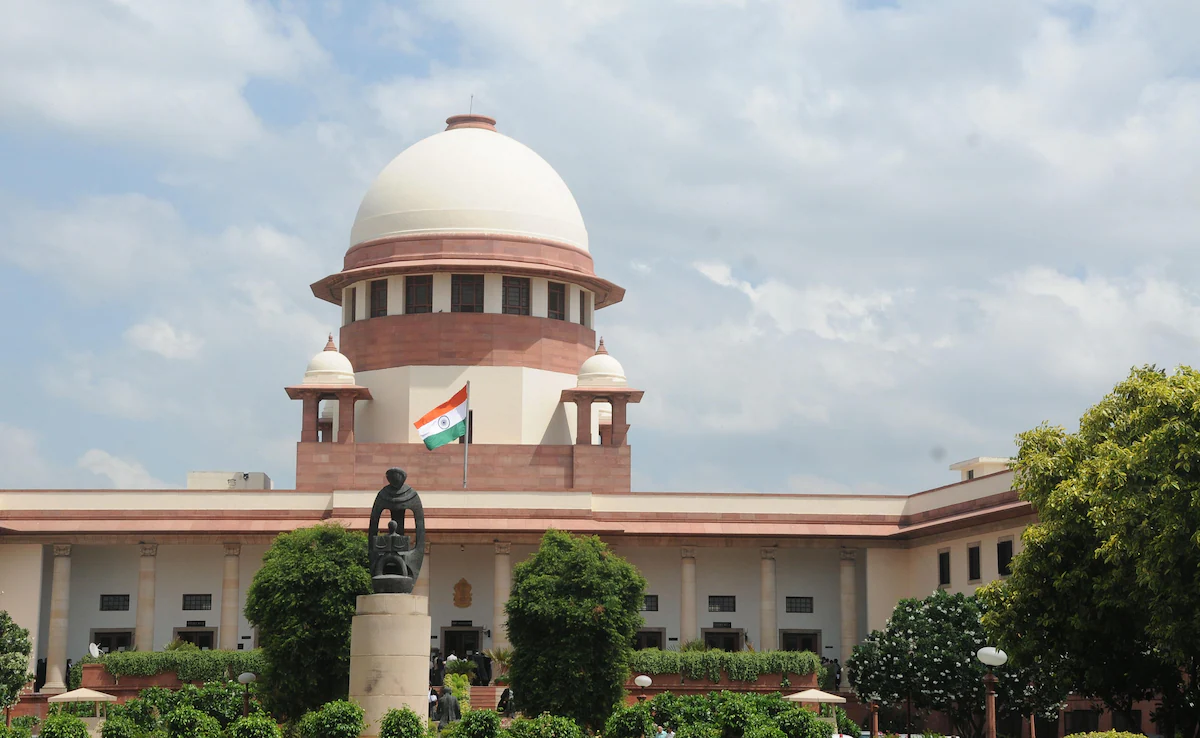
The Supreme Court of India is sitting on one of the most significant constitutional hearings in recent history, reviewing the jurisdiction of Article 200 of the Constitution, which regulates the authority of Governors in handling bills enacted by state legislatures. The issue came before the Court after President Droupadi Murmu referred a batch of constitutional questions pertaining to the powers of Governors and the delays or obstructions that they tend to create in the legislative process from time to time. On August 21, the Court’s five-judge Constitution Bench wrapped up the second day of arguments, and arguments are due to continue.
At the heart of the debate lies a fundamental constitutional question: Should state governments, elected with a clear majority, operate subject to the discretion—or whims—of Governors, who are nominated by the Centre?
Article 200 and the Governor’s Role
Article 200 empowers a Governor to take one of three courses when a bill is presented for assent:
Give assent to the bill, allowing it to become law.
Withhold assent, effectively vetoing the bill.
Hold the bill for the consideration of the President, especially where the bill is likely to be contrary to central laws or matters of constitutional significance.
Although these choices seem simple, in reality, Governors’ roles have become contentious. Governors have held up decisions, kept bills pending for months, or sent them back to legislatures without proper explanation on various occasions over the past few years.
Centre vs States: The Political Undercurrent
This row must be viewed in the larger context of India’s federal set-up. Governors are appointed by the President at the recommendation of the Union government. In states governed by opposition parties at the Centre, there is often tension. The opposition parties normally charge that Governors are political representatives of the central government and not impartial constitutional figures.
For example, in states like Kerala, Tamil Nadu, Telangana, and Punjab, friction between Governors and elected governments has frequently led to delays in implementing legislation. Bills relating to university administration, state autonomy, or welfare schemes have often been caught in this tussle.
The bigger fear is that if Governors exercise their powers under the Constitution unfettered, they may de facto freeze the operations of majority-elected governments, thus subverting the people’s will.
Supreme Court’s Previous Interventions
It is not the first time the Supreme Court has had to delineate the extent of gubernatorial powers. Various landmark decisions set the context for the present discourse:
Shamsher Singh vs State of Punjab (1974): The Court directed that Governors have to act upon the aid and advice of the Council of Ministers except in very exceptional situations.
Rameshwar Prasad vs Union of India (2006): The Court deprecated the abuse of gubernatorial discretion in Bihar under a hung assembly.
Nabam Rebia vs Deputy Speaker (2016): The Court pointed out that Governors cannot do so in an arbitrary manner and have to be within the purview of constitutional propriety.
Notwithstanding these judgments, there are still ambiguities, such as what time period a Governor has to act upon a bill, or what reasons must be advanced to reserve a bill for presidential assent.
The Core Question Before the Bench
The present five-judge Constitution Bench is considering whether Governors enjoy untrammelled discretion under Article 200 or whether their action is constrained by constitutional morality and the ideals of representative democracy.
The Court’s tart question—”Can majority governments operate according to the will of the Governor?”—grasps the core of the controversy. If the reply is “yes,” then unelected Governors would exercise a veto over democratic legislatures. If “no,” then the Court must set transparent boundaries on gubernatorial prerogative, ensuring Governors play a facilitative rather than an obstructive role.
Possible Outcomes and Implications
Defining Timelines: The Court could hold that Governors should act on bills within a reasonable period (three months, for example). This would rule out indefinite postponements.
Barring Discretion: The Court could specify that withholding assent should be an exception, not the norm, and be supported by reasons in writing.
Strengthening Federalism: A judicious judgment could re-educate state governments and Raj Bhavans about each other, re-affirming the federal nature of the Constitution.
Curbing Central Overreach: By restricting the purview of reserving bills from the President, the Court can ensure that Governors are not made instruments of the Union government to delay state legislation.
Each of these developments would have very significant Centre-State implications in India.
Political Stakes
Apart from the constitutional language, this controversy has heavy political implications. The opposition parties perceive the issue as representative of Centre’s attempts to undermine non-BJP-ruled states. For the ruling party at the Centre, Governors tend to be seen as a constitutional check on state governments that might enact legislation contrary to national policy.
The Supreme Court’s verdict, thus, will not just affect governance but also redefine political strategies. If Governors are checked, state governments will be emboldened to legislate more autonomously. If the Court confirms broad gubernatorial latitude, it can incite Raj Bhavans to go on acting as bulwarks against states, commonly along central preferences.
Conclusion: A Constitutional Crossroads
India’s constitutional structure bestows Governors a distinctive, though not supreme role. Real sovereignty in a democracy is vested with the people and their representatives. While the Supreme Court hears arguments, it is at the turning point: it has to balance constitutional form and democratic content.
The broader principle in question is whether the people’s will, as articulated by their elected governments, can be subject to the unelected power of Governors. The response will not only determine the future of Centre-State relations but also India’s democratic system’s credibility.
As federal tensions run high, the Supreme Court decision will ratify either the supremacy of democracy or jeopardize making majority mandates dependent upon gubernatorial whim
