
RSS Volunteers Lead Relief in Flood-Hit Uttarkashi, Pauri Garhwal

Poonam Sharma
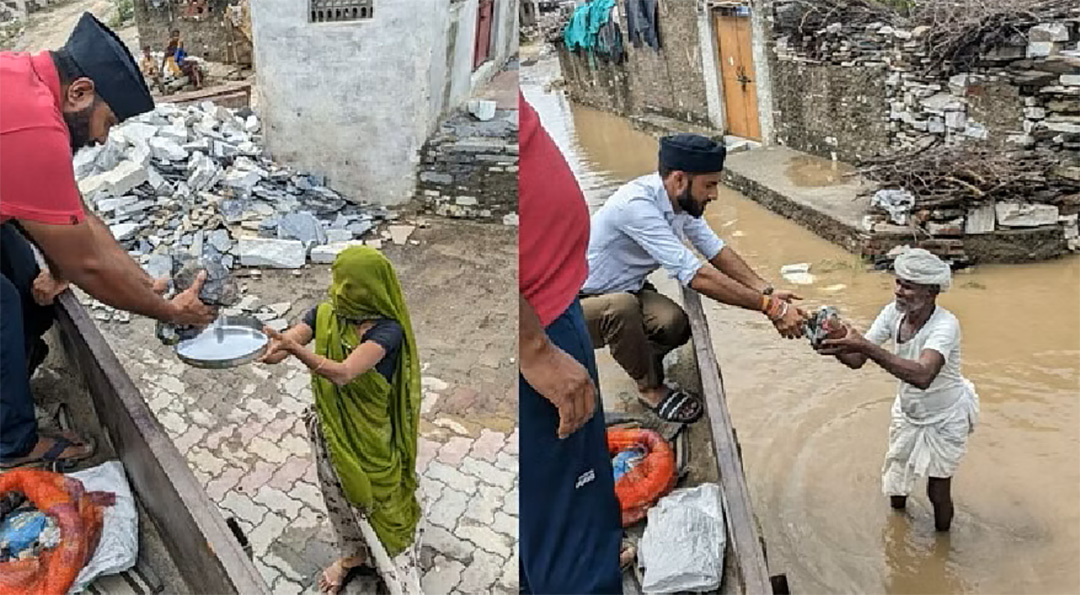
The unabating monsoon rains in Uttarakhand brought extensive devastation, particularly in Uttarkashi and Pauri Garhwal districts. Landslides, swept-away bridges, and flooded roads isolated numerous remote villages, leaving people stranded with minimal access to basic supplies. During the crisis, the Rashtriya Swayamsevak Sangh (RSS) has moved in with a big relief effort, deploying its volunteers to reach out to disaster-struck families in some of the most remote locations.
Reaching Where Roads Cannot
With roads washed away in large numbers and transport gravely affected, it has become a task to reach far-flung mountain villages. RSS volunteers and ex-servicemen have been trekking on foot through mountains to bring relief material. With heavy packs of the necessary material, they have been trekking to far-off settlements where aid has not yet reached.
The initial goal of the first team has been well-defined—give each affected family a two-week ration package. These packets include rice, pulses, flour, cooking oil, salt, and other essentials to keep families going until normal supplies can be replenished.
A Proven Relief Model
This is not the first time the RSS has used this kind of strategy in Uttarakhand. In previous calamities, the same fortnight-long ration packets have worked exceedingly well in providing immediate relief to affected families. This has given the organisation an opportunity to react quickly this time, without wasting precious hours on planning.
In Pauri district, Sainji and surrounding villages have already been supplied with the kits. In Uttarkashi, relief groups have been working in Radul, Kalgaadi, and other badly affected areas. The kits are given directly to every home so that no one is left without essentials.
Dharali Disaster and Beyond
One of the hardest-hit areas has been Dharali and the surrounding areas. Under the guidance of the RSS Uttarkashi unit, volunteer groups have been able to reach villages attached to Harshil, Bhatwari, Gangnani, and Dharali itself. The damage has been massive there—houses swept away, crops laid waste, and essential infrastructure destroyed.
The volunteers not only distributed ration kits but also carried out thorough damage assessments. By engaging in conversations with residents and recording the depth of losses, they have prepared thorough reports that are now being dispatched to the RSS’s coordination center at Dehradun. The reports will serve to streamline further aid and direct resources to areas in need.
Ground-Level Surveys and Emotional Support
Relief operations have transcended material assistance. RSS teams have carried out comprehensive surveys in affected areas, sitting down with locals to hear first-hand testimonies of the disaster. Former combatants serving with the volunteers have added expertise in crisis management and making relief distribution smooth and systematic.
In perhaps the most humane act of the campaign, RSS volunteers have individually visited each family who have lost their loved ones in the disaster. They have offered condolences and promised these families that the organization is with them unequivocally during this period of loss. For survivors, this empathy has been as valuable as the material relief—reminding them that they are not by themselves.
Documenting Losses and Missing Persons
Data gathered through these surveys have also revealed people missing or confirmed deceased. This information is important not only in planning the rescue and relief operations but also in making sure that no affected individual is left out in the rehabilitation process.
The RSS has been coordinating these conclusions into a structured report, which will be utilized in planning the next stages of the relief operation. These will encompass the reconstruction of destroyed homes, rebuilding livelihoods, and assisting children who could have lost their parents or guardians.
Appeal for Wider Public Support
Realizing that this huge relief work has to be supported over a long period of time, the RSS has invited all people of India to contribute to the effort. The donations are being routed through the Uttaranchal Daivya Aapda Peedit Sahayata Samiti, a volunteer committee that has handled relief operations in natural disasters in Uttarakhand earlier. Bank account details have been published so that well-wishers can make contributions quickly and securely.
This committee has a record of galvanizing mass support and taking assistance directly to affected people, without the delays of bureaucracy. By coupling the volunteer networks in the localities with funding at the national level, it is able to send relief to the farthest reaches of disaster areas.
Beyond Immediate Relief
Although the present emphasis is on immediate needs—food, water, and medicine—the RSS’s organized approach also anticipates eventual long-term recovery. From previous experience in Uttarakhand, it has been known that repairing roads, schools, and essential infrastructure is a time-consuming task, taking months or even years.
By keeping personnel in the afflicted villages and in contact with local leaders, the RSS hopes to be a part of these long-term undertakings. This means assisting in the re-establishment of agriculture, assisting small businesses, and organizing medical camps after the instant crisis has subsided.
A Spirit of Service
The relief operation still going on in Uttarkashi and Pauri Garhwal is a testament to the service spirit of RSS volunteers. Operating in risky circumstances, with minimal equipment, at times, they have placed the comfort of others above theirs.
Numerous volunteers have had to walk up steep and slippery paths with heavy packs in wet attire. But the spirit is not dampened—driven by the fact that all they are doing is actually contributing to a concrete impact in the survivors’ lives.
Conclusion
The Uttarakhand floods have again put to test the resilience of its citizens and the efficiency of relief agencies in responding. In this context, the RSS’s speed of mobilization, disaster relief experience, and commitment to reaching even the most remote villages have made a huge difference.
As crushed roads and bridges are rebuilt and things start slowly returning to their normal state, the memory of volunteers venturing into the mountains to bring food and comfort will be a potent symbol of unity in the midst of adversity. And as pleas for public assistance keep coming, the hope is that ever more people will step up, helping to make those affected not just survive the moment but also rebuild for a brighter future.
