
Aditya Srivastava vs Rahul Gandhi: The Vote Chori Truth

Paromita Das
New Delhi, 11th August: Does Rahul Gandhi really know what he’s trying to prove? At a time when the Election Commission of India (ECI) is actively regulating and refreshing the voter list to maintain electoral transparency, the Congress leader chose to stage a protest at Makar Dwar in Parliament, shouting that “democracy is dying.” Instead of engaging in the crucial Parliamentary Question Hour — where ministers answer questions directly and accountability is tested — he and his colleagues have been boycotting the sessions.
Vote Chori is an attack on the foundational idea of 'one man, one vote'.
A clean voter roll is imperative for free and fair elections.
Our demand from the EC is clear – be transparent and release digital voter rolls so that people and parties can audit them.
Join us and… https://t.co/4V9pOpGP68
— Rahul Gandhi (@RahulGandhi) August 10, 2025
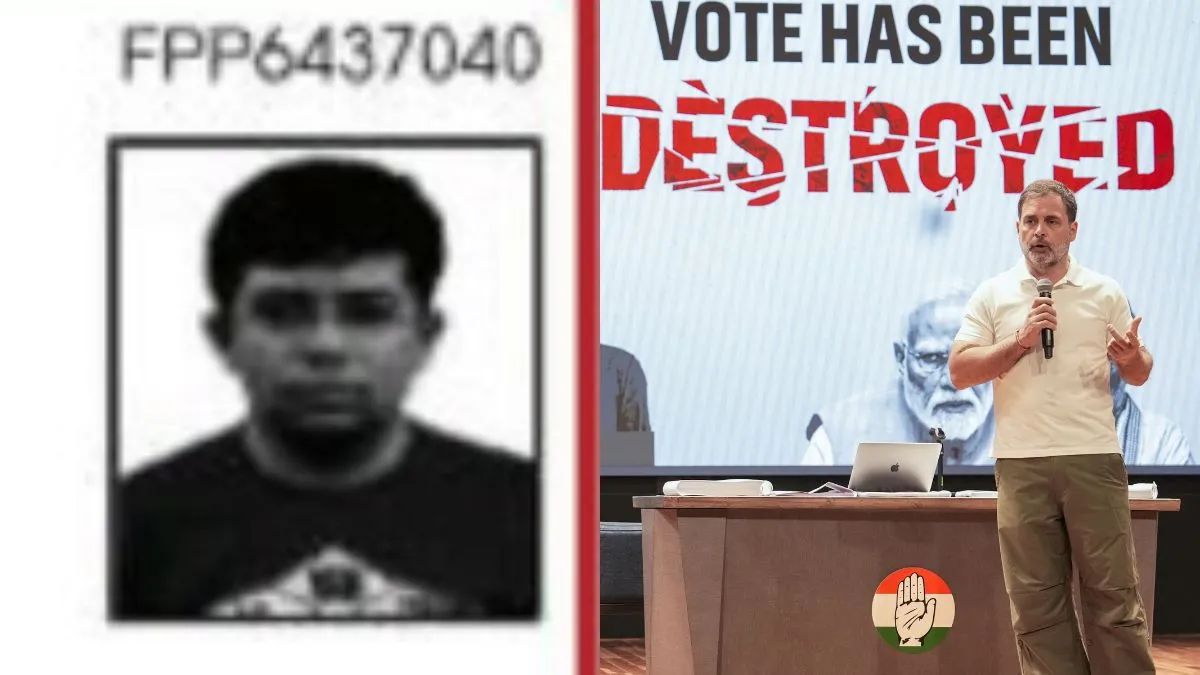
This political theatre took an even more questionable turn when, a day before his protest, Rahul Gandhi publicly accused a private citizen, Aditya Srivastava, of being part of an elaborate voter fraud scheme. But as the facts emerged, the narrative he pushed began to crumble — revealing not just a lapse in political judgement, but a disregard for the personal dignity of a common man.
The Accusation That Sparked Controversy
On August 7th, during a press conference, Rahul Gandhi alleged that Aditya Srivastava’s name appeared on electoral rolls in three different states — Maharashtra, Karnataka, and Uttar Pradesh — even claiming it appeared four times. He suggested this was part of a broader conspiracy involving “thousands of such cases” and went so far as to state that “11,000 votes have been stolen like this.”
ये आदित्य श्रीवास्तव है,
इन्होंने 1 नही, 4 राज्यों में वोट डाले है
ये कैसे हुआ माननीय हुआ?#RahulGandhi #VoteChori #ElectionCommissionOfIndia #RahulGandhiVoiceOfIndia #RahulExposesVoteChori pic.twitter.com/d5ckVVHfjU
— Vikas Bansal (@INCBANSAL) August 7, 2025
The implication was clear: Aditya Srivastava was being painted as a symbol of alleged “vote chori,” a term Gandhi has used to question the integrity of Bharat’s electoral system.
The Victim Speaks — Facts Over Fiction

On August 8th, Aditya Srivastava himself debunked these claims in a televised interview with India TV. He explained his simple, verifiable story:
- He hails from Lucknow, Uttar Pradesh, where he first registered as a voter.
- In 2016, he moved to Mumbai for work and transferred his voter ID there.
- In 2021, he shifted again to Bengaluru and updated his voter registration accordingly.
At no point did he vote in more than one state during the same election. He clarified that his EPIC number (the unique voter ID number) remained the same throughout — meaning his voter identity was consistently tracked, as per ECI protocols.
Transparency vs. Recklessness
Aditya

Srivastava rightly called out the Congress leader for leaking his personal details in a public forum without consent. More importantly, he dared Rahul Gandhi to present CCTV footage or call records that could substantiate the wild claims of multiple voting. No such proof has surfaced.
India TV’s ground verification at his former Mumbai address confirmed he had indeed vacated the property in 2021, consistent with his own testimony. These details matched official records, leaving little doubt about his innocence.
The ECI’s Role — and the Opposition’s Narrative

The ECI provides a straightforward online process for updating voter details when citizens move to a new state. This system exists precisely to prevent electoral fraud while accommodating Bharat’s highly mobile population. By overlooking these processes — or worse, misrepresenting them — Rahul Gandhi’s accusations appear not only uninformed but misleading by design.
It’s worth noting that this isn’t just about one man’s reputation. By conflating voter roll changes between the 2019 and 2024 Lok Sabha elections, Gandhi’s “research team” created a false impression that directly undermines the credibility of the Election Commission.
A Pattern of Political Deflection

The ‘vote chori’ conspiracy theory seems less about safeguarding democracy and more about rationalising repeated electoral defeats. When a party consistently loses, blaming the system can be a tempting narrative. However, in a democracy as robust as Bharat’s, such claims without evidence risk damaging public trust in institutions rather than strengthening them.
From Parliament to Public Square — The Wrong Priorities

Instead of utilising Parliament’s platform to question ministers and demand policy accountability, Rahul Gandhi chose protest slogans over parliamentary debate. In doing so, he not only diminished the opportunity to address governance issues but also fed a confrontational narrative that thrives on perception rather than substance.
When a leader spends more time accusing without evidence than engaging with facts in Parliament, it raises legitimate questions about political intent versus political performance.
Democracy Thrives on Debate, Not Drama
Bharat’s democratic framework is built on institutions, rules, and processes — not on the volume of protest slogans. Real leadership means using the available democratic tools to question, challenge, and propose solutions. By bypassing these tools and resorting to public spectacle, Rahul Gandhi risks alienating the very voters he claims to defend.

Worse still, targeting a common citizen like Aditya Srivastava without verifying facts is politically reckless and ethically questionable. It sets a dangerous precedent where political rhetoric can trample on personal reputations with little consequence.
The Real Cost of Reckless Politics
The collapse of Rahul Gandhi’s ‘vote chori’ claims in the face of documented facts is more than just a personal embarrassment — it’s a reminder of the importance of truth in public discourse. The Election Commission of India, despite political criticism, continues to refine and secure the electoral process.
Democracy does not die because an opposition leader loses an election. It suffers when its leaders choose sensationalism over substance, and when citizens’ trust in institutions is eroded by baseless allegations. If Rahul Gandhi truly wants to strengthen democracy, the path forward lies in credible evidence, constructive debate, and respect for the truth — not in undermining ordinary citizens and constitutional bodies for political theatre.
