
As Modi Heads to SCO Tianjin All Eyes Turn to D C Reaction
From Galwan’s Ghost to Global Gambit: PM Modi’s High-Stakes Return to China at the SCO Summit Signals a New Diplomatic Posture That’s Raising Eyebrows in Washington—Fuelling Fresh Tensions Over Trade, Influence, and Indo-Pacific Balance.

Paromita Das
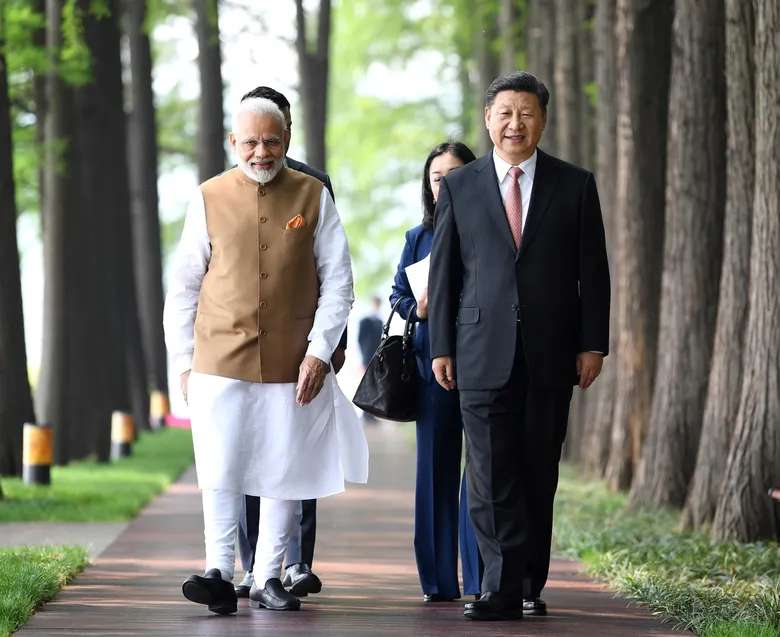
New Delhi, 8th August: As global attention shifts toward the Shanghai Cooperation Organization (SCO) summit set for August 31–September 1 in Tianjin, all eyes are on Prime Minister Narendra Modi’s long-awaited return to China. This is his first visit since the 2020 Galwan Valley clashes, and carries weighty implications—not just for Bharat-China ties, but also for Modi’s ongoing tariff negotiations with Washington. The visit offers Bharat a rare opportunity to demonstrate diplomatic leadership while reshaping the geopolitical narrative, one that could influence America’s trade posture toward Bharat.
Reopening Dialogue After Galwan’s Shadow
The 2020 Galwan clash—where 20 Bharatiya soldiers tragically lost their lives—shattered decades of fragile peace along the Line of Actual Control (LAC). That heated confrontation marked the first loss of life between Bharat and China since the 1962 war, plunging bilateral relations into deep stagnation. But Bharat has since embarked on a careful path of reconciliation. A key turning point came in October 2024, when Modi and President Xi Jinping met on the sidelines of the BRICS Summit in Kazan. This led to disengagement in hot-border zones like Depsang and Demchok, restoring grazing and patrolling rights and marking cautious normalization.

This thaw continued into 2025. Indian Defence Minister Rajnath Singh and External Affairs Minister S. Jaishankar attended SCO ministerial meetings in Beijing, followed by Jaishankar’s direct engagement with President Xi. These interactions signaled Bharat’s balanced approach: firm on security yet open to cooperation.
Modi’s Summit Moving the Needle on U.S. Tariff Calculus
The SCO summit comes at a critical juncture, especially as Bharat faces escalating tariff threats from the United States. President Donald Trump previously threatened to levy steep duties on Bharatiya exports, citing New Delhi’s purchases of Russian oil. Bharat, however, retaliated strongly—highlighting American imports of Russian uranium, fertilizers and palladium, and asserting its sovereign right to strategic autonomy.

Modi’s China summit could shift the U.S. conversation in several ways:
- Projection of Geostrategic Calm: By engaging Bharat-China tensions within a multilateral framework, Modi casts Bharat as a mature stakeholder—not an agitator. This can weaken Trump’s narrative that Bharat acts recklessly, reinforcing New Delhi’s case for strategic flexibility rather than punitive tariffs.
- Strengthened Global Credibility: Bharat’s conciliatory posture, paired with defense of its national interests, boosts its image as a stabilizing force in Asia. When U.S. policymakers evaluate trade policy, they may view Bharat less as a leviable trade partner and more as a sensitive ally deserving of latitude.
- Shifting U.S. Political Perceptions: As domestic opposition to Trump grows—including Bharat-friendly voices like Elon Musk and Nikki Haley—the optics of the SCO visit can reinforce bipartisan support in Washington for a more sensitive and cooperative approach toward Bharat.
A Summit of Substance, Not Spectacle
Modi’s participation in Tianjin isn’t just about optics. He and Jaishankar have consistently advocated for SCO’s core mandates—anti-terrorism, separatism, and extremism. In recent sessions, Bharat refused to endorse joint statements that diluted language on such threats, especially after the Pahalgam terror attack. Modi’s attendance reinforces Bharat’s insistence that the SCO remain true to its founding principles.

Through high-level diplomacy, Bharat is already securing practical advances: trade, air links, pilgrimage access via Kailash Mansarovar, and visa facilitation are being resumed. Modi’s summit presence will likely further cement these initiatives, signaling to the U.S. that Bharat manages its regional security and civil engagement responsibly.
An Bharatiya Rebuttal Wrapped in Diplomacy
Modi’s calculated moves at the SCO will allow Bharat to counter U.S. tariff pressure indirectly but effectively. When Bharat demonstrates nuanced dialogue with Beijing while continuing to defend its national interests, it becomes harder for Washington to justify broad-brush economic punishments. Bharat’s strategic behavior counters Trump’s caricature of Bharat as a rogue energy profiteer.

Importantly, Bharat’s messaging will be rooted in data and principle—not reactionary rhetoric. By asserting its energy policy is driven by market realities and public welfare, New Delhi continues to frame itself as a reasoned and level-headed partner, even in trade disputes.
Diplomacy Over Demagoguery
Modi’s visit isn’t just about border freezes or camera swaps: it’s about resetting global respect and projecting a leadership style that balances strength with strategy. Bharat’s message is clear: it can engage China when necessary, stand firm when required, and assert its rights while remaining constructive.

For the U.S., particularly under leaders still tethered to Trump’s transactional worldview, this challenges old reflexes. Bharat will no longer be seen as expendable or defiant, but rather as an essential ally—and one worth understanding rather than punishing.
If Washington continues to rely on tariff threats to wield influence, it risks distancing what may soon become its most democratically aligned economic partner in the region.
A Summit That Might Redirect U.S. Trade Thinking
Prime Minister Modi’s attendance at the SCO summit in Tianjin marks more than diplomatic diplomacy; it is a statement of Bharat’s emergence as a measured global power. It underscores Bharat’s ability to engage disputed relationships judiciously, to uphold regional institutions, and to push back without severing ties.
As U.S. tariff threats loom, Bharat’s measured engagement with China stands as a demonstration of geopolitical maturity. If Washington wants Bharat to continue advancing shared regional stability, it’s time to support sophistication—not superpower tantrums. The SCO visit could be the moment when American trade strategy begins to respect Bharatiya sovereignty more—and threaten it less.
