
Kashi Drowning — And the Administration Is Still in Dry Denial
Despite heavy investments and repeated promises, Varanasi’s monsoon preparedness collapses, raising serious governance questions.

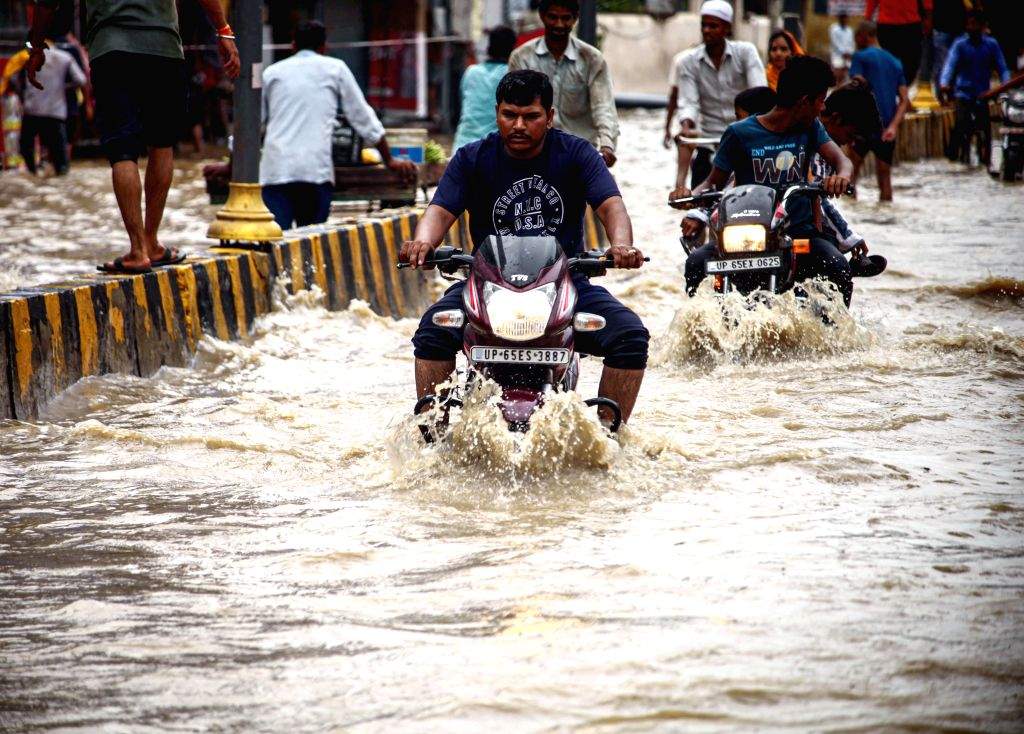
- Monsoon rains submerge key roads and colonies, crippling daily life in PM Modi’s constituency.
- 85 known waterlogging zones and ₹4 crore in funds failed to prevent civic breakdown.
- Residents plant paddy in flooded streets to mock inaction; letters to authorities go unanswered.
- Calls grow for answers from Mayor Ashok Kumar Tiwari and the Varanasi Municipal Corporation.

The sight of Varanasi’s historic lanes and newly built roads submerged under filthy floodwater this monsoon has raised uncomfortable but necessary questions—not about the weather, but about governance. For a city that serves as the Prime Minister’s political stronghold and a global symbol of Indian heritage, the images of residents wading through waist-deep water are a sobering reminder that optics cannot replace infrastructure.
Planning Promises vs. Ground Reality
The Varanasi Municipal Corporation, led by Mayor Ashok Kumar Tiwari, had identified 85 chronic waterlogging spots and earmarked funds—reportedly over ₹4 crore—for pre-monsoon drainage upgrades. Yet, the city was caught unprepared.
Where did the ₹4 crore go?
Funds were allocated for flood management and drainage upgrades—show the expenditure receipts.
From VIP roads to residential colonies such as Shivdaspur and Bhagwanpur, the absence of preventive measures has been glaring. Shops in commercial areas like Godaulia and Madanpura suffered losses as water entered their premises, exposing the fragility of civic planning.
Why were 85 waterlogging hotspots ignored?
You had the map. You had the time. Why wasn’t preventive work done?

Citizen Frustration on Display
This frustration is no longer confined to private conversations. In Sadar tehsil, lawyers resorted to a symbolic protest, planting paddy in stagnant water to highlight administrative inertia. Parents in Balaji Nagar lament that their children must wade through knee-deep water to reach school, pleading for even basic drainage solutions. Written complaints to the municipal commissioner have, so far, yielded little visible action.

Public Health at Risk
The problem extends beyond inconvenience. Stagnant water in at least 44 areas has become a breeding ground for mosquitoes, increasing the risk of dengue. Notices have been issued where larvae were found, but there is no sign of a coordinated, city-wide fumigation or clean-up campaign. The administration appears to be responding to outbreaks rather than preventing them—a costly and dangerous approach.
Why is there no emergency drainage response team?
The water stayed for days—where were the pumps and crews?
A Broader Symbolism
Varanasi is not just any city; it is the Prime Minister’s showcase for heritage revival and urban renewal. If such a high-profile constituency can suffer repeated monsoon breakdowns, what does that signal for towns without political or media visibility?
Accountability Must Follow
The residents of Varanasi deserve answers. Where did the allocated funds go? Why were known problem areas not addressed before the rains? And who, if anyone, will be held accountable for this civic failure?
Who will take responsibility?
Will Mayor Ashok Kumar Tiwari or the Municipal Commissioner step up and admit failure—or will we just get more excuses?
Governance is measured not in ribbon-cuttings or cultural festivals, but in how a city functions in its most testing moments. This monsoon, Varanasi’s test was clear. The grade, unfortunately, writes itself.
