

Poonam Sharma
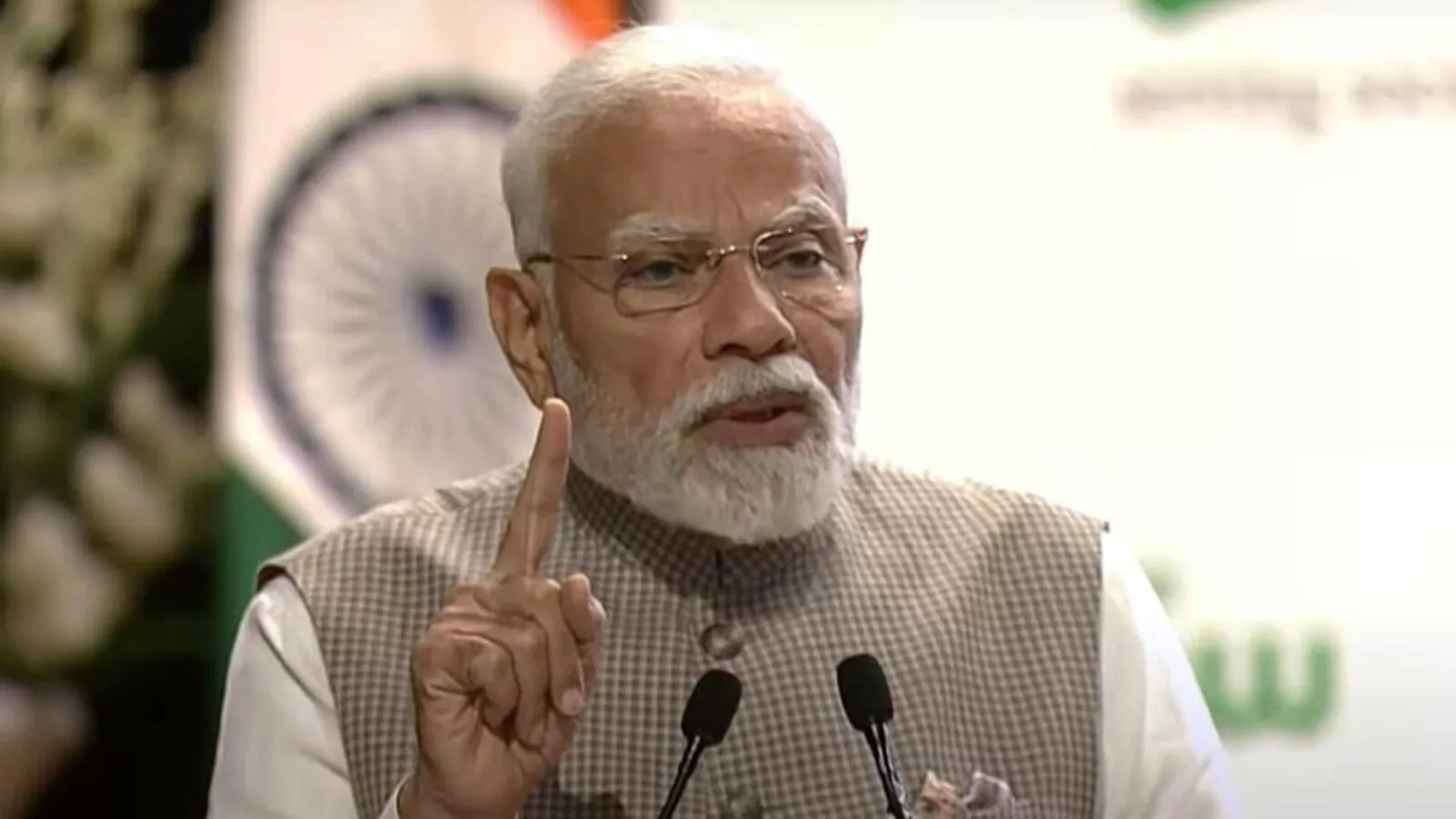
Prime Minister Narendra Modi, having served an unprecedented 11 years in office at India’s head and the most successful Chief Minister previously, made his most intimate—and perhaps most troubling—public utterance ever recently. He openly first hinted at the possibility of threats to his life. “I stand firmly with my country—with its farmers, cattle-rearers, and fishermen,” he asserted. It is in those brief words that the burden of a profound, perilous truth: India’s democratically elected leader is at risk—not only from internal challengers but from an international system that has long cozened, penetrated, and undermined sovereign states for the sake of democracy.
Modi has faced attacks before—even when he was Gujarat’s Chief Minister, there were assassination attempts. Yet he remained silent. Even in 2022, when his convoy was stopped in Punjab due to a suspicious “security lapse,” Modi didn’t lash out or accuse Congress leader Charanjit Singh Channi. He could have; he didn’t. That restraint is now gone. Why now?
Rahul Gandhi’s “Warning” or Threat?
The timing of Rahul Gandhi’s latest statement gives an ominous twist to the events unfolding. After Modi had given a statement regarding threats to his life, Rahul Gandhi made a threatening statement at a press conference:
“When I return, I will track you all down. I will deal with you. My time will come.”
This wasn’t political rhetoric—it was street-level gangster speak, disturbingly similar to the tone of terror-linked figures like Shahdab Ansari, son of gangster-politician Mukhtar Ansari, who had once said:
“Give us six months. We’ll settle scores.” In a democratic setup, such language is more than irresponsible—it’s dangerous. It isn’t just about political rivalry anymore; it’s a signal. A signal to India’s enemies, internal and external, that the time to act is now.
India Is Not Alone: A Familiar Pattern of Regime Change
To grasp the threat Modi currently faces, we have to grasp the international regime-change playbook—one used time and again by the U.S. and its deep-state proxies. Have a look at the world map:
Iraq’s Saddam Hussein defied the petro-dollar regime and lost his life.
Libya’s Gaddafi attempted to launch a gold-backed dinar. He was disposed of.
Sheikh Hasina in Bangladesh was pressured until her administration almost collapsed under the pressure of foreign-designed discontent.
Chile, Colombia, Argentina, and Mexico—all experienced elected presidents brought down by U.S.-backed coups, open or secret.
Even Shinzo Abe, Japan’s nationalist prime minister and India’s good friend, was murdered in daylight on suspicious charges.
These are not conspiracy theories—they are established facts, with even former CIA agents flaunting such interventions.
India’s Turn?
India, with Modi, is taking an autonomous direction. That in itself is enough to make it a danger to the Western system. Think about it:
Modi would not take a call from the American President at a delicate diplomatic moment. He declined the secret passage through Canada, spurning American efforts at the back-channel negotiation. With him at the helm, India has declined to be part of the Western chorus on Ukraine, Iran, and China. India has rolled out UPI and other digital systems that weaken the grip of Western payment monopolies.
He stripped away Article 370, executed surgical strikes, and moved India toward genuine strategic autonomy. That’s unacceptable to the Western deep state. They prefer puppet regimes—not nationalist governments backed by the masses.
Who Benefits from Modi’s Fall?
The answer is obvious: America, which sees India as an unruly ally Canada, which shelters Khalistani terrorists like Gurpatwant Singh Pannun. The Congress ecosystem, which never managed to curb terrorism, corruption, and communal disintegration.
let us not forget—Lal Bahadur Shastri mysteriously passed away after defying pressure on fundamental policies. Rajiv Gandhi was assassinated by an IED connected to foreign intelligence and terror networks LttE was funded by whom is not a secret . Sanjay Gandhi, the sole genuine alternative to Congress old guard, died in a suspicious plane crash. Each time there emerged a forceful nationalist voice in India—it was silenced. Today, Modi speaks for that voice. And knives are out now. Manipur, CAA, and Foreign Interference
Rahul Gandhi goes on and on accusing Modi of shying away from conflict zones such as Manipur. The reality? Violence in Manipur was not indigenous. Caches of arms were seized. False ethnic cleansing narratives were promoted. Western-funded training programs and international NGOs were operating in the area. Just as it happened with the CAA protests, the script was clear: agitate, internationalize, destabilize. Who gains? Those who wish regime change in Delhi.
From Brain Drain to Ethical Return
This regime-change soap opera is not about Modi—it’s about India. For generations, the “American Dream” wooed India’s best brains. Students and professionals, especially from upper-caste and elite communities, quit to become proud NRIs. They scoffed at India’s systems, laughed at its nationalism, and took Uncle Sam’s oath.
But as America disintegrates—from recession to racial tensions, dollar decline, and political chaos—these very same NRIs are gazing back toward India.
Ironically, the nation they had ridiculed as “third world” is today the world’s ascendant power. A turnaround is in progress—West to East. And yet, as they turn back, a question hangs in the air:
Will they come back with humility—or with arrogance?
Modi’s India: A Resistance, Not Just a Government
This isn’t merely about politics anymore. Modi’s government has become a resistance movement—against decades of foreign manipulation, cultural shaming, economic exploitation, and ideological infiltration. It’s not just Modi who is under threat—it’s India’s civilizational resurgence.
Modi’s individual threat is representative of a broader scheme—similar to Lal Bahadur Shastri, Rajesh Pilot, Rajiv Gandhi, and others who met their demise under suspicious circumstances, Modi also has become a target because he doesn’t succumb. He doesn’t beg. He doesn’t play gallery politics in Washington.
And that’s why Rahul Gandhi’s reckless language must not be taken lightly. His past appeals to U.S. agencies to “intervene in Indian democracy” are public knowledge. His calls for international pressure during internal matters—like CAA and Manipur—show where his loyalties lie.
India Must Stay Vigilant
Modi’s government has weathered all—slander campaigns to plots of assassination. But the threat is genuine, and this time it’s open. The regime change machine has been rolled out once again, with backing from within and abroad. Media, academia, and even foreign governments are part of it. But India is no longer the pushover it used to be. Today’s India is strong, proud, and conscious.
Modi doesn’t simply head a political party—he embodies a national will that will not submit. And if history has taught us anything, it’s this: the moment the West starts fearing a leader—they begin plotting his demise.
But not this time, India needs to say: Not again. Never again. This isn’t merely about defending a man. It’s about upholding a civilization.
