
Trinamool in Turmoil: Bengal’s Political Family Feud Goes Public
As internal rivalries spiral out of control, the Trinamool Congress faces its fiercest identity crisis yet, with personal vendettas, generational clashes, and public breakdowns threatening to shatter Bengal’s most dominant political force from within.

Paromita Das
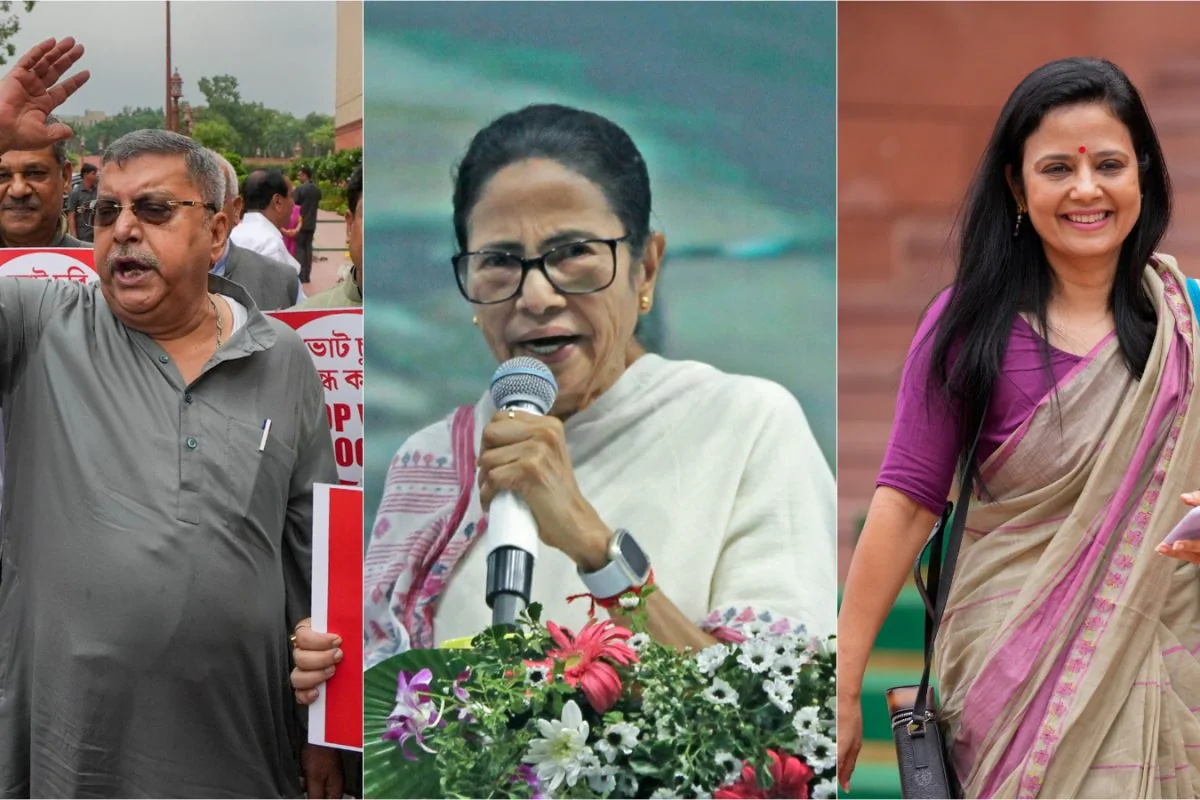
New Delhi, 7th August: In Bharatiya politics, factional spats are hardly new. Yet the ongoing drama within the Trinamool Congress (TMC) in West Bengal—marked most recently by the sudden resignation of Lok Sabha Chief Whip Kalyan Banerjee and public feuding with senior MP Mahua Moitra—is more combustible and revealing than most. The turmoil not only underscores the fragility of West Bengal’s internal structures but stands in stark contrast to how other major political hubs like Delhi, Mumbai, and Bengaluru manage their party crises.
Shri Kalyan Banerjee submitted his resignation yesterday to the Chairperson from the post of Chief Whip of the @AITCofficial Parliamentary Party in the Lok Sabha. The Chairperson has accepted his resignation and thank him for his contributions in that role.
In consultation with…
— All India Trinamool Congress (@AITCofficial) August 5, 2025
West Bengal: A Theatre of Personal Rivalries
West Bengal, under Mamata Banerjee’s largely centralized leadership, has been seen as tightly disciplined. But cracks are now undeniable. When Mahua Moitra likened a colleague to a “pig” in an explosive interview, and Kalyan Banerjee retorted about misogyny and betrayal, it wasn’t just an internal row—it became full-blown political theatre.
TMC’s Mahua Moitra who is under investigation for compromising her parliamentary login to help a businessman dig up info on competitors has now called her own party colleague, senior MP Kalyan Banerjee, a PIG 🐷.
Yes, you read that right.
She’s referring to none other than a… pic.twitter.com/dO4msNfiyE
— BJP West Bengal (@BJP4Bengal) August 3, 2025
Despite attempts by Mamata and her nephew-cum-general secretary Abhishek Banerjee, the narrative slipped quickly out of control. Banerjee cited emotional exhaustion, poor coordination, and being personally attacked—before resigning. Satabdi Roy and Kakoli Ghosh Dastidar have been drafted into leadership roles, but these moves may only paper over deeper issues of trust, factionalism, and generational rifts.
Mumbai and Delhi: Damage Contained, Discipline Enforced

Contrast that with Mumbai’s Shiv Sena (UBT) or Delhi’s AAP or BJP structures. Agreement on leadership discipline—even amid turbulence—has historically been stronger. Mumbai may have rival factions, but disciplinary committees and internal arbitration often quash public skirmishes before they erupt. Delhi’s AAP, for all its internal challenges, typically relies on unanimous internal letters, high-command mediation, or discrete reassignments instead of public resignations.
Unlike TMC, these parties seldom leak internal conflict into the public domain so brazenly. Even when leaders disagree, mechanisms—formal or informal—exist to restore order without editorial headlines.
Bengaluru and Southern Parties: Institutional Culture Over Syndrome
In Tamil Nadu or Bengaluru, political culture leans heavily on institutional decorum—even within aggressive party politics. Public outbursts still adhere to code: powerful disagreements are framed as policy differences rather than personal vendettas. When internal conflicts emerge, they are managed via factional détente, public rationalisation, or rare reshuffles—not emotional resignations on primetime platforms.
The TMC’s crisis stands out in its emotional intensity—a sign not just of political friction but of organizational instability at its core.
What’s Fueling the TMC’s Collapse?
Mamata Banerjee’s grip has always been tight, but generational change is challenging it. Kalyan Banerjee belongs to the ‘old guard’—a loyalist with decades of experience. Mahua Moitra represents a newer, assertive cohort aligned more with Abhishek Banerjee’s outspoken, modernizing yet controversial style.

The failure of intra-party dispute mechanisms is evident. When Moitra delivered her “pig” remark and Banerjee fired back via social media, it exposed an inability to settle friction internally. In other states, such exchanges might lead to a quiet withdrawal or private redress—but in Bengal, the public circus only escalated.
I have taken note of the recent personal remarks made by Ms. Mahua Moitra in a public podcast. Her choice of words, including the use of dehumanising language such as comparing a fellow MP to a "pig", is not only unfortunate but reflects a deep disregard for basic norms of civil…
— Kalyan Banerjee (@KBanerjee_AITC) August 4, 2025
Political and Public Fallout: A Dangerous Mirror
For West Bengal, this rift is more than a spectacle—it’s a warning signal. Unlike Mumbai and Delhi, where internal chaos rarely derails public messaging, Bengal’s crisis plays like a national drama. Voters in other metros may shrug, but in Bengal—where political identity is visceral—the spectacle undermines party authority and raises questions about leadership stability.

Analysts see this as symptomatic of a wider problem: centralized control devoid of institutional buffers. Without clear internal governance—or credible neutral bodies—the TMC’s crisis is likely to deepen before it heals.
Accountability Demands Structure, Not Drama
At its root, this is not just a matter of personal disagreement. It’s about party institutions failing to manage factionalism. A political organization cannot hinge solely on one leader’s charisma. Especially in a state governed by Mamata for over a decade, leadership demands systems—clear rules for conflict resolution, transparent accountability, and succession planning.

Regional parties like the DMK, BJP, or even Congress have evolved such mechanisms—however imperfectly. TMC’s crisis reveals that personality-driven rule is brittle ready-to-fracture under closer scrutiny.
Stability Requires Structure
West Bengal’s TMC is now more drama than government—a cautionary tale for regional parties everywhere. Lacking institutional safeguards, rigid succession pathways, or structured dispute resolution, TMC’s factional firework displays are more self-inflicted wounds than electoral strategy.
Mumbai, Delhi, Bengaluru may have internal tussles—but they manage to separate activism from governance. Bengal cannot. Unless TMC builds transparent mechanisms to channel intra-party dissent, rebuild credibility, and institutionalize leadership beyond personalities, it risks long-term erosion of public trust.
In Bharat’s federal political theatre, West Bengal’s TMC crisis is more than entertainment—it’s a blueprint of how internal dysfunction becomes public collapse.
