
Sustaining UPI as a Public Good: A Needonomics Policy Insight for Viksit Bharat


Prof. Madan Mohan Goel, Proponent of Needonomics and Former Vice-Chancellor
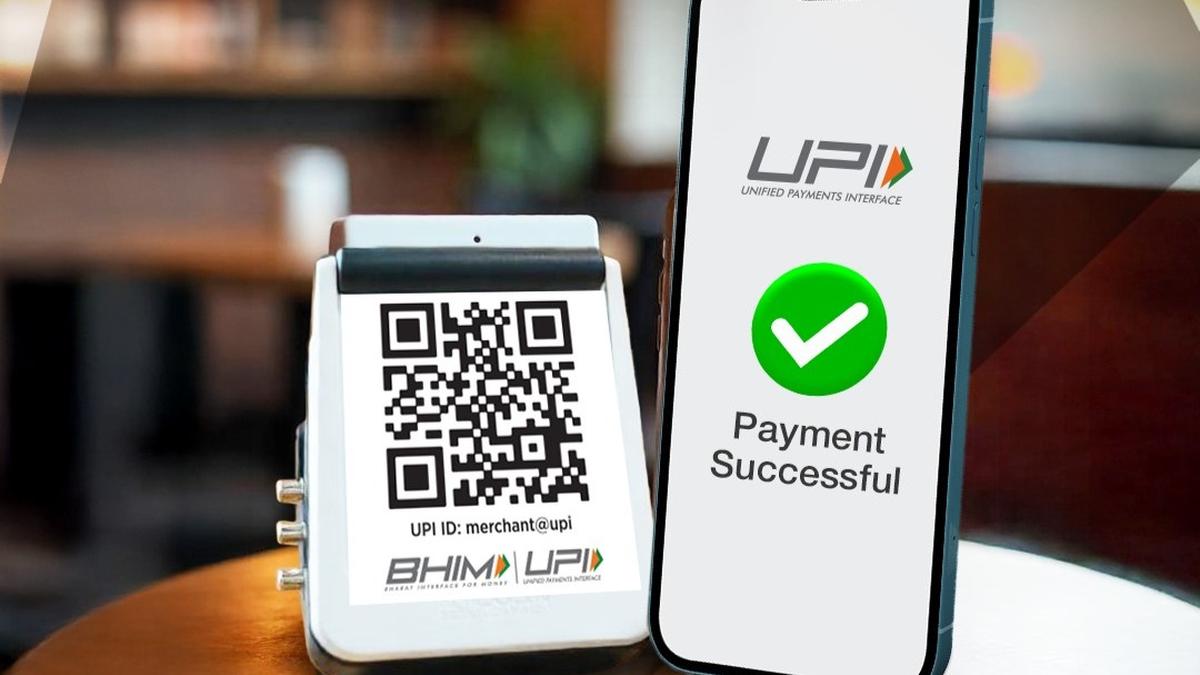
The Unified Payments Interface (UPI), developed by the National Payments Corporation of India (NPCI) and regulated by the Reserve Bank of India (RBI), stands today as a cornerstone of India’s digital financial ecosystem. Since its launch in 2016 and its widespread transformation by 2029 into a real-time, user-friendly payment system, UPI has significantly reshaped how Indians transact—ensuring instant, secure, and accessible money transfers across the socio-economic spectrum. With 1840 crore transactions worth Rs 24 lakh crore recorded in June 2025 alone, UPI has demonstrated not just technological success but deep societal integration. From the Needonomics School of Thought (NST), this surge reflects more than just digital adoption; it highlights UPI’s role as a public good that facilitates need-based, inclusive economic behavior, transparency, and trust in financial systems—making it essential to sustain for the realization of Viksit Bharat.
UPI as a Public Good: Understanding the Economics
In classical economic terms, a public good is non-excludable and non-rivalrous—meaning its use by one person does not diminish its availability for others, and no one can be effectively excluded from using it. UPI, in its present form with zero Merchant Discount Rate (MDR), fulfills these characteristics.
Initially, UPI struggled with widespread adoption due to the presence of MDR—a fee merchants had to pay for accepting UPI payments. This discouraged small businesses and daily retail operations from embracing the system. However, once the government abolished MDR and began compensating banks directly, UPI became a household name and a preferred method of transaction.
The impact is evident: a 14-fold increase in transaction volume over five years. Clearly, when essential digital infrastructure is made freely accessible, it fosters equitable economic participation and curtails reliance on cash. This aligns with NST’s belief in need-based solutions over profit-maximizing mechanisms, especially for public utilities.
RBI Governor’s Concern: An NST Analysis
In a recent public remark, the Governor Reserve Bank of India (RBI) Sanjay Malhotra stated that “some cost has to be paid” for maintaining UPI. While the sentiment is valid from a regulatory and sustainability perspective, Needonomics mandates careful differentiation between ‘cost-bearing’ and ‘revenue-generating’ mindsets when it comes to public goods.
UPI, like road infrastructure or clean air, is an economic facilitator. The Government of India, recognizing its public value, has rightly chosen to subsidize its operation by compensating banks and service providers. For instance, the Ministry of Finance in June 2025 reiterated that the government pays 15 paisa per Rs 100 transacted via UPI to support the ecosystem without reintroducing MDR.
The NST interprets this as a justifiable cost for promoting economic dignity and financial inclusion—particularly for the unbanked and underbanked population. Any attempt to reintroduce MDR would disproportionately affect small merchants, street vendors, and the lower-middle class who form the backbone of India’s consumption economy.
UPI vs. Cash: A Case for Cost-Efficiency
An often-overlooked aspect of this debate is the hidden cost of cash. According to official data, the cost of printing currency in 2024–25 was Rs 6,373 crore. This excludes the associated costs of distribution, storage, logistics, security, and counterfeit prevention. Every rupee spent on cash is a rupee less for development, education, or health.
In contrast, digital payments like UPI reduce leakage, enhance transparency, and contribute to the formalization of the economy. By encouraging digital over cash, we are not merely opting for convenience but embracing economic prudence, a key tenet of Needonomics.
Hence, running UPI as a free public good is not an expense but an investment—one that yields dividends in the form of reduced corruption, better tax compliance, and stronger financial literacy.
Needonomics on UPI: A Call for Sensible Sustainability
From the standpoint of the Needonomics School of Thought, UPI is a classic example of “Needo-utility”—a service that meets essential human and economic needs without encouraging excessive consumption or speculative use. It simplifies transactions for daily needs, enables digital record-keeping for small businesses, and reduces the dependency on intermediaries.
The success of UPI should not tempt policymakers to seek revenue extraction through reimposition of MDR. Instead, it calls for a long-term sustainability model, possibly including:
- Government Funding Continuation: As long as UPI remains a public good, budgetary allocation to banks and digital service providers should continue as a part of financial infrastructure investment.
- Tiered Support Model: Larger enterprises with high turnover may be encouraged (not forced) to contribute to maintenance costs voluntarily or through incentives.
- Promoting Open-Source Innovation: India can reduce UPI operational costs by supporting open-source, indigenous digital solutions that lessen dependence on private vendors.
- Digital Financial Literacy: NST recommends a strong campaign to educate users and merchants on digital payment ethics, security, and budgeting—a preventive step against misuse and fraud.
UPI and Economic Happiness Index (EHI)
One of NST’s unique contributions to modern economics is the Economic Happiness Index (EHI)—a qualitative measure of economic well-being based on satisfaction rather than income or GDP. UPI has a role here too.
When transactions become easier, faster, safer, and traceable, citizens experience reduced stress, enhanced trust, and better control over personal finance. This boosts not just economic efficiency but also psychological well-being, contributing to higher EHI.
Moreover, the digital trail created by UPI builds financial identity, empowering millions to access formal credit and insurance, which were previously out of reach. This democratization of finance is an underappreciated facet of UPI’s utility.
A Strategic Recommendation: Keep UPI Free, Forever
On the basis of above analysis, Needonomics School of Thought firmly recommends that UPI should continue as a free public good, without any MDR, especially for small-value, high-volume transactions. It enhances:
- Financial Inclusion for the underserved.
- Transparency in tax and subsidy delivery.
- Cost-efficiency in reducing cash management burden.
- Digital Empowerment of Bharat’s large informal sector.
Rather than monetizing UPI usage, the focus should be on optimizing its infrastructure, educating its users, and minimizing operational redundancies.
Conclusion:
UPI is not merely a digital payments mechanism—it is a hallmark of inclusive innovation, resonating with the principles of the Needonomics School of Thought, which emphasizes resource efficiency, ethical usage, and equitable access to essential services. It exemplifies how digital infrastructure, when rooted in need-based policy thinking rather than profit-driven motives, can strengthen the social and economic foundation of a nation. As Bharat advances on its path to Viksit Bharat @2047, sustaining UPI as a public good becomes a policy imperative. Doing so will ensure that the digital financial revolution continues to remain citizen-centric, inclusive, and aligned with long-term national development goals.
