
Tianjin Lead Poisoning Scandal Exposes China’s Public Safety
China's Lead Poisoning Scandal: A Systemic Safety Collapse and Decades of Official Cover-Up

Poonam Sharma
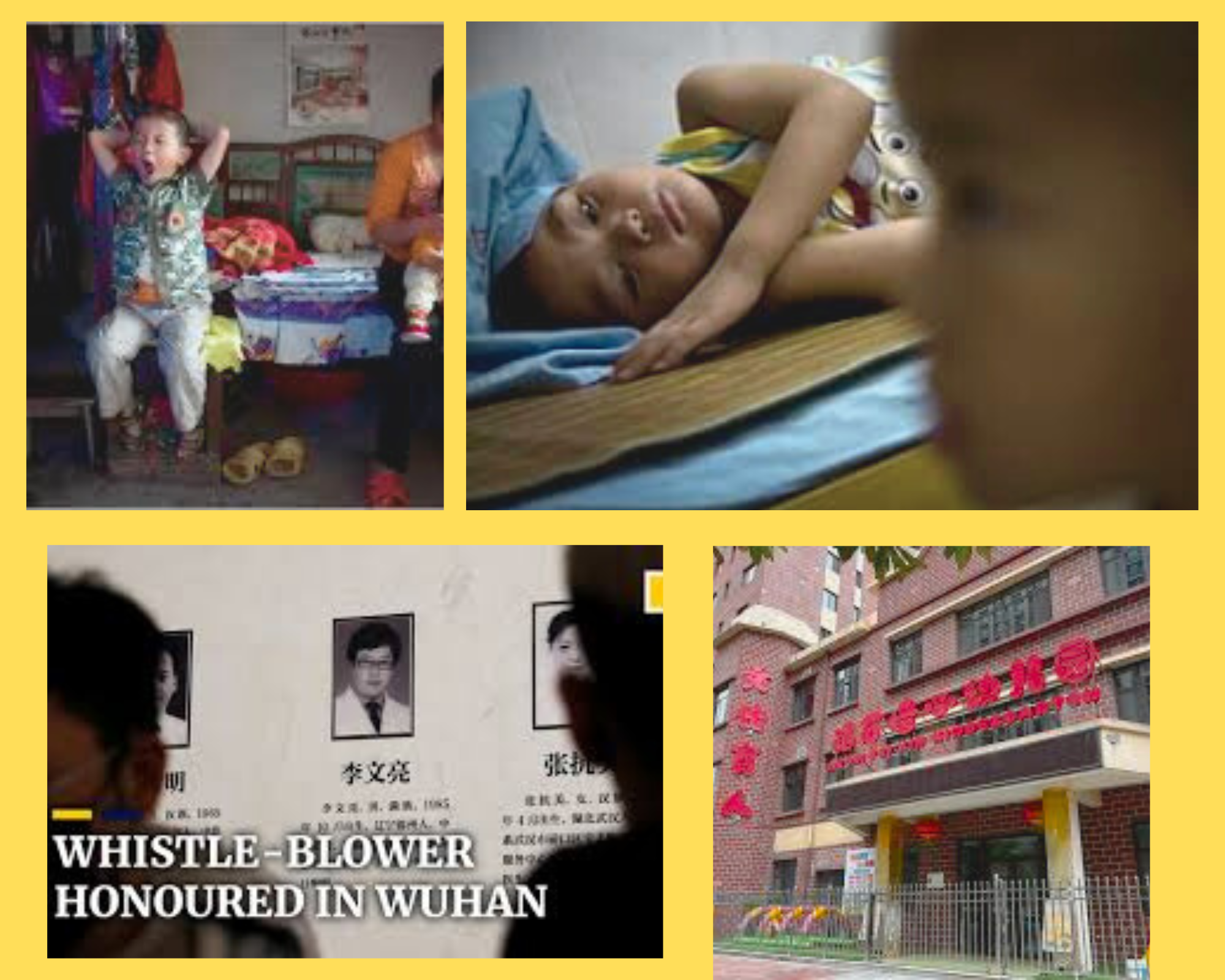
Recently, a shocking public health epidemic has unfolded out of Tianjin, China, as dozens of children were found to have dangerously high levels of lead in their blood. Initially, it appeared to be an isolated incident. However, as more parents started sharing information, an unsettling trend was spotted—many children from the same district were exhibiting similar symptoms. Their relatives, growing ever more concerned, started to go elsewhere for second opinions, to better-stocked hospitals beyond the region, and what they learned destroyed any delusion that the issue was small or contained.
The Alarming Numbers
Xi’an’s Central Hospital, a reputable medical institution in Shaanxi Province, reported that over 70 children had elevated blood lead levels—some five times higher than the internationally recognized safety limit. In one particularly damning case, a child was initially told by local Tianjin doctors that his blood lead level was a harmless 14 micrograms per litre. But the same child’s test from Xi’an showed a staggering 290 micrograms per litre—a twentyfold increase.
This variance cannot be rationalized based on equipment differences or small lab variations. Blood lead testing is a regulated medical practice. Experts concur that such a large disparity highly indicates data tampering. It suggests that local authorities might have compelled Tianjin hospitals to fake medical reports in an attempt to underestimate the crisis.
The Official Narrative vs. Reality
On July 8, in the face of overwhelming public pressure, the local authorities finally made an official announcement. Their finding? Tainted food. Authorities said the kindergarten had used industrial paint illicitly to color food. They detained the principal, the investor, and six others, presenting the case as one of corporate greed—an open-and-shut case of food poisoning from carelessness.
But this description only leads to more questions. Specialists in toxicology insist that concentrations of lead in the blood like this do not materialize overnight. Lead builds up over time in the body, accumulating in bones and organs before it slips back into the bloodstream slowly. This strongly indicates long-term, chronic exposure—far from the scope of a single food contamination incident.
And then came the most damning revelation of all: a near-identical lead poisoning scandal had occurred in the same district of Tianjin almost two decades earlier.
A Repeating Tragedy: The 2006 Incident
In 2006, residents of the same area reported unusually high lead levels in their children after testing at a local facility. The results were dismissed by the district government as “unauthoritative.” A second round of testing conducted by the district’s own CDC showed only one borderline case. But when parents sought independent verification from Xi’an, once again the results showed hundreds of children with dangerously high lead levels. Sound familiar?
It’s not an accident—it’s a blueprint for systematic cover-up. The same techniques, the same denials, and the same refusal to allow independent verification.
The Real Suspect: Water and Industrial Pollution
If the kitchen tale is a smokescreen, what’s actually poisoning the children?
Environmental analysts and whistleblowers suggest a much more sinister origin: water pollution caused by local industrial operations. Only 1.7 kilometers upstream from the polluted kindergarten is a lead-zinc ore transfer station owned by Baiyin Nonferrous Metals Group, a massive state-owned enterprise (SOE). The facility holds tonnes of raw ores outdoors. During rains, poisonous runoff most likely filters through the Wei River, polluting the water supply.
Adding fuel to the suspicion, a local whistleblower alleged that the site on which the kindergarten was constructed was previously a dumping ground for industrial wastes by the same company. Just a few years back, the government repurposed the site for educational purposes, possibly without adequate environmental rehabilitation.
Importantly, the other three kindergartens owned by the same private company have seen no similar incidents—because they’re situated far from the polluted area.
Why the Cover-Up?
Why the cover-up makes sense becomes obvious when you look at what’s on the line. Baiyin Nonferrous is a behemoth SOE that brings vast economic benefits to the region through taxes, employment, and politics. Confessing that its activities poisoned dozens of kids would not only destroy the firm—it would destroy local officials who approved the construction of a kindergarten on contaminated soil.
If Baiyin were held accountable, there might be lawsuits, criminal prosecutions, and widespread public outrage. So instead, the authorities fell back on their old playbook: deny, deflect, and scapegoat. Arrest a few kitchen workers, close the case, and bury the truth.
And the implication goes even further. Parents have already come forward and reported being compelled to bring their children back to Tianjin to be treated—only those who are treated domestically will have their medical bills reimbursed. Other province hospitals have been told not to accept children from Tianjin. This is a clear sign that the central government is now intervening—not to address the crisis, but to regulate the narrative and restrict its national coverage.
Safety Under Siege
This scandal reflects a larger, more sinister truth: in today’s China, public safety is an increasingly fragile casualty of state control.
Is it poisoned water, tainted food, toxic air, or doctored medical reports? Whatever it is, the fundamental building blocks of safety—health, environment, and justice—are being systematically eroded. If citizens can’t trust hospitals, local governments, or even drinking water, what can they trust?
It’s not a matter of one district or one scandal any more. Citizens are waking up to a cold reality: their own government has become the greatest threat to their security.
A Society in Decline?
The similarities to the collapse of the Soviet Union are becoming all too apparent. And yet, in several respects, China is worse. Food safety crises are much more common and serious in China. Whistleblowers, human rights activists, and ordinary citizens disappearances are now ominously routine. Kidnappings, alleged organ harvesting, and unreported public health emergencies are now a part of everyday life.
In the USSR of the 1980s, citizens did not have political freedom, but their individual security was not consistently undermined in this way. In contemporary China, the very institutions intended to safeguard individuals—from hospitals to schools—are being used to suppress the truth.
The Tianjin lead poisoning incident is not unique. It is a symptom of a system that emphasizes control, profit, and face-saving above human lives. It shows how entrenched corruption, bureaucratic self-interest, and unbridled state power can wreck public trust and public health.
As more families start to speak out and make the connections, it’s apparent this is no longer just about environmental irresponsibility—it’s about a regime that has lost its ability to provide the most fundamental right of all: the right to safety.
And once that’s lost, the social contract breaks.
