

Poonam Sharma
In a quiet but telling development, luxury fashion house Prada recently acknowledged that its new line of leather sandals was “inspired” by Kolhapuri chappals, a centuries-old Indian artisan product known for its handcrafted leatherwork and regional cultural significance. On the surface, this might seem like a long-overdue recognition of Indian craftsmanship by a global fashion behemoth. However, beneath this polished veneer lies a far more unsettling truth: cultural appropriation without accountability, and worse, an almost deafening silence — both from Indian policymakers and global watchdogs — in addressing it.
When ‘Inspiration’ Becomes Exploitation
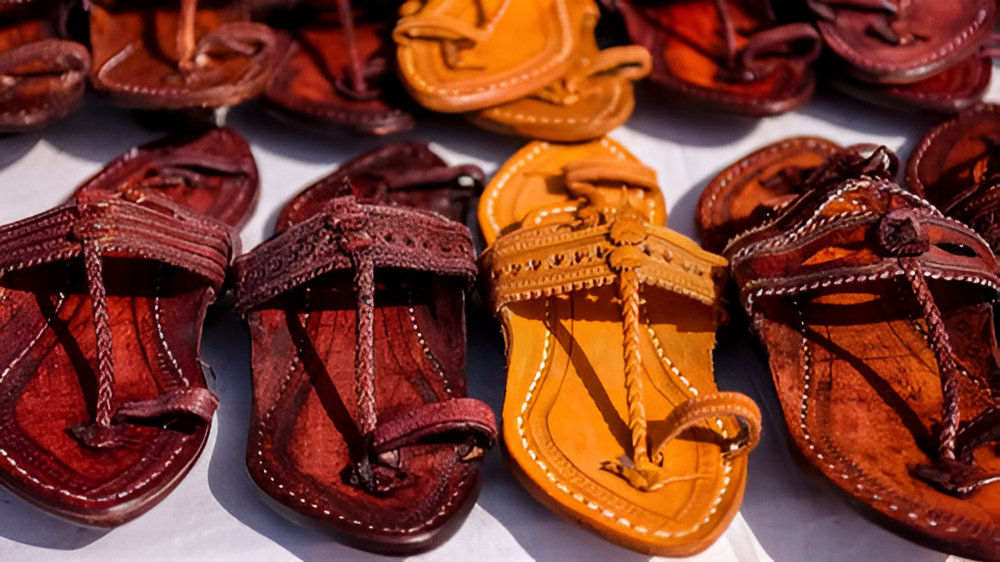
Kolhapuri sandals are not just footwear — they are cultural artefacts, rooted in the soil of Maharashtra and Karnataka, made by skilled artisans using traditional tanning and stitching techniques passed down generations. For decades, these artisans have received little to no global recognition, often struggling to maintain their livelihood in the face of industrial mechanisation and cheap imitations.
Now enter Prada, a billion-dollar corporation headquartered in Milan, that suddenly decides to “borrow” the Kolhapuri style for a new leather sandal collection. The irony? These “inspired” sandals are marketed as high fashion and sold at exorbitant prices, often ranging in hundreds of Euros — while the actual Kolhapuri chappal makers barely survive on meagre earnings from domestic sales.
To be clear, inspiration in fashion is not inherently wrong. Cultures influence each other all the time. But the issue here is not mutual inspiration — it’s unidirectional appropriation, where global luxury brands profit off the sweat and legacy of Indian artisans, without offering royalties, collaboration, or even visible credit.
Why Is There No Outcry?
What makes the Prada incident particularly egregious is the absence of protest or accountability — from the Indian government, from international fashion watchdogs, and even from large segments of Indian media and civil society. There are a few reasons behind this silence:
1. India’s Elitist Fashion Narrative
India’s own fashion industry, heavily westernised and urban-centric, has often sidelined rural or traditional artisans. When brands like Prada co-opt indigenous designs, there’s no strong counter-narrative from Indian fashion houses — because the urban elite often see such acts as validation by the West, rather than theft.
2. No Legal Framework for Cultural IP
India lacks a strong intellectual property framework to safeguard traditional knowledge or cultural designs. While geographical indication (GI) tags exist — Kolhapuris do hold a GI tag — they are toothless in global commercial disputes. There’s no enforceable mechanism that can compel Prada or others to compensate or even acknowledge these communities in any meaningful way.
3. Colonial Hangover of Validation
A disturbing trend persists in India: when Indian culture is praised by the West, it is often met with awe rather than interrogation. Prada’s nod is seen more as a compliment than as a commercial strategy, despite the obvious economic and ethical implications. This colonial hangover — that Western praise equals legitimacy — is why the theft of culture is rarely questioned.
4. Economic Disempowerment of Artisans
The people most affected — the Kolhapuri artisans — have no voice in international legal or fashion forums. They are not unionised, have minimal online presence, and are disconnected from the global luxury discourse. Without a platform or institutional support, their exploitation continues quietly.
The Dangerous Precedent
What Prada has done is not new. In the past, global brands like Isabel Marant (Mexico), Louis Vuitton (Maasai patterns), and even Victoria’s Secret have used indigenous designs without consent. Each time, these brands hide behind the veil of “creative inspiration,” while siphoning cultural capital for profit.
India, rich in textiles, dyes, embroidery, and folk arts, is a particularly ripe target. From Ajrakh block printing to Banarasi weaving, the potential for further plundering is immense — and with no opposition in place, Prada’s move sets a dangerous precedent. If Kolhapuri today, what stops Gucci tomorrow from claiming “inspiration” from Paithani sarees or Warli art?
A Path Forward: What Needs to Change
1. Cultural Intellectual Property Laws
India must push for binding international laws that protect traditional designs, much like how software and patents are protected. GI tags must be expanded with enforcement capabilities.
2. Demand Transparent Credit
Fashion brands should be required to disclose source inspiration and origin clearly in product descriptions. If Prada is inspired by Kolhapuri, say it. Show it. Pay for it.
3. Collaborate, Don’t Copy
Instead of copying, brands should collaborate with artisan clusters. If Prada wants Kolhapuri inspiration, it should partner with Indian co-operatives, co-brand the product, and ensure artisans benefit.
4. Raise Indigenous Voices
Indian media, civil society, and influencers must actively raise awareness when such theft happens. Silence is complicity. Platforms should be created to amplify artisan voices internationally.
The Prada-Kolhapuri episode is not about just one sandal; it’s about who gets to profit from cultural heritage. Until India wakes up to protect its artisans, and global fashion is held accountable for what it “borrows”, this silent theft will continue. India’s traditional craftsmanship deserves not just respect, but economic justice. Inspiration is welcome — exploitation is not.
