
Gambhira Bridge Collapse: When Will We Learn from These Cracks?
A 40-year-old bridge collapses, killing 11 — raising tough questions on state oversight and infrastructure neglect.

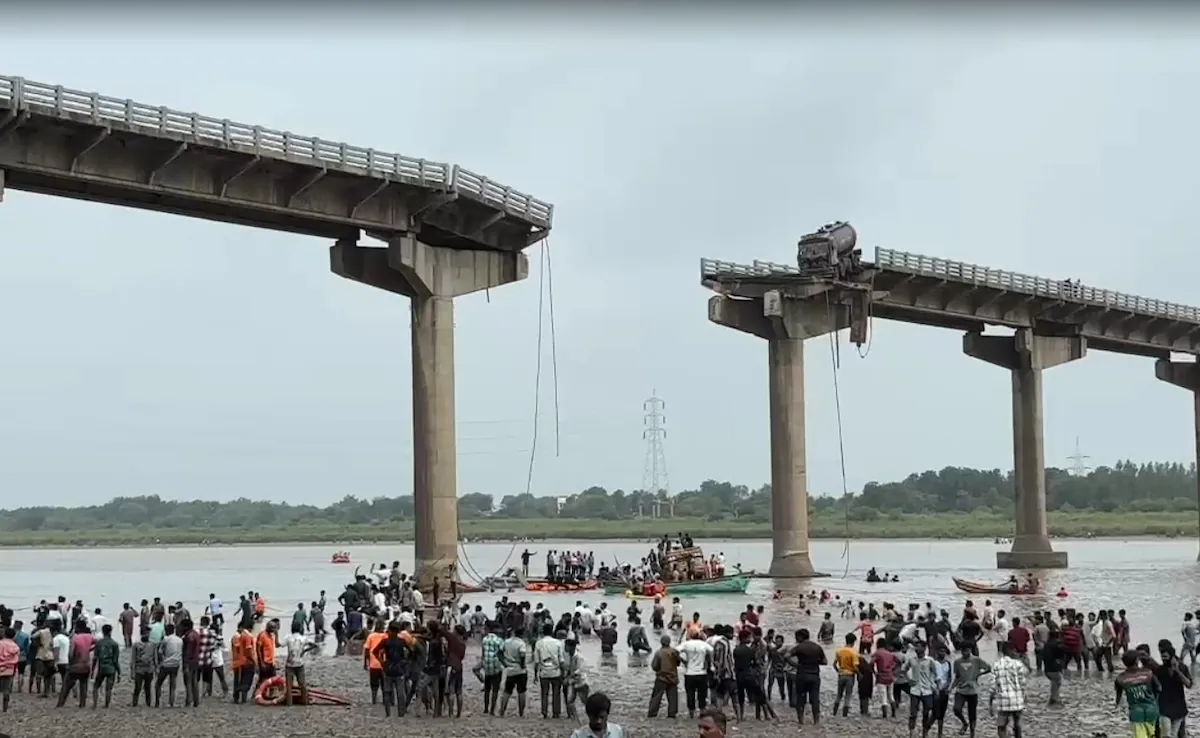

The tragic collapse of the Gambhira bridge over the Mahisagar river in Gujarat—claiming 11 lives—has again laid bare a glaring truth: India’s infrastructural foundations are weakening under the weight of chronic neglect, corruption, and administrative apathy. The bridge, built in 1985, had long outlived its intended lifespan. Local residents had repeatedly raised concerns about its stability, reporting that it shook dangerously when heavy vehicles crossed. Yet, the bridge was not closed. No timely replacement came. No serious warnings were issued.
It was a disaster waiting to happen—and tragically, it did.
A Repeated Pattern of Tragedy
What happened in Vadodara’s Gambhira bridge is not an isolated incident. It is the latest entry in a grim catalogue of infrastructural failures in India.
In October 2022, the Morbi bridge collapse, also in Gujarat, killed 141 people, including women and children. The bridge had been reopened after a hasty renovation by a private company without any fitness certification. A Special Investigation Team later found that 22 of 49 main cable wires were corroded, unauthorised welding had taken place, and a heavier deck had been installed—raising load beyond safe limits. No engineering audit was carried out. No accountability enforced—until lives were lost.

In Bihar, more than 12 bridges collapsed within just 17 days in 2024, exposing the shoddy quality of construction and the absence of regular safety inspections.

In June 2025, a footbridge in Pune gave way during the monsoon, resulting in multiple casualties. In every case, the story remains the same: neglected maintenance, inadequate oversight, and unheeded warnings.

The Structural Rot Within
At the heart of these collapses is a broken system that prefers shiny new infrastructure over the thankless task of maintaining the old. While governments celebrate expressways and bullet trains, basic infrastructure like rural bridges and urban footpaths are left to decay. There is little political incentive in maintaining assets already built—until a disaster forces a press conference, a condolence message, and an ex gratia payment.
India lacks a centralised, publicly accessible bridge registry. The Indian Bridge Management System (IBMS), launched with much fanfare, has failed to prevent such tragedies. There are no mandatory structural audits or safety grading for most older bridges. Even where surveys are conducted, the findings often gather dust.
The Morbi bridge had been awarded to a clock-making company, Oreva, without a proper tender. The Gambhira bridge, despite clear signs of distress and an approved plan for replacement, was kept open, reportedly under pressure to avoid disrupting traffic. In both cases, public safety was sacrificed at the altar of convenience, complacency, and cost-cutting.
A Crisis of Governance
What is most troubling is the institutional amnesia that follows every such tragedy. After Morbi, committees were formed and inquiries ordered. Yet less than three years later, another bridge in the same state has collapsed. Were lessons not learned? Was no audit conducted across similarly aged bridges?
The Gujarat government had indeed approved a new bridge at Gambhira, based on a local MLA’s recommendation. But the old one was neither decommissioned nor restricted. The question now is not just about the bridge—it is about governance failure. Why did the administration not heed warnings? Why were safety inspections not acted upon? Why was the public not alerted to the risk?
A Roadmap for Accountability
If India is to prevent such disasters, incremental change will not suffice. A complete overhaul is needed in how we treat infrastructure safety:
- Mandatory Safety Audits: All bridges older than 20 years must undergo third-party structural audits every 2–3 years. The audit results should be made public.
- Bridge Health Index: Like school report cards, every bridge should carry a safety grade, visible to citizens and commuters.
- Central Monitoring System: A national dashboard should list all bridges, their age, maintenance history, and risk level.
- End-to-End Accountability: Engineers, contractors, and municipal officials found complicit in negligence must be booked under relevant sections of the IPC, including 304A (causing death by negligence).
- Whistleblower Mechanisms: Citizens, engineers, and local leaders should be empowered to flag crumbling infrastructure without fear of retribution.
Bridging the Gap Between Development and Safety
India aspires to be a global power, with world-class infrastructure and booming urban growth. But no nation can rise on broken foundations. The glamour of mega-projects must not blind us to the grittier, crucial task of maintaining what we already have.
The Gambhira bridge collapse is a national failure, not just a local tragedy. It demands not just compensation for the victims but a complete rethinking of how we treat public safety and infrastructure longevity. The past cannot be undone. But the future still can be protected—if only we act, and act decisively.
