

By Anjali Sharma
UNITED NATIONS – UN Assistant Secretary-General for Human Rights Ilze Brands Kehris briefed the UN Human Rights Council on the human rights situations in Ukraine and Gaza, along with a call to confront structural racism and intersectional discrimination worldwide.
Ilze Brands Kehris reported a sharp escalation in hostilities in Ukraine.
She noted that civilian casualties have surged, with 50 per cent more deaths and injuries compared to the same period in 2024.
“More than 90 per cent of these casualties occurred in territory controlled by Ukraine,” she said.
She attributed the spike in part to intensified Russian drone and missile attacks.
The attacks using airburst warheads and repeated strikes on hospitals have instilled “terror and anxiety” among urban populations, she added.
She said June 16-17 nighttime attack in Kyiv killed more civilians than any other assault in the past year.
Ms. Kehris underscored that the ceasefire negotiations have produced some humanitarian gains such as the exchange of prisoners of war and the return of deceased soldiers but conditions in detention is horrific.
OHCHR reported that over 117 former Ukrainian POWs were torture, including sexual violence, in Russian captivity.
The less widespread, similar abuses have been documented in unofficial Ukrainian detention facilities, prompting calls for transparent investigations.
The report noted ongoing human rights violations in territories occupied by Russia, including restrictions on civic space and the exercise of freedom of expression.
“Peace is more imperative than ever,” Ms. Kehris said.
She reiterated calls for an immediate cessation of hostilities in line with international law.
Ashwini K.P., Special Rapporteur on contemporary forms of racism, delivered a thematic report focused on intersectionality as a tool for racial justice.
She said that from her experience of black feminists and expanded by studies focused on Dalit, Indigenous, Muslim and Roma community members, the concept of intersectionality was presented as essential to dismantling systemic discrimination.
“Women of African descent, caste-oppressed communities, Roma, Arab and Muslim women, and other marginalized groups are disproportionately impacted due to overlapping forms of discrimination,” Ms. Ashwini said.
The report detailed how states can integrate an intersectional approach, emphasized data disaggregation, participatory policymaking, legal recognition of multiple discrimination and historical accountability.
Ms. Ashwini highlighted the importance of reparatory justice for communities affected by colonialism and slavery and called on states – particularly those historically complicit – to implement bold reforms.
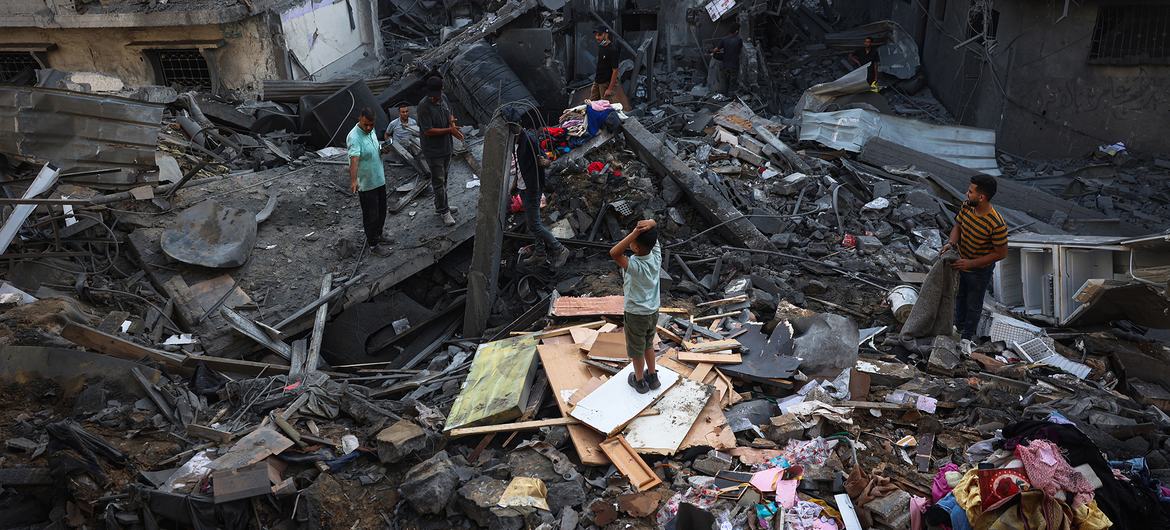
Francesca Albanese, Special Rapporteur on the situation of human rights in the Palestinian territories occupied since 1967 also reported to the Council, with grim update on Gaza.
She described conditions as “apocalyptic” and reported over 200,000 people killed or injured since 7 October 2023, when Hamas and other Palestinian armed groups attacked Israeli communities killing at least 1,200 people and taking more than 250 as hostages.
“In Gaza, Palestinians continue to endure suffering beyond imagination,” Ms. Albanese said.
She described the Israeli-backed Gaza Humanitarian Foundation as a “death trap engineered to kill or force the flight of a starved, bombarded, emaciated population marked for elimination.”
Ms. Albanese accused Israel of using the conflict as an opportunity to test new weapons and technology against the population of the enclave “without restraint”.
“The forever-occupation has provided an optimal testing ground for arms manufacturers and big tech with little oversight and zero accountability – while investors, and private and public institutions have profited handsomely,” she said.
“We must reverse the tide,” Ms. Albanese urged, calling on Member States to impose a full arms embargo on Israel, suspend all trade agreements and investment relation and enforce accountability, “ensuring that corporate entities face legal consequences for their involvement in serious violations of international law.”
Special Procedures, Special Rapporteurs and other independent experts are mandated to monitor and assess the rights situation in certain thematic or country situations.
