
“My Father Was My First Institution”: JP Nadda Pays Tribute at Centenary Celebration

GG News Bureau
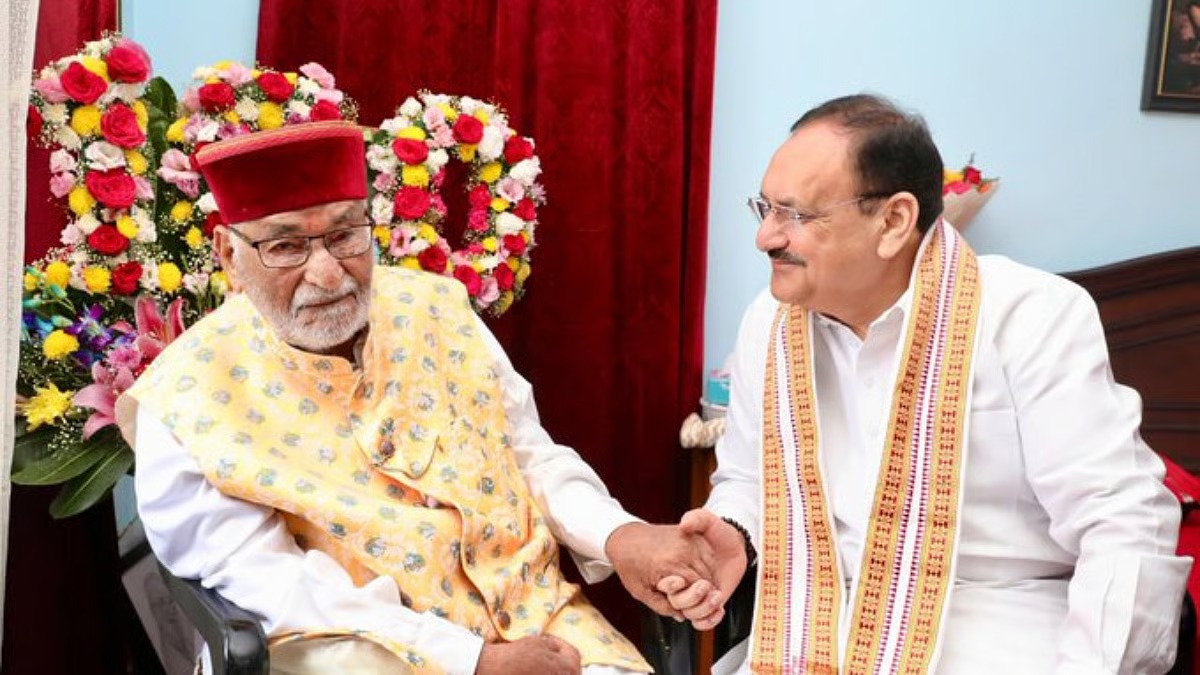
Bilaspur, 4th July: BJP National President J.P. Nadda turned emotional and reflective as he returned to his hometown Bilaspur to attend the Shatayu Samaroh — the centenary celebrations of his father, Dr. Narayan Lal Nadda. The event honoured the towering legacy of one of Himachal Pradesh’s foremost educationists and reformers, whose influence continues to shape generations.
Addressing a packed audience, Nadda said, “My father gave direction to my life. Whatever I am today, it is because of his ideals and the strength he gave me at every turn.” Recalling his childhood, he added, “He never imposed, only inspired. His conduct was his curriculum.”
Dr. Narayan Lal Nadda, born in Bihar, moved to Himachal Pradesh in pursuit of academic excellence and public service. Melding the intellectual legacy of Bihar with the aspirations of a young hill state, he rose to prominent positions including Vice Chancellor of Ranchi University (1978–1980) and Chairman of the Himachal Pradesh Board of School Education. His tenure marked transformative reforms—focusing on meritocracy, teacher empowerment, and transparent examination systems.
His daughter-in-law, Dr. Malika Nadda, chronicled his remarkable journey in her memoir Vidhī Kī Ek Rachnā (“A Composition of Law”), released in 2019 by then Law Minister Ravi Shankar Prasad. Through poignant passages, she paints a portrait of a man who led by example. “He was a man of profound silence and deeper thoughts. His presence could calm a storm,” she wrote.
The memoir recalls how Dr. Nadda’s soft-spoken discipline and unwavering ethics shaped not only his institutions but his family. “Baba never raised his voice. He didn’t need to. The sheer weight of his ethics made all of us strive to become better versions of ourselves,” she reflected.
Dr. Nadda’s contributions included curriculum modernization, teacher training modules, and advocacy for regional languages and scientific thinking. Despite holding powerful roles, he led a life of humility—walking to work, mingling with students, and avoiding pomp. His simplicity and spiritual strength became legendary in Bilaspur.
“The people of Himachal are tired of hollow announcements. Governance must reflect intent, not just optics,” Nadda said, taking a veiled swipe at the Congress-led Sukhu government. While he could not visit his ancestral village due to time constraints, Nadda met senior citizens and party workers, saying, “These people are my roots too — they reflect the soil that nurtured my father and me.”
The event was attended by scholars, students, political leaders, and citizens from across the state. Cultural performances, tributes, and speeches underscored the enduring impact of Dr. Nadda’s intellectual and ethical legacy.
As the ceremony concluded, J.P. Nadda bowed before his father’s portrait, reaffirming a lifelong bond of gratitude and principles. “My father was my first institution,” he said, his voice tinged with emotion. “His teachings will remain etched in my consciousness forever.”
In an age searching for moral clarity, Dr. Narayan Lal Nadda’s centenary stands as a powerful reminder — that true leadership begins at home, with values lived and shared across generations.
