

By Anjali Sharma
UNITED NATIONS – UN Office for the Coordination of Humanitarian Affairson Wednesday warned that a key water reservoir serving Khan Younis in southern Gaza has become inaccessible after new Israeli displacement orders, sparked fears of a collapse in the city’s water distribution network and worsening dire humanitarian conditions.
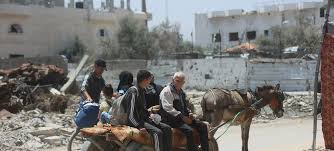
According to the OCHA, Israeli authorities issued displacement orders overnight for two neighborhoods in Khan Younis, where up to 80,000 people had been living.
The Al Satar reservoir a critical hub for distributing piped water from Israel has become inaccessible as a result.
UN spokesperson Stéphane Dujarric told reporters in New York that “Any damage to the reservoir could lead to a collapse of the city’s main distribution of the water system, with grave humanitarian consequences”.
OCHA said that Al Satar’s disruption comes as Gaza’s infrastructure buckles under relentless displacement, strained services and critical shortages of fuel and supplies.
It reported that 85% of Gaza’s territory is currently either under displacement orders or located within military zones severely hampering people’s access to essential aid and the ability of humanitarians to reach those in need.
Some 714,000 Palestinians have been displaced including 29,000 in the 24 hours between Sunday and Monday since the collapse of a temporary ceasefire in March.
The existing shelters are overwhelmed, and aid partners report deteriorating health conditions driven by insufficient water, sanitation and hygiene services, OCHA stated.
Health teams reported that rates of acute watery diarrhoea have reached 39 per cent among patients receiving health consultations.
Khan Younis and Gaza governorates are hardest hit, with densely overcrowded shelters and little access to clean water exacerbating the spread of disease.
It stressed that no shelter materials have entered Gaza in over four months, despite the hundreds of thousands of newly displaced people.
UN partners reported that in 97% of surveyed sites, displaced families are sleeping in the open, exposed to heat, disease and trauma.
The fuel shortages are jeopardizes the humanitarian response. A shipment of diesel intended for northern Gaza was denied on Wednesday by Israeli authorities a day after a successful but limited delivery to Al Shifa Hospital in Gaza City.
Mr. Dujarric warned that if the fuel crisis is not urgently addressed, the relief efforts could grind to a halt.
“If the fuel crisis isn’t addressed soon, humanitarian responders could be left without the systems and the tools that are necessary to operate safely, manage logistics and distribute humanitarian assistance,” he said.
He added “This would obviously endanger aid workers and escalate an already dire humanitarian crisis.”
