
“So-Called Arbitration Award Is Illegal and Void”: India on Indus Treaty Panel

GG News Bureau
New Delhi, 27th June: In a strongly-worded statement, India has categorically rejected a ‘supplemental award’ issued by an “illegal” Court of Arbitration constituted at Pakistan’s behest over the Indus Waters Treaty (IWT), calling it a brazen violation of the 1960 agreement. The Ministry of External Affairs (MEA) asserted that the treaty has been placed in abeyance until Pakistan dismantles its terror infrastructure.
The so-called award pertains to India’s Kishenganga and Ratle hydroelectric projects in the Union Territory of Jammu and Kashmir. The MEA clarified that New Delhi does not recognise the existence or jurisdiction of this tribunal. “India has never recognised the existence in law of this so-called Court of Arbitration,” the statement said, branding the panel’s constitution a “serious breach” of the IWT.
“Any proceedings before this forum and any award or decision taken by it are also for that reason illegal and per se void,” the ministry added.
Treaty Suspended Following Terror Attack
The MEA reiterated that the Indus Waters Treaty was suspended by India in the aftermath of the Pahalgam terror attack, which was traced to Pakistani elements. Citing sovereign rights under international law, the MEA said India is no longer obligated to uphold the treaty while it remains in abeyance.
“Until Pakistan credibly and irrevocably abjures its support for cross-border terrorism, India shall not resume its treaty obligations,” the government affirmed.
‘No Legal Standing, No Jurisdiction’
India has accused Pakistan of manipulating international mechanisms to evade global scrutiny over terrorism. It said the so-called Court of Arbitration “has no existence in the eye of law” and lacks any jurisdiction to assess India’s internal projects.
“This latest charade at Pakistan’s behest is yet another desperate attempt… to escape accountability for its role as the global epicenter of terrorism,” the MEA said.
India also issued a stern warning: any future terror attacks with links to Pakistan will warrant a military response, regardless of location. This forms part of India’s zero-tolerance policy on cross-border terrorism, which has been consistently reiterated by Prime Minister Narendra Modi, who has declared:
“Blood and water cannot flow together.”
Background: Indus Waters Treaty
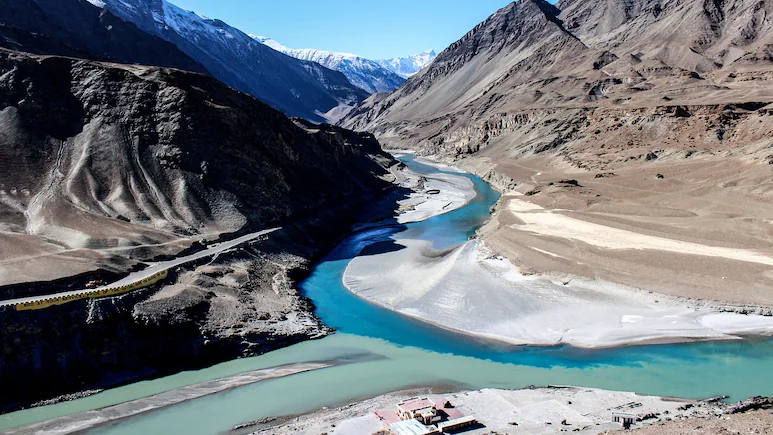
Signed in 1960 with the World Bank as guarantor, the Indus Waters Treaty divides the six rivers of the Indus basin between the two countries. India retains control of the eastern rivers — Beas, Ravi, and Sutlej — while Pakistan gets the western rivers — Indus, Jhelum, and Chenab, though India is allowed limited use, including for hydroelectric projects.
The MEA stressed that India had honoured the treaty in good faith for decades, despite continued hostility from Pakistan. However, the government’s recent position leaves future cooperation dependent on Pakistan’s actions against terrorism.
