

By Anjali Sharma
UNITED NATIONS –UN conference for Financing for Development will be held in Seville as the world’s roadmap for ending poverty, protecting the planet and tackling inequalities.
UN noted that it’s been 10 years since the Addis Ababa Action Agenda was established to support the implementation of the 2030 Agenda for Sustainable Development.
The organizers stated that a $4 trillion financing gap is hindering progress to achieve the Sustainable Development Goals by the end of this decade.
The Fourth International Conference on Financing for Development will take place in Sevilla, Spain, beginning on 30 June in efforts to bring together stakeholders to advance solutions to the financing challenges threatening sustainable development.
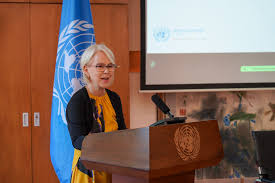
UN Deputy Secretary-General Amina Mohammed at a press conference in New York said “We’ve seen mounting debt burdens and declining investment, and we’ve seen reduced aid and growing trade barriers. The current system is certainly not delivering for the people it was designed to support”.
Ambassador Héctor Gómez Hernández of Spain, and Ambassador Chola Milambo of Zambia also joined the briefing..
Over 70 heads of state and government will attend the Conference, along with leaders of international financial institutions, civil society, philanthropies and the private sector, including those from energy, food systems and digital industries.
Ms. Mohammed said “The collective presence alone, I believe, sends a good signal for multilateralism at a time when we’re facing quite a bit of pushback”.
Member States agreed on the Compromiso de Sevilla, or Seville Commitment, to adopt at the Conference.
Ms. Mohammed stressed that the Commitment addresses the debt crisis in developing countries that are particularly vulnerable to financing shortfalls, as many spend more on debt interest than on essential services, straining the opportunity for sustainable development.
Ambassador Milambo explained that this will be done through greater transparency, a global debt registry, and amplifying the voices of debtor countries.
It aims to catalyze investment by tripling Multilateral Development Bank lending, doubling Official Development Assistance to developing countries, leveraging private sector investment and ensuring the international financing system is more inclusive and effective.
“This is an agenda that world leaders can do something about. They do have the tools and the political clout to make it happen,” said Ms. Mohammed.
Ambassador Hernández emphasized that the Conference comes at a critical time for multilateralism.
“This conference is an appeal to action, and we have the extraordinary opportunity to send a very strong message to defend the international community’s commitment to the multilateral system,” he said.
Ambassador Milambo added that the consensus on the Seville Commitment “sends a real message of hope to the world that we can tackle the financing challenges that stand in the way of the SDGs and that multilateralism can still work.”
US announced it will not send a delegation to the Conference despite the consensus.
Ms. Mohammad said that the speakers urged observers to keep the broader picture in mind: “It is regrettable, but it doesn’t stop us from continuing to engage with that Member State” and urge a change in the course of action.
She concluded that given the recent agreement of the Commitment, the discussions the UN is having with other donors on how they are trying to use resources more efficiently will hopefully go a long way.
