
Bharat’s Emergency of 1975: A Stark Reminder of Democracy’s Fragility

Paromita Das
New Delhi, 25th June: A Nation Plunged into Silence
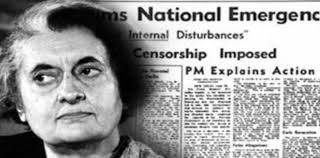
On a humid summer night in June 1975, while much of Bharat was asleep, the nation’s democratic soul was quietly suffocated. In the dark hours of June 25, Prime Minister Indira Gandhi made a decision that would carve one of the darkest chapters in Bharatiya political history. The Emergency, declared that night, ushered in an era of unparalleled authoritarian control that would last 21 months. It was a period marked by the silencing of dissent, the shuttering of a free press, and the brutal assertion of executive power—ironically, all through constitutional means.
This declaration wasn’t a sudden outburst of authoritarianism. The early 1970s had already set the stage for turmoil. An economy crippled by inflation, food shortages, and rising unemployment created the perfect breeding ground for unrest. Public frustration erupted into massive protests in Gujarat and Bihar, led primarily by students but quickly gaining national traction. Jayaprakash Narayan, a veteran of the freedom movement, emerged as the moral compass of the resistance. His call for “Total Revolution” sought to uproot corruption and reinstate accountability in governance, challenging the very foundation of Indira Gandhi’s rule.
The Trigger: Judiciary and Power Collide
The real trigger, however, came not from the streets, but from the courtroom. On June 12, 1975, the Allahabad High Court found Indira Gandhi guilty of electoral misconduct and invalidated her 1971 Lok Sabha win. She was barred from holding any elected office for six years—a judgment that shook the political establishment to its core. Instead of resigning, Gandhi chose to retaliate. On June 25, she advised President Fakhruddin Ali Ahmed to declare a national Emergency under Article 352, citing “internal disturbances”—a vague and later-removed provision that provided sweeping powers to the executive.
The declaration stunned the nation. It bypassed the Cabinet, stunned Parliament, and shocked even senior Congress leaders. The next morning, Bharat awoke to the grim announcement via All India Radio. The first targets were opposition leaders and dissenters—many of whom were arrested before dawn. In a chilling echo of totalitarian regimes, Bharat’s streets remained quiet, but its prisons swelled.
Censorship and the Crushing of the Free Press
Among the most immediate casualties of the Emergency was the freedom of the press. Journalists and editors were suddenly subjected to pre-publication censorship. Power supply to prominent newspaper hubs like Bahadur Shah Zafar Marg in Delhi was cut on the night of June 25, preventing papers from going to print. Government censors took residence in newsrooms, striking out anything deemed critical of the administration.
The Ministry of Information and Broadcasting, led by V.C. Shukla, became the nerve center of information control. Independent news agencies were forcibly consolidated into one entity—Samachar—so the government could single-handedly control the news narrative. Even cultural and entertainment content wasn’t spared; songs, films, and literature faced similar scrutiny.
And yet, the spirit of journalism wasn’t entirely extinguished. In a bold act of defiance, The Indian Express left its editorial column blank on June 27, signaling the silencing of the press without uttering a word. Such silent protests became iconic, immortalizing the role of media even in the darkest times.
Civil Liberties in Chains
The repression extended far beyond the press. Over 36,000 political opponents were detained under preventive laws, most without trial. The Supreme Court’s infamous ruling in the ADM Jabalpur vs Shivkant Shukla case (1976) allowed for the suspension of even habeas corpus—the right to challenge unlawful detention. This decision would later be denounced and overturned, but at the time, it gave the government legal cover to operate with impunity.
Simultaneously, a parallel power center began to emerge in the form of Sanjay Gandhi, the Prime Minister’s son. Though unelected, Sanjay wielded enormous influence. His controversial Five-Point Programme included forced sterilizations and aggressive slum clearance drives. In Delhi’s Turkman Gate, peaceful protestors against these demolitions were fired upon by police, leading to fatalities. In Uttar Pradesh’s Muzaffarnagar, protests against sterilizations ended in bloodshed. The human cost of the Emergency was brutal, and the scars remain.
An Unexpected Reversal and Its Aftermath
In a surprising turn, Indira Gandhi lifted the Emergency in January 1977 and called for general elections. Some believe it was due to overconfidence; others suggest she sought democratic legitimacy. Regardless of intent, the outcome was unequivocal. The Congress party suffered a crushing defeat in the March elections. The Janata Party, a coalition of anti-Congress forces, came to power with Morarji Desai as Prime Minister.
The new government moved swiftly to reverse many Emergency-era decisions. The 44th Constitutional Amendment restored the rights stripped during those 21 months. “Internal disturbances” was removed as a ground for Emergency, judicial review was reinstated, and civil liberties were reaffirmed. The Shah Commission, established to investigate Emergency abuses, uncovered rampant misuse of power, vindicating the cries of those who had resisted.
A Democracy Tested but Not Defeated
The Emergency of 1975-77 remains a chilling reminder of how fragile democracy can be when institutions falter and individual power overrides collective wisdom. It wasn’t just a political event—it was a national trauma that reshaped Bharat’s democratic consciousness. Yet, it also revealed the resilience of Bharatiya democracy. The eventual electoral defeat of an authoritarian regime reaffirmed the power of the ballot and the will of the people.
Fifty years on, the Emergency serves not only as a cautionary tale but also as a call to vigilance. Freedom, as history shows us, can never be taken for granted. It must be guarded fiercely, especially in times when power tempts those in office to silence those who dissent. Democracy is not just about holding elections—it’s about ensuring the press remains free, the judiciary remains independent, and every citizen remains protected by the Constitution. The Emergency tested all of these—and taught Bharat never to forget.
