
A Hero in Chains: The Forgotten Engineer Behind America’s Stealth Triumph
Noshir Gowadia.

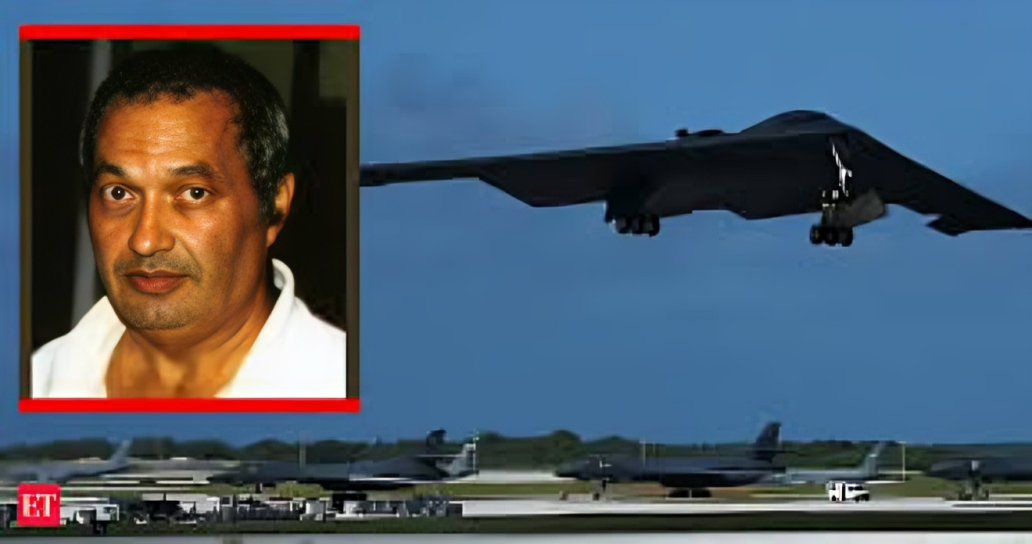
On a quiet June night in 2025, seven B-2 Spirit bombers soared across the globe like silent shadows, flying 37 unbroken hours from Missouri to Iran. With a precision that felt almost divine, they struck deeply buried nuclear bunkers—targets no other aircraft could have reached. That night, American power spoke in whispers, not roars. And the invisible force behind it all? A gentle, silver-haired engineer from Mumbai: Noshir Gowadia.
Today, that same man sits alone in a Colorado supermax prison, 81 years old, waiting for a freedom he may never taste again. His mind—once full of dreams that danced with the stars—has been silenced not by betrayal, but by a nation that forgot to say thank you.
Noshir was born in 1944, on the busy, sun-warmed streets of Bombay. Even as a boy, he looked skyward, not with the fantasy of a child, but with the curiosity of an inventor. By his 20s, he had earned a doctorate in aeronautics, and the United States—then a beacon for dreamers—welcomed him with open arms. In the tranquil beauty of Maui, he built a life and a family, including a beloved son, Ashton. But his true offering was to his adopted country. At Northrop Grumman, he gave everything he had to a single mission: making the B-2 Spirit invisible.
It was Gowadia’s infrared-suppressing nozzle that cloaked the bomber from enemy eyes. Without his work, the B-2’s ghost-like flight on that night in 2025 would have been impossible. It was a miracle of engineering—a love letter to flight and freedom, signed by a man who never asked for applause.
But applause never came.
For nearly two decades, Gowadia devoted himself to Northrop Grumman. He called himself the “father” of the B-2’s stealth, and rightfully so. Yet the company—awash in billions from taxpayer-funded contracts—never recognized him with promotions or honors. They used his brilliance, then discarded him. In 1986, disheartened and humiliated, he walked away. Not from America, but from the corporation that failed to see the human being behind the numbers.
Still, he believed in his country.
He formed a small consultancy and tried to keep living with dignity. What he had built, he believed, belonged as much to him as to anyone. His knowledge—crafted in his mind and forged through sacrifice—was not a file to be locked in a cabinet. But the rules disagreed. Even though he was cast out by Northrop, the secrets he carried were still shackles around his ankles.
Between 2003 and 2005, he sought validation. He shared ideas—never blueprints, never documents—with Chinese engineers. In return, he received just \$110,000. Enough to make a dent in a Maui mortgage, but not to buy his silence, nor to make him rich. For this, the government called him a traitor.
In 2010, he was sentenced to 32 years in prison. Not for murder. Not for espionage in the traditional sense. But for speaking aloud thoughts he believed were his own.
To put it in perspective: in America, someone convicted of second-degree murder may be out in 20 years. Gowadia, whose invention may have saved American lives by avoiding detection in war, will serve more than three decades. The irony is painful. His creation made the B-2 untouchable. Yet he himself was thrown away.
Elsewhere in the world, men like him were cherished. India’s A.P.J. Abdul Kalam—another missile visionary—was crowned President, a national treasure. Pakistan’s A.Q. Khan, who sold nuclear secrets, was barely confined. Even modern companies share tech across borders. Tesla shares with China—legally. No chains. No prison.
Why, then, did we lock away Noshir Gowadia?
Because he didn’t have the machinery of power to protect him. Because we treat corporations like Northrop as sacred, and the humans behind them as expendable.
He could have been so much more. A professor. A mentor. A hero, if only someone had paused to look. Had he been given a Presidential Medal of Freedom, as India gave Kalam the Bharat Ratna, perhaps he would never have strayed.
Today, his name has been all but erased from America’s memory. But we should remember. Because the silence of the B-2 over Iran began with the voice of a dreamer from Mumbai. And because a nation that forgets its heroes will one day look for them and find only silence.
With this article we would request clemency for this son of India and America from President Trump. This man deserves to be with his family and not in prison. When would America learn to honour it’s heroes?
