
Why Is the Bharatiya Opposition Desperate to Undermine PM Modi Even at the Cost of National Dignity?

Paromita Das
New Delhi, 20th June: In a democracy, dissent is not only accepted—it’s essential. It provides balance, invites accountability, and prevents power from going unchecked. But dissent loses its nobility when it abandons truth and borders on sabotage. This is exactly what unfolded in the wake of Operation Sindoor, where key opposition leaders, particularly from the Congress party, seized upon misinformation—not to protect democracy, but to dent the credibility of a Prime Minister chosen by the people.
Instead of standing by their own nation’s institutions—its military, its diplomatic corps, its elected leadership—a section of the opposition chose to validate the self-promotional, fact-light statements of former U.S. President Donald Trump. Their eagerness to cling to his baseless claim of mediating peace between Bharat and Pakistan revealed a deeper obsession: the compulsion to discredit Prime Minister Narendra Modi, even at the cost of Bharat’s global standing.
Operation Sindoor: Bharat’s Strategic Triumph, Misread Deliberately
Operation Sindoor was Bharat’s swift and decisive military response to terrorist infrastructure inside Pakistan. The Indian Air Force targeted and eliminated deep terror camps and struck 11 Pakistani air bases with precision. Pakistan’s military, facing significant setbacks, initiated a ceasefire request via established bilateral DGMO channels. This ceasefire, agreed upon on May 10, was a direct and sovereign military-to-military understanding. No third-party mediation, no global intermediaries—just Bharat asserting its security interests through its own might.
However, even before Bharat could officially communicate this success, Donald Trump falsely claimed credit for mediating between Bharat and Pakistan. True to his style of self-congratulatory diplomacy, he tried to insert himself into a matter he had no role in. What followed should have been a textbook case of Bharat uniting against external misrepresentation.
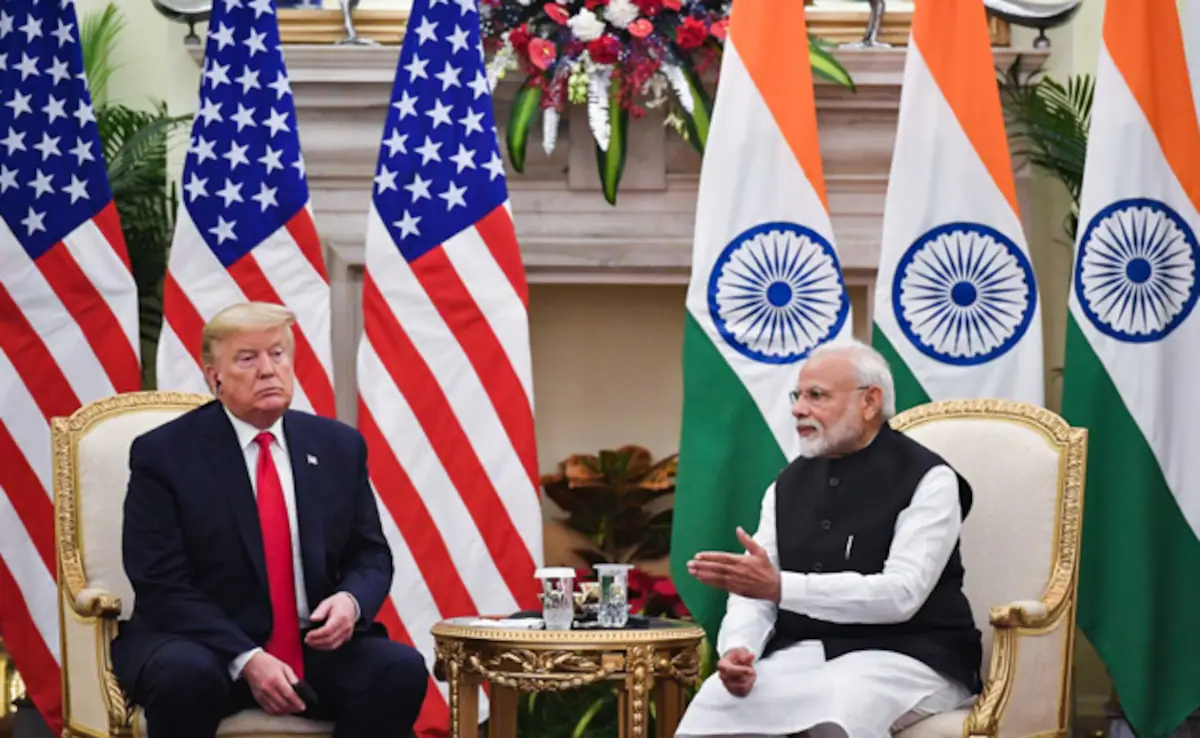
Instead, some Congress leaders embraced Trump’s claims. This, despite a direct 35-minute phone conversation between PM Modi and Trump on June 17—held during Modi’s G7 visit in Canada—where Modi categorically denied any U.S. involvement. Bharat’s Foreign Secretary Vikram Misri later reiterated at a press conference on June 18: “PM Modi clearly told President Trump that during the entire course of events, at no point, and at no level, was there any discussion about a U.S.-Bharat trade deal or U.S. mediation between Bharat and Pakistan.”
Foreign Secretary Vikram Misri announced that Prime Minister @narendramodi had a telephonic conversation with US President #DonaldTrump, which lasted approximately 35 minutes. During the discussion, PM Modi briefed President Trump about Operation Sindoor. PM Modi clarified that… pic.twitter.com/1RuPVc778V
— DD News (@DDNewslive) June 18, 2025
PM Modi also reaffirmed Bharat’s consistent position on Kashmir: “India has never accepted, does not accept, and will never accept mediation on the Kashmir issue.”
The Opposition’s Misplaced Trust in Foreign Validation
Despite these clear statements, Congress leaders like Jairam Ramesh and Pawan Khera demanded “clarifications,” fueling speculation and controversy. They ignored statements from Bharatiya diplomatic and defense authorities and instead gave more weight to Trump’s discredited rhetoric. In doing so, they weakened Bharat’s global message and gifted ammunition to Pakistan’s propaganda machine.
Pakistani media quickly picked up Congress’s statements, presenting them as internal confirmation of Trump’s claims. At a time when Bharat was trying to build an international consensus against terrorism, the Congress party became a talking point for Islamabad’s misinformation campaigns.
This willingness to believe foreign narratives over official Bharatiya communication reflects a troubling trend among sections of the opposition: a loss of confidence in Bharat’s voice and an over-dependence on foreign validation—especially from Western powers like the U.S.
Political Obsession Is Blinding Reason
This isn’t the first time such behavior has surfaced. From misrepresenting foreign press coverage of Kashmir to amplifying Western NGOs’ opinions on domestic policy, parts of the opposition seem eager to echo external criticism—provided it damages the Modi government.
Why does this happen? Why does the opposition struggle to believe that Bharat’s foreign policy under Modi is strong, sovereign, and increasingly respected across the world? Perhaps because it’s easier to challenge the messenger than confront the message: that Modi’s leadership, despite criticism, resonates with a large section of Bharatiya and many global counterparts.
In their urgency to counter him politically, the opposition has often dismissed achievements, including international recognition, simply because they came under Modi’s watch. This doesn’t just insult a leader—it undermines Bharat.
Modi’s Measured Diplomacy vs. Trump’s Self-Promotion
Trump’s brand of diplomacy is theatrical, self-centered, and often factually inaccurate. Modi, in contrast, showed calm and clarity. Rather than publicly ridiculing Trump, he addressed the misinformation directly with dignity and ensured Bharat’s stance was unambiguous. That restraint reflects statesmanship.
And yet, even with such clarity, the opposition preferred to chase controversy. This wasn’t just a political oversight—it was a deliberate choice to mistrust Bharat’s elected leadership in favor of foreign noise.
Nation First Must Not Be a Slogan, But a Practice
Opposition is vital to democracy—but not when it becomes a tool to damage the nation’s image abroad. By preferring Trump’s fiction over Modi’s fact-backed response, Congress crossed that line.
In clarifying Trump’s exaggerated claims, PM Modi didn’t just defend his government—he defended Bharat’s sovereign voice in global affairs. He reminded the world, once again, that Bharat stands tall, not because others say so, but because it believes in its own strength.
Political differences must never compromise national dignity. For Bharat’s opposition, it’s a lesson long overdue.
