
“Engine Trouble or Enemy Plot? Khalistani Threat Casts Dark Shadow Over Air India After Series of Technical Failures?”

Poonam Sharma
In what appears to be more than just an unfortunate coincidence, Air India has suffered its technical malfunction in repeatedly , with the latest being a mid-air emergency landing in Kolkata. Flight AI180 from San Francisco was forced to land after its left engine reportedly developed a serious fault. While the airline has attributed it to a technical snag, questions are now being raised whether these repeated incidents point toward something far more sinister.
Just some days ago , Gurpatwant Singh Pannun, the self-styled leader of the banned Khalistani separatist group Sikhs for Justice (SFJ), released a chilling video warning. In his message, Pannun openly threatened Air India flights, asking passengers not to travel between November 1 and 19, claiming it to be a “window of retribution” coinciding with the 40th anniversary of what he calls the “Sikh genocide.”
Since that warning, India has witnessed an alarming uptick in airline-related threats and technical issues, particularly involving Air India—the nation’s flagship carrier and a symbol of its sovereignty in the skies.
A Pattern Too Dangerous to Ignore
The latest incident occurred when Flight AI180, a long-haul international route from San Francisco to Delhi via Kolkata, began experiencing engine failure over eastern India. According to sources within the Directorate General of Civil Aviation (DGCA), the left engine showed signs of fluctuating thrust and temperature anomalies, prompting pilots to issue a mid-air distress call and initiate an emergency landing protocol.
Fortunately, all passengers and crew were unharmed, but the incident is one in a string of similar “technical issues” Air India has reported in recent days.
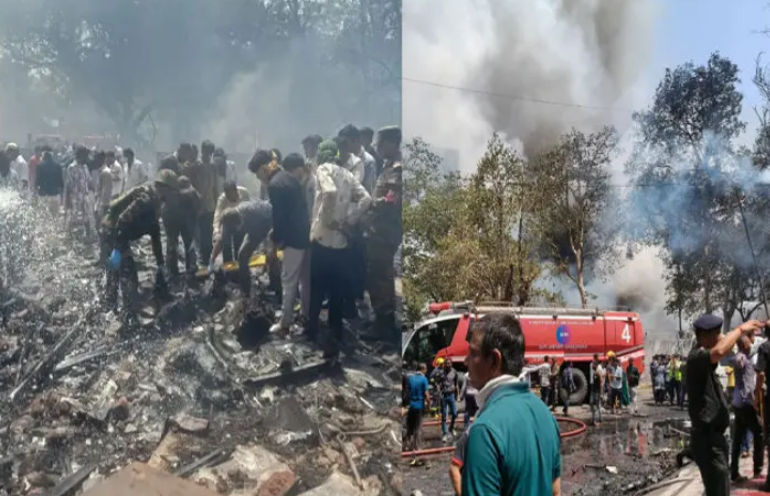
On June 12, an Air India flight tragically crashed near Ahmedabad, killing more than 270 passengers and injuring dozens. Initial reports blamed “instrumental failure and poor visibility,” but given recent threats, the tragic event is now being reevaluated by investigative agencies with a broader lens.
In the past one week alone, Indian airports have dealt with so many bomb threats, many of which were directed at Air India flights. While security agencies initially dismissed them as hoaxes, the mounting frequency and uncanny timing in conjunction with Pannun’s video now demand deeper scrutiny.
Who is Gurpatwant Singh Pannun?
Pannun is no ordinary rabble-rouser. A lawyer by training and a terror propagandist by design, he operates from North America and has long used his platform to destabilize India’s internal security using digital propaganda, targeted threats, and legal warfare.
Despite SFJ being banned in India since 2019, Pannun has leveraged Western liberal platforms to amplify anti-India narratives. His calls for “Referendum 2020” were widely dismissed, but his rhetoric has only grown bolder and more dangerous.
His recent video posted on June 10 has raised eyebrows across Indian intelligence agencies. He said:
“From November 1 to 19, don’t fly on Air India. These are not threats; these are warnings. The skies will remember the blood of innocents. We won’t forget 1984.”
This veiled terror threat, referring to the anti-Sikh riots that followed Indira Gandhi’s assassination, is being interpreted as a precursor to potential attacks—not just cyber or symbolic, but kinetic and real.
Echoes of 1985: A Grim Reminder
The timing and targeting of Air India flights evoke terrifying memories of the 1985 Kanishka bombing, when Air India Flight 182 exploded mid-air due to a bomb planted by Khalistani extremists, killing 329 people—most of them Canadian citizens of Indian origin.
The parallels are chilling. Same ideology. Same airline. Same warnings.
Are we staring at another Kanishka in the making?
Investigations Must Go Beyond Surface-Level Technicalities
Multiple former aviation safety officers have warned against viewing these malfunctions in isolation
The National Investigation Agency (NIA) and Aviation Intelligence Bureau are now reportedly working in tandem to examine whether these malfunctions show signs of deliberate tampering. Sources indicate investigators are not ruling out remote interference or compromised maintenance logs—particularly in aircraft operating on international routes with multiple transit points.
Government Response: Still Muted?
India’s Ministry of External Affairs has strongly condemned Canada’s apparent leniency toward Pannun, with External Affairs Minister S. Jaishankar saying:
“When you shelter extremists and then downplay their threats, you embolden terrorism. Pannun’s statements are not free speech—they are acts of psychological warfare.”
Despite the repeated threats, there is growing public sentiment that Indian authorities must act more decisively, both diplomatically and operationally.
Should flights to and from key risk zones be temporarily reviewed? Are all Air India maintenance procedures being rigorously audited? Is there a covert hand aiding these threats?
Are We Flying Blind Into a Storm?
The skies over India are becoming increasingly unsafe—not because of pilot error or aging aircraft—but due to a rising storm of geopolitical and ideological extremism. Pannun’s threats, when seen alongside actual incidents, are no longer empty rhetoric. They are part of a well-timed psychological and possibly kinetic offensive.
Air India, the pride of Indian aviation, must not become the soft target of Khalistani terror revivalism. It’s time to connect the dots, revisit the lessons of 1985, and ensure that India’s national carrier and her citizens don’t pay the price for a delayed or dismissive response.
The world is watching. And so is the enemy.
