
UNSC holds emergency session over Iran-Israel conflict, amid strikes and counterstrikes

By Anjali Sharma
UNITED NATIONS – UN Security Council on Friday held an emergency session as Israel’s strikes on Iranian nuclear and military facilities marked a dangerous new escalation in the Middle East region.
UN nuclear watchdog agency IAEA head Rafael Grossi who warned of the grave risks to regional stability and nuclear safety.
Israeli military strikes targeted nuclear facilities across Iran, including the Natanz enrichment site, according to media reports.
Media reports indicated that Hossein Salami, the head of the Islamic Revolutionary Guard Corps as well as several prominent nuclear scientists, were among those killed.
UN noted that the strikes also caused significant damage, including dozens of civilian casualties. Airspace in the region has been largely closed and security forces are on high alert.
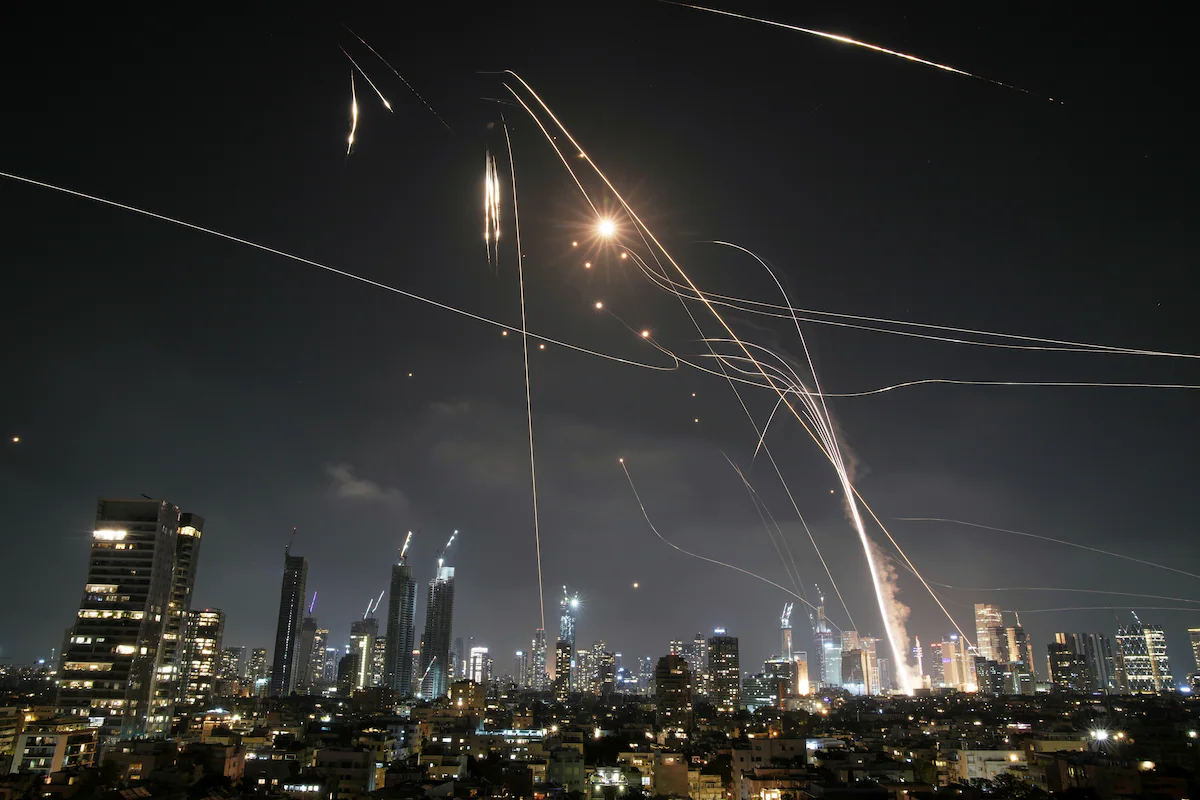
Media reported additional Israeli strikes late Friday local time as well as ballistic missile launches by Iran which have reportedly struck parts of Israel, including Tel Aviv.
Rosemary DiCarlo, UN Under-Secretary-General for political affairs told the members of the Council that the repercussions of the attacks were already reverberating.
“I reaffirm the Secretary-General’s condemnation of any military escalation in the Middle East,” she said.
She urged both Israel and Iran to exercise maximum restraint and “avoid at all costs a descent into deeper and wider regional conflict”.
Ms. DiCarlo also noted that the military escalation came just as “some significant diplomatic developments” were unfolding, including the planned resumption of United States-Iranian talks in Oman at the weekend. Latest reports indicate that Iran will no longer attend.
She urged parties to stay the diplomatic course.
“A peaceful resolution through negotiations remains the best means to ensure the peaceful nature of Iran’s nuclear programme,” she said.
“We must at all costs avoid a growing conflagration which would have enormous global consequences.”
IAEA head Rafael Grossi briefed the Council members said his agency was in constant contact with the Iranian Nuclear Regulatory Authority to assess the status of affected facilities and determine broader impacts on nuclear safety and security.
He stressed that nuclear sites must never be targeted – under any circumstances.
“Such attacks have serious implications for nuclear security, nuclear safety and safeguards, as well as regional and international peace and security,” Mr. Grossi said.
He stands ready to travel to the region at the earliest opportunity he added, to assess the situation and support safety, security and non-proliferation efforts in Iran.
“It is clear that the only sustainable path forward for Iran, for Israel, the entire region and the international community is one grounded in dialogue and diplomacy to ensure peace, stability and cooperation.”
Mr. Grossi concluded by offering the IAEA as a neutral platform where “facts prevail over rhetoric” and where technical engagement replace escalation.
“I reaffirm my personal and the agency’s readiness to facilitate dialogue and support efforts that promote transparency, security and the peaceful resolution of nuclear issues in Iran.”
Russian Ambassador to the UN Vassily Nebenzia warned that Israel’s actions in the Middle East are “pushing the region to a large-scale nuclear catastrophe.”
“This completely unprovoked attack, no matter what Israel says to the contrary, is a gross violation of the UN Charter and international law,” he said.
He expressed Russia’s “strong condemnation” of the strikes.
Ambassador Nebenzia accused “Western members” of the 2015 Iran nuclear deal the Joint Comprehensive Plan of Action of contributing to the current crisis through their policies toward Iran and its nuclear programme.
“They have been doing everything to fuel the escalation and essentially incited it,” he told ambassadors.
Mr. Nebenzia urged renewed diplomatic efforts.
“Once again, settling issues related to the Iranian nuclear programme is only possible if a peaceful, political, and diplomatic pathway is followed,” he said.
Pakistan’s Ambassador to the UN Asim Iftikhar Ahmad told the Council that Israel’s “blatant provocations” pose a grave threat to regional peace and stability.
“Iran has the right to self-defence under Article 51 of the UN Charter,” he said.
He alleged that Israel’s actions in Gaza, Syria, Lebanon and Yemen “reflect a continuing pattern of unilateral militarism”.
“The fact that these attacks against Iran have happened in the middle of a negotiations process aimed at finding a peaceful diplomatic solution to the Iranian nuclear issue makes it all the more morally repugnant and against international norms,” he added.
Mr. Ahmad urged all parties to avoid further escalation and priorities dialogue.
He also called on the Security Council to “hold the aggressor accountable for its actions. This Council must deny Israel the free hand and the impunity with which it continues to operate in defiance of international law and international opinion.”
United States envoy McCoy Pitt, a senior State Department official, accused Iran of having launched “unprovoked, direct and proxy attacks” against Israeli civilians and of spreading of terror, instability and human suffering in the region.
“As President Trump has repeatedly said this dangerous regime cannot be allowed to have nuclear weapons,” he said.
Mr. Pitt noted that the US had been informed of the Israeli strikes in advance but was not militarily involved.
“Our absolute, foremost priority is the protection of US citizens, personnel and forces in the region,” he said.
He said that the US will continue to seek a diplomatic resolution that ensures Iran will never acquire a nuclear weapon or pose a threat to instability in the Middle East.
“Iran’s leadership will be wise to negotiate at this time,” he said.
Iranian Ambassador to the UN Amir Saeid Iravani told the Security Council he was addressing the body on behalf of his government and people “with the utmost urgency and grave alarm.”
“We strongly and unequivocally condemn the barbaric and criminal attack, a series of targeted assassinations against senior military officials, nuclear scientists and innocent civilians,” he said.
“These deliberate and systematic killings were not only illegal and inhuman, a chilling display of calculated aggression. These atrocities constitute a clear act of State terrorism and flagrant violation of international law,” he added.
He said Israel’s attacks on protected nuclear facilities defied not only the fundamental principles of international law but also “common conscience,” warned that damage to such sites could release catastrophic radiological consequences across the region and beyond.
“Only a regime devoid of humanity and responsibility would endanger millions of lives in pursuit of its destructive ambitions,” Mr. Iravani said.
“Those who support this regime, with the United States at the forefront, must understand that they are complicit. By aiding and enabling these crimes, they share full responsibility for the consequences.”
Israeli Ambassador to the UN Danny Danon reminded the Security Council members that as they spoke – Iranian ballistic missiles were striking Israeli cities and injuring civilians.
He said Israel’s strikes were preventative and carried out with “precision, purpose, and the most advanced intelligence” available.
Danon added that the mission was clear, “dismantle Iran’s nuclear programme, eliminate the architects of its terror and aggression and neutralize the regime’s ability to follow through on its repeated public promise to destroy the State of Israel.”
He accused Iran of taking steps toward building a nuclear arsenal.
Ambassador Danon criticized the international community for failing to act and rein in Tehran.
“Israel did not act recklessly – we waited,” he said.
He concluded “This was an act of national preservation. It was one we undertook alone, not because we wanted to, but because we were left no other option.”
