
India’s Leopard Population Surges to 13,874: Environment Ministry Report

GG News Bureau
New Delhi, 29th Feb. India’s leopard population has surged to 13,874, marking a growth rate of 1.08 percent per year between 2018 and 2022, as per the latest report unveiled by the Environment Ministry today.
Released by Union Environment Minister Bhupender Yadav, the report highlights Madhya Pradesh as the state harboring the largest leopard population in the country, with 3,907 individuals in comparison to 3,421 in 2018. Maharashtra follows with 1,985, followed by Karnataka with 1,879, and Tamil Nadu with 1,070.
The fifth cycle of leopard population estimation (2022) in India focused on forested habitats within 18 tiger states, covering major tiger conservation landscapes. However, non-forested habitats, arid areas, and high Himalayas above 2000 meters above sea level (30% area) were excluded from the sampling.
The report indicates that India’s leopard population is estimated at 13,874 individuals, with a stable trend compared to the 2018 estimation of 12,852 individuals within a similar area. Notably, 70 percent of leopard habitat, including the Himalayas and semi-arid regions not designated as tiger habitats, were not sampled.
Among tiger reserves or sites with the highest leopard populations, Nagarajunasagar Srisailam (Andhra Pradesh) leads the list, followed by Panna (Madhya Pradesh), and Satpura (Madhya Pradesh).
The report further notes a stable or slightly growing population in Central India, with a decline observed in the Shivalik Hills and Gangetic Plains. The largest growth rate of 1.5 percent was observed in Central India and the Eastern Ghats, while a 3.4 percent decline per year was recorded in the population growth of leopards in the Shivalik Hills and the Gangetic Plains.
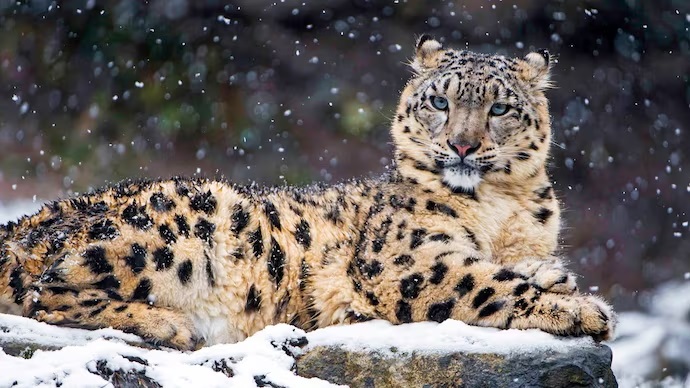
Leopards, formidable big cats closely related to lions, tigers, and jaguars, face escalating threats across India, including habitat loss, human-wildlife conflict, and poaching. The National Tiger Conservation Authority (NTCA) spearheaded the fifth cycle of leopard population estimation to assess the status and trends of these elusive big cats.
The survey, spanning 6,41,449 kilometers, involved foot surveys to estimate carnivore signs and prey abundance, complemented by strategically placed camera traps at 32,803 locations. This effort resulted in a total of 4,70,81,881 photographs, capturing 85,488 images of leopards.
Union Environment Minister Yadav emphasized the conservation legacy of Project Tiger, extending beyond tigers to encompass broader species protection efforts. He commended the dedicated efforts of the Forest Department, highlighting Project Tiger’s inclusive approach toward ecosystem interconnectedness and diverse species conservation under Prime Minister Narendra Modi’s guidance.
The report underscores the critical role of protected areas in conserving leopard populations, as noted by the environment ministry.
